

As an English major at Lipscomb University, I’m required to take a course about Shakespeare. In the class, we read some of his plays and critically analyze them. But don’t think for a moment that William Shakespeare only wrote his plays to be over-studied by literature professors in the stuffy halls of British universities. Believe it or not, Shakespeare is extremely relevant for college students. The only problem? His plays are really, really hard to read.
Now, I’m not saying you should let that stop you. And I understand that you’re probably too busy with off-campus jobs, music practice, clinicals, and stats homework to dive into The Merchant of Venice. But keep in mind, Shakespeare is not only a famous author, he’s also the reason we have a lot of our current phrases in English. “The stuff which dreams are made of?” That’s Shakespeare. So is the popular sorority quote, “Though she be but little, she is fierce.” We borrowed a lot of things from William Shakespeare: maybe it’s time to check out some of his plays. Here are a few reasons to read Shakespeare in college.
His plays are classic, and they’ll develop your understanding of literature AND pop culture. This may sound like a stupid reason, but reading Shakespeare will likely make you feel smarter. Plus, you’ll have opinions to contribute to any conversation with your English major friends, who – believe it or not – actually like talking about things like Macbeth and A Midsummer Night’s Dream. Also, some movies are actually based on a play by Shakespeare, such as the rom-com 10 Things I Hate About You. Even the popular musical West Side Story is a clear reference to Romeo and Juliet. Knowing the story-lines of Shakespeare’s plays can help you understand some aspects of pop culture better and also gives you the opportunity to have good conversations with other students.
Shakespeare is relevant. He understood human follies and agonies, and he conveys humor, romance, murder, political intrigue and family relations through his plays. Although they were originally meant to be performed rather than read as literature, Shakespeare’s plays have valuable insights that readers can gain by just studying the script. If you understand what Shakespeare is saying, you might be surprised at how much a sixteenth-century guy actually knows about your life.
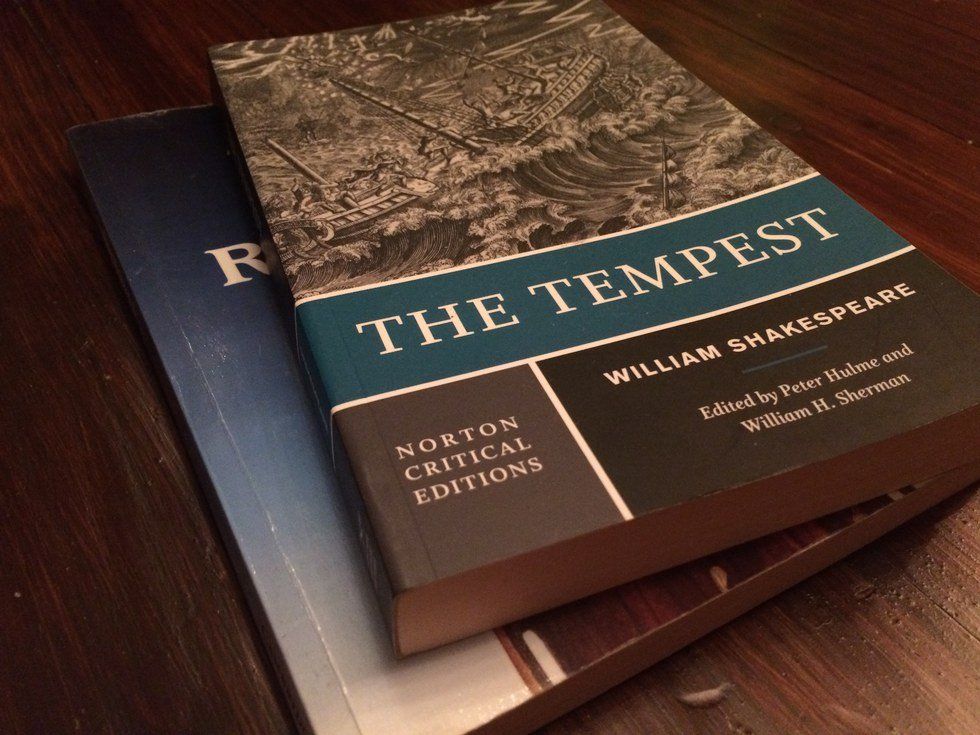
But there’s the hard part: understanding Shakespeare. How can you take anything of value from his plays if you don’t have a clue what “Soft, what light through yonder window breaks?” means? (It sounds really cool, though.) But seriously, that’s a problem that even English majors face. Trust me, I know. It’s a struggle, but if you find the right edition of a play for you, there will be footnotes that explain the meanings of phrases and words. Reading a play twice, first to understand the basic events and then to analyze the characters, helps too. Finally, if you can watch a film version or go to a performance of the play, you’ll be able to picture the events of the play and better understand them.
Yes, Shakespeare is really difficult to read at times. But his plays are also relevant to college kids, even if they sound like they were written for the court of Queen Elizabeth. They were actually also written for the common people of England back in the day. So are we going to let the complicated language and funny-sounding words stop us from reading Shakespeare? As Henry V might say: Not today, O Lord, not today.















