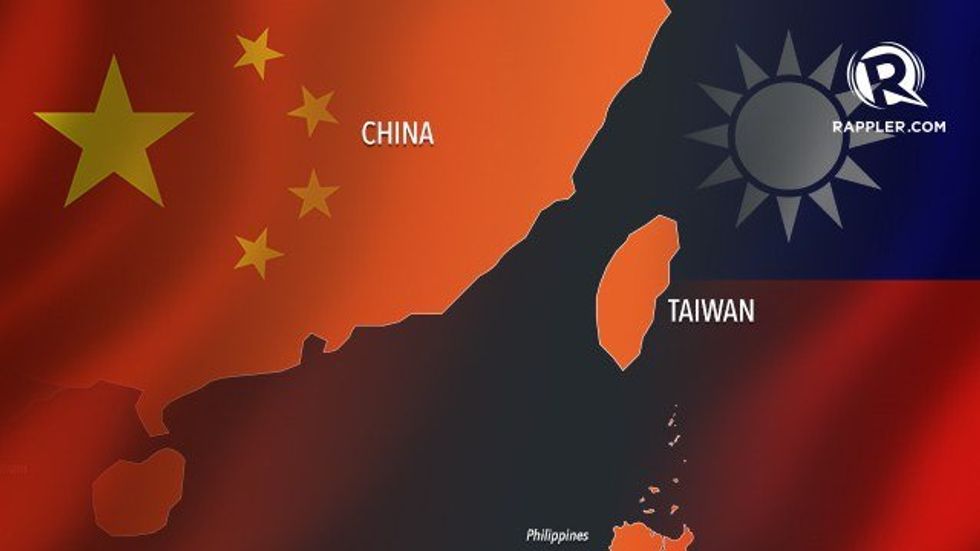
Have you ever been asked questions like, Do you think Taiwan is a country? or Do you think Taiwan belongs to China?
Friends have asked me these kinds of questions a countless number of times, and I felt the tension when answering them. The conflicts about the independence of Taiwan existed in history for a long time, but recently were triggered by Taiwan having its first female president, and also by a posted video about a Taiwanese singer on YouTube.
Tsai Yin-wen, 59, a nominee of the Democratic Progressive Party, was elected as Taiwan's first female president on Jan. 16. The news was soon spread among the crowd and soon became a hit. Students from Mainland China and Taiwan expressed their own opinions about Ms. Tsai’s election and her party's supportive policy to the independence of Taiwan.
A little bit earlier than the election, a video was released on YouTube about a Taiwanese singer, Chou Tzu-yu, who was developing her career in South Korea. The video was issued by her management company about Chou giving an apology to her former behavior by implying Taiwan’s independence on a Korean television show. Both of the two news stories led to a serious debate, more precisely an argument, on the internet among Chinese nationalists and Taiwanese who were angered with this video.
On Jan. 16, my friend Wendy Huang, a freshman at Stony Brook University who came from Taiwan, called me at 11 p.m. and told me the story and her sorrow to Chou. From the moment I received the message from news media, it was like my body was being pinned by needles. I knew that the tension between China and Taiwan was getting worse.
I calmed her down and questioned myself: Why can't we, as a new generation of both cultures, come to peace over this matter? The problem between China and Taiwan existed for decades, and some people were busy choosing their sides and targeting their “enemies” while there were still people who were neutral toward this question and just wanted a peaceful life in the “battle”.
I like making friends with all kinds of people. To keep the tension, like the one that China and Taiwan had, under control, I had an agreement with my friends to not talk about this sensitive topic. I'm not a nationalist Chinese, so I've been respecting everyone's opinion about this topic. However, when I saw the debate online with rude words abusing each side, my nerves were shocked. I felt ashamed! The strong connection between two regions did not bring people a blooming culture, but endless hatred for each other. For instance, the comments I read on Ms. Tsai's Facebook page questioned and made fun of her qualifications as President, and were left by Chinese nationalists.
Also, I looked through images that the Taiwanese posted on blogs to tease the Chinese government and celebrities. The whole argument seemed tireless and ceaseless, like an ironic game that might be popular in kindergarten. People were educated with different perspectives and beliefs, so the conflicts came when people from two places met each other. One insisted his or her perspective of value, and another held an opposite one. When they saw the differences, they started arguing and got mad at each other. They attacked each other with words, but when it came to my heart, these words were like stones; every word hit my heart and tightened my nerves. No one was thinking about the aftermath, all they wanted was to demonstrate that they were right on this point.
The argument was aggressive and furious. People were targeting each other’s president and citizens. But there were also people like me, brokenhearted, by this behavior. There might be some mistakes and conflicts left by history. It happened everywhere in the world. People were making efforts to learn about the differences and understand them. We called these differences “diversity,” which means we accept people from different cultures, religions, parties and beliefs, and we respect their opinions even though they are opposed to ours.
The problems between China and Taiwan originated years ago and we could not centralize everyone’s thought on this topic. The disputes between governments might be serious, but we should not use abusive language and aggressive behavior to target those innocent citizens. In today's context, the enhanced connections of cultures and economies among different countries should ensure people a prosperous future, but not a civil life with hatred and fears. The history left us problems and gaps. We should cure the wounds and leave the scars to fade by time instead of worsening them with new cuts.
We, as a new generation, as well as global citizens living in a diverse environment, should respect others different perspectives and defend the peace we long for. Let’s put down the bias and show some respect.