


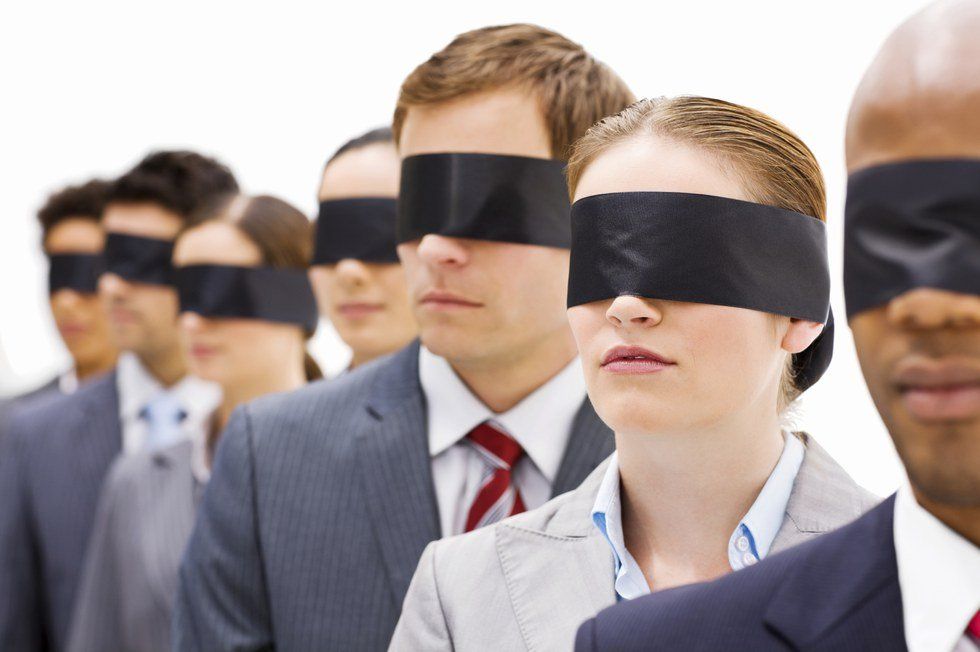
Growing up one of very few black people in a small, conservative, and mostly white town taught me many lessons. One of the most memorable of those lessons being that discussing race makes most people wildly uncomfortable. America is considered by many to be a wondrous melting pot. However, this country has a difficult time acknowledging the many different cultures that exist within that melting pot. This apprehension to discuss race has resulted in a growing problem: colorblindness.
There are two main definitions of colorblindness in America. There is the more well-known term that refers to a person who has a color deficiency in their vision, but there is also an ever-growing population of people who claim colorblindness when faced with the racial inequalities this country struggles with on a daily basis. The latter is becoming another issue that people of color have to face. Someone will say it in passing or in response to a specific racial topic that was brought up, but you will hear it time and time again. “Oh, I don’t see race! I’m colorblind.” Cue the eye roll.
While some people who say this may truly mean it as a positive notion, it is deeply problematic. To say you are colorblind to race is first and foremost, a lie. When people see me I know they see a black woman. I look at myself in the mirror and this is how I present to American society. There is nothing wrong with noticing the color of a person’s skin. It is when you begin to judge a person based solely off of their skin color that you have a problem. People often times equate noticing the amount of melanin in someone else’s skin as immediate prejudice when that is not the case. I can see a friend’s white skin or another friend’s brown skin without then attaching that to the stereotypes society has associated with them. You must learn to detach the notion that seeing someone’s skin color is inherently racist. It is also imperative to actively fight against associating skin color with the stereotypes attached to each race from societal conditioning.
Once you move passed the dishonesty of claiming to be colorblind, you can begin to explore the dismissive nature of the term as well. It is most often when presented with the racial inequalities people of color in this country face that someone brags about how they don’t see color. It is essentially a person’s way of saying, “I can’t acknowledge the issue you’re speaking of because we are all one.” While being a unified front is a wholesome idea and something this country should strive for, that cannot be fully accomplished until we acknowledge and work to repair the issues people of color face within our communities. Colorblindness is more often than not used to silence the cries for help from POC under the guise of not being able to see them at all. No issue was ever fixed by ignoring its very existence.
Finally, the most disheartening component of someone claiming to be colorblind is the missed opportunity. In refusing to acknowledge the differences in each race and culture within this country, you’re robbing yourself of a plethora of rich experiences. Part of the appeal of the American melting pot is the sharing of culture. By acknowledging and opening yourself up to the differences between you and others, you have the ability to learn a great deal. You can enjoy music that might not have been a part of your childhood, foods that you might not have had the chance to taste and a million other possibilities. The sharing of foods and music often leads to the sharing of experiences. The sharing of experiences leads to a better understanding of the circumstances that we each deal with in this country and that is how we can attain a more unified and inclusive society.
To claim to be colorblind may not sound harmful at first, but it is a great disservice not only to yourself but also to this country as a whole. We are more willing to fight for those we know, love, and understand and to understand the specific issues others face, we must first accept that we have differences.

















