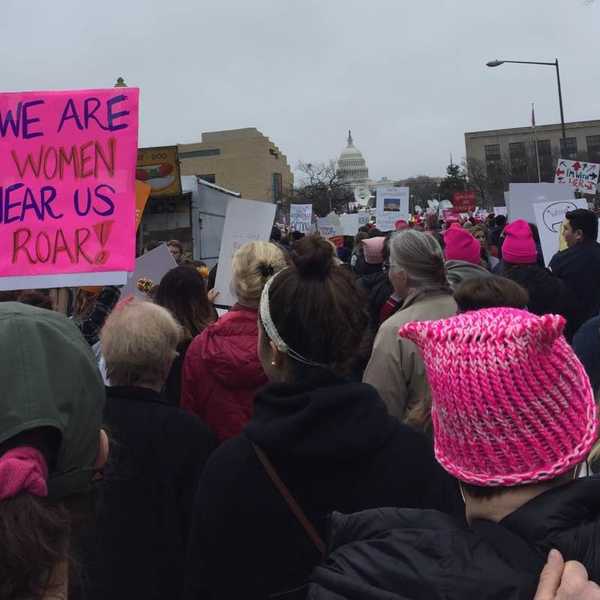
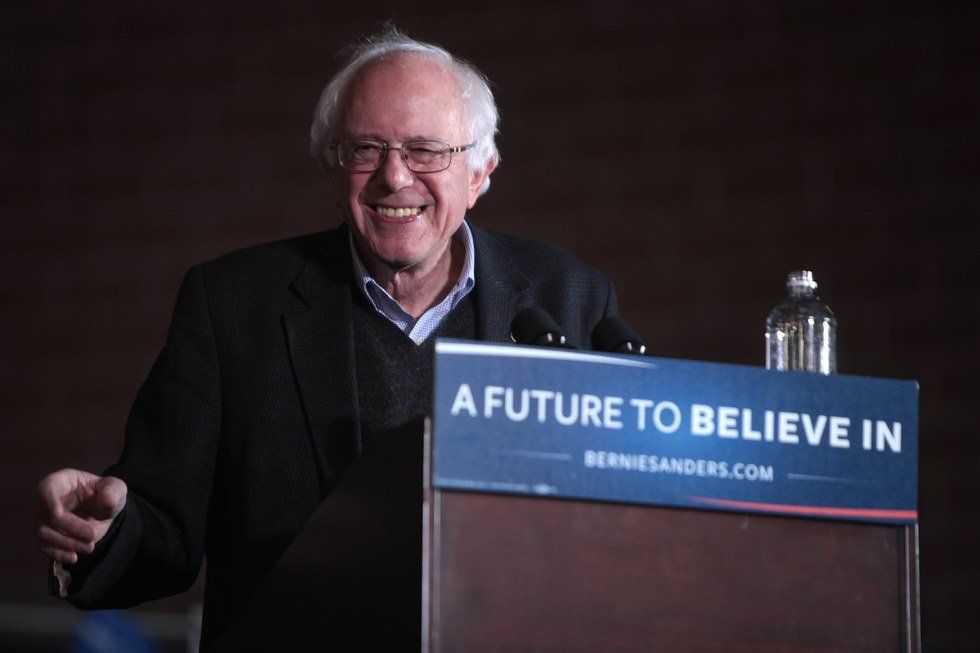
We are the sparks in a fire that burns larger than any single one of us. For years, we watched as the divide between the top one percent and bottom ninety-nine percent grew larger. We listened as oil company giants and other powerful influencers denied climate change, even as it unfolded in front of our eyes. We were silent as the violence created by systemic racism bled out in our streets. Where once we sat down, now we stand. I’m just one of millions who have been swept up in the movement toward a more just, equal society.
Last week, Bernie Sanders officially endorsed Hillary Clinton for president. It’s a sad time for many people like me, who have been holding out hope since his loss in the California Primary. But it’s pretty clear now that come November 8, Sanders won’t be on the Democratic ballot unless a miracle happens at the convention. Regardless of whether he’s on the ticket or not, Bernie Sanders didn’t lose this election. Here are six reasons why I believe this.
1. He brought people together.
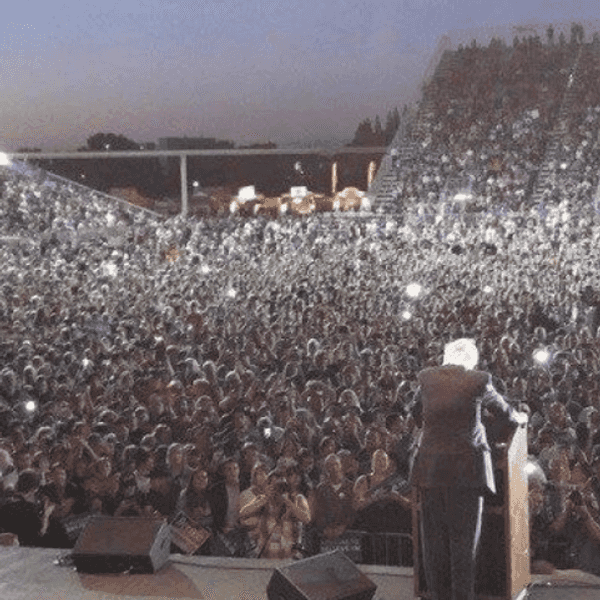
Every single campaign Sanders has ever run has been built on the idea of “coalition politics.” He brings people together — progressives, low-wage workers, college students, faith organizations, LGBTQA groups, unions, immigrants and average Americans — by fighting for policies that benefit the majority of people, not the top one percent. I look around at my neighbors and I see people who are like me, people on the same team whereas before we might as well have lived on different planets. My community of support has grown exponentially and I have faith once more in our potential. When enough voices come together, change happens.
2. He funded his campaign without Super PACs.
Clinton has raised 27 percent of her campaign money through Super PACs, committees that can raise unlimited campaign money from corporations and other private interests under Citizens United. Sanders received 99.99 percent of his funding from individual donations, from people like you and me. I personally donated three times over the course of his bid and I wasn’t alone. By April 1, 2016, Sanders was shattering fundraising records, with $6.5 million individual donations from 2 million people. He didn’t take money from corporate interests, a type of legalized bribery that encourages elected officials to support the interests of their billionaire funders over those of the majority. Instead, Sanders put his belief in publicly-funded elections to practice, proving their feasibility while also maintaining his promise to represent the 99 percent.
3. He raised awareness of our broken democracy.
In addition to Citizens United, Sanders has also started conversations about additional ways in which our democracy is broken.
- Half of all states have a closed primary system, where people who are registered independents can’t vote in the Democratic primary. Sanders won the majority of the independent vote in states with an open primary, but Clinton had the upper-hand in closed primary states. She won 18 out of 25 of these contests, and millions of voters were silenced simply because they opted not to side with a party.
- New York was a state where the closed primary had a huge impact on the outcome, and several of my Independent friends were unable to vote for Sanders. They would have needed to register as Democrats by October 9 of 2015, more than eight months before the primary. They were so upset, they wrote letters to their representatives.
- In some states and localities, long lines at the polls, strict voter ID laws, inconvenient opening hours, among other problems kept people from voting in the primaries.
- 3.9 million people in the US are felons, meaning they can’t vote even after they’ve served their time. This silences black men a disproportionate amount of time.
I, for one, am ready to work toward a democracy where no one is unfairly silenced.
4. He engaged young voters.
In 2008, Obama won 60 percent of the youth vote to Hillary Clinton’s 35 percent, racking up 2.2 million votes from the under 30 crowd. Young people consistently vote less often than their older counterparts, but Sanders encouraged the participation of more young people than any other primary election this millennium. Sanders surpassed Obama’s record even before the primaries were over, winning 71 percent of the youth vote with 2.4 million votes. Youth participation doubled between the 2000 and 2008 primaries, and Sanders helped push that number even higher. While we wait for all the data to come in, it’s safe to tentatively say Bernie Sanders is the most popular primary candidate this century. Remarkably, even when media conglomerates were calling the race over, young people still turned out in force to vote for him.
5. He moved the Democrats further left.
According to a Harvard University study, Sanders’ impact on millennial voters has actually pushed the Democrats closer to a progressive platform. The study cites rapidly changing views of young people since 2014, which indicate a mass movement toward progressive ideals, like those held by Sanders. He has fundamentally changed the way young people think about politics, according to polling director John Della Volpe. Just recently, the Democrats adopted the most progressive party platform ever. If they stick to this agenda, Democrats are going to put a price on carbon, investigate all shootings involving police officers, work toward a $15 minimum wage, end corporate tax loopholes, abolish the death penalty, ban private prisons, expand Social Security, among other things. Oftentimes, change is incremental, but change is possible: that’s something Sanders has taught us. We’re in it for the long haul.
6. He is encouraging other progressives to run for office.
And people are actually listening! Sanders set up a form on his website where people who were interested in running for office could sign up, and 20,000 people from every congressional district in the country put their names down. If that many people actually run for office, a good portion of them will get elected and progressives will be in a great position to start creating the systemic change we need. It may take a while to see the progress, but if we keep this movement going, change will happen one election at a time. Some of Sanders’ supporters have already been elected, like Jane Kleeb, who’s now the state party chairwoman for the Nebraska Democrats. This is only the beginning and the rest of us need to show our support by participating in government on the local level.
Before the start of this presidential election, I never knew so many people shared my views or were willing to stand up to the corruption that trickles down from our government. Through this movement, I have found my people and we’ll still be standing here long after Sanders steps off the stage. Regardless of whose name is going to appear on the Democratic ballot in November, Bernie Sanders has paved the foundation upon which we will collectively build a more just society, no matter how long it takes. And that's exactly what he set out to do.