

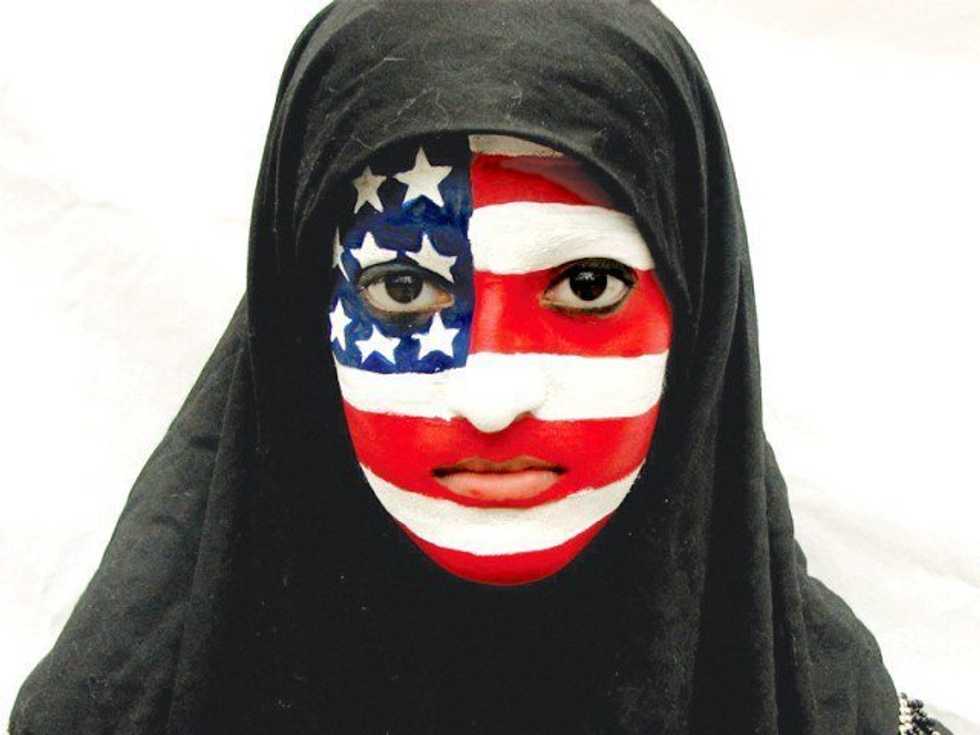
Muslim women who wear the hijab are the most obvious displays of Islam to the Western World. And with the growth of Islamophobia and anti-Islam hate talk in the elections, it’s getting harder and harder for Muslim Hijabis to go through their daily lives undisturbed. Muslims, however, are not the only people of faith who openly display their religion. Many Sikhs wear a traditional turban, Jews wear yamakas, and many Hindu women wear bindis as well.
Look, I’m proud of my religion. Despite the media’s twisted portrayal of it all, Islam to me is a religion of peace and I can identify with many of the teachings. To be fair, I chose to wear the hijab. Yet, it can be exhausting to constantly deal with all the looks, stares and comments. So here’s a couple of reasons why being a visible person of faith can suck sometimes.
1. People think we represent our entire faith.
Yes, I am a Muslim, but I am not Islam. A Muslim is a follower of the religion of Islam, and there are more than six billion of them out there. I do not represent six billion people; I can only represent me. My answers will not always represent the views of six billion individuals, nor should they. So when people ask me “why do Muslim women wear the hijab?”, I can’t give you a full answer. The hijab means something different to every woman and her religious or cultural affiliations with Islam. Now, if you ask me “Why do you wear the hijab?” I will gladly answer (I’ve been working on the response for years).
2. The stares
This is personally one of my biggest pet peeves. I can see you staring. No really, I can. I know, you think you are slick and I haven’t noticed you. However, you think that and so do five other people around you. There’s always a constant watch around me, and noticing other people’s stares can be exhausting. And it’s not just those five people either. It’s those five people, plus the ones while I walk out, and the ones when I enter the next building. Basically, it feels like you are a circus animal and everybody is watching you for a grand old time. So please, stop staring. And if you are looking out of admiration, speak. I put time and effort into my choice of outfits, and I appreciate compliments for my fashion choices.
3. We have to deal with people's outright racism.
The good thing about our outward religious symbols is that it is much easier to spot people’s ignorance. The bad part? The racism. A week or two ago, I walked into a drugstore and one of the ladies who worked there trailed me throughout the entire thing. When I went to check out, she was there too, and when I went to grab my bag from her while I was paying, she deliberately pulled it out of my grasp. And in case you were wondering, why yes, she did have full view of my debit card before she did that.
4. Microaggressions
These are the worst. Microaggressions often leave you wondering if the person in front of is being a racist or you have become too sensitive. The worst part is when you realize he is a racist but it’s too late to say anything about it. Just as an example, one of the most famous microaggression phrases out there is: “You’re pretty for a black girl”. One of the worst ones for me is “So do you wear the hijab because your parents force you to?” Yes, yes they did. Because parents who force the hijab on their daughter will obviously let her move two states away to pursue a degree that will basically take her to study abroad. Yep, real oppressed.
5. We can no longer tell whether you hate us because of our religious beliefs or because of our personalities.
Seriously, with more people catching the disease of racism, it’s harder to tell if someone hates you because of your race/religion/skin color/sexuality etc. What’s harder though for visible people of faith is the fact that one of your identities is out in the open, and sometimes people’s hate is so intense to your faith that they just despise you without reason. Sometimes though (and let’s be real) people can be rude. Even I have days where I’m just a plain out jerk to everybody who crosses my path. So sometimes it’s hard for people like me to tell the difference, and it makes it even harder to know how to deal with you. Because if you hate me for me, that I can understand. Haters are going to hate, and I can move on in my day treating you as an insignificant bug. However, if you hate me because of my faith and other things I cannot control, I just want you to know one thing: you are ridiculous.
Now, many will just lay out the practical argument of simply removing the sign that makes visible people of faith visible. That, however, is quite a ridiculous notion. Not only does it hurt our constitutional values (freedom of religion?), it’s also discriminatory and tells people like me your differences are not welcome in the country you were born in. It’s 2016, we should be moving toward a world where we accept each other’s differences and learn to grow together in order to create a better world. Yes, that might be extremely optimistic, but following the prejudices of the past is no way to step into the future.

















