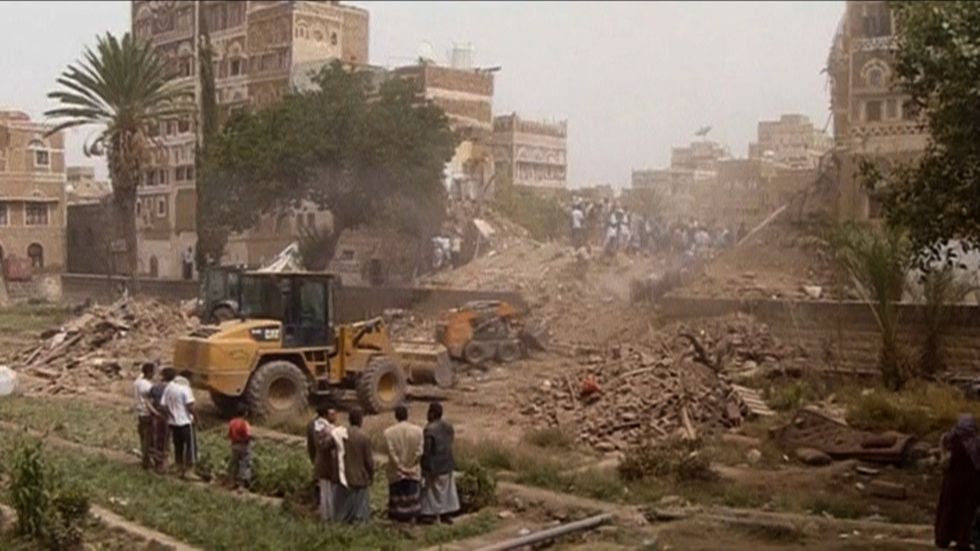
In the current political climate, the conversation on middle eastern peace tactics center around countries like Palestine, or Syria, whose civil war has garnered international focus and become a focal point of President Trump’s foreign policy plan. For years now we have been bombarded by political tough-talk, promising the establishment of a stable government in these countries through a diverse array of proposed, and ultimately unsuccessful, solutions. But while our political mainstream argues over the future of these countries, there are deeply frightening atrocities being committed to a small country on the Arabian Peninsula known as Yemen. Only an hour flight from the horn of Africa, Yemen has been and continues to be one of the poorest countries in the modern Arab World. Despite being some of the most vulnerable and in-need people on earth, the United States and other close allies have been actively complicit in committing vicious war crimes in the area.
To understand the current situation in Yemen, one must first understand that there exists a renewed sense of cultural tension between Sunnis and Shias, two sects of the Muslim Religion. Throughout history, the relationship between these two sects have been rocky at best. While they have had extended periods of peace, there has also been a precedent for Sunni nations oppressing or even outright attacking Shia nations and communities. However, the modern manifestation of this rivalry centers around Sunni-dominated Saudi Arabia and Iran, who underwent a Shia revolution in 1979. Since then, things have only gotten more complicated, as middle eastern countries seemingly begin to take sides in this conflict; and as the US begins to intervene and topple certain Sunni regimes.
The idea of evolution in Yemen finally began to pick up steam in mid-August 2014, before finally breaking out into a full scale civil war in 2015. Inspired by the social media-influenced revolutions in countries like Egypt and Tunisia, the Yemeni people took to their streets, marching on the capital city of Sanaa and demanding that President Abd-Rabbu Mansour Hadi and his government step down. These rebels called themselves the Houthi, named after a 20th century political movement in Sanaa based around tolerance and peace, and eventually ousted President Hadi. The Houthi do not have one defining sect of Islam that the group identifies itself by; there exists a diverse religious background for the Houthis. However, it is important to note that the group does not hold a strong Sunni majority. President Hadi is not only a Sunni, but also has close ties with the Sunni-Extremist led government of Saudi Arabia. Saudi Arabia has a vested interest in keeping Yemen Sunni, and has allowed President Hadi to flee to the Saudi capital, Riyadh, while Saudi-backed government forces retook towns in Yemen from Houthi control.
When retaking towns from Houthi forces, Saudi forces made no qualms about using brutal tactics and taking the lives of innocent civilians. A leaked UN report from early 2016 showed that Saudi-led troops began actively targeting civilians with airstrikes to lower morale, and even took steps to create a famine in some regions. This is where the Stars and Stripes come in. Since early 2015, the United States has been providing material and logistical support to these Saudi forces, as well as providing them with intel on Houthi communities. But, what exactly does that entail? Typically, the US will manufacture the bombs Saudis drop on Houthi medical facilities, or provide Saudi military planes with mid-air refueling so they can make longer bombing runs. The most damning piece of evidence, however, came in the summer of 2016, when footage and images of Saudi forces using the chemical weapon White Phosphorous were traced back and shown to have been sold to Saudi forces by the US. At one point, even the United Nations put Saudi Arabia on a blacklist for its crimes against civilians. Rights groups such as Amnesty International, Oxfam, and Human rights watch have called for investigation into War Crimes committed by Saudi forces on Houthi communities, specifically civilian schools and hospitals (despite these acts being explicitly outlawed by the Geneva convention).
The western powers of the world seem to have clearly put profit over people in the case of Yemen. Since 2009, the US has sold more than $115 billion to the Saudis over the course of 42 different arms sales. The UN estimates that around 10,000 Yemini Civilians have been killed since 2015 alone. For a brief moment in late 2016, however, there was reason to be optimistic that the US would tend to the needs of civilians. In mid-December, the Obama Administration blocked the sale of 16,000 guided munition kits to Saudi Arabia, citing their worry that Saudi forces haven’t been taking adequate steps to avoid unnecessary causalities. But all progress made was quickly squandered when only a few weeks ago, Secretary of State Rex Tillerson approved a measure resuming all arms sales to the Saudis. The future looks bleak innocent Yemini Civilians, as they wonder what will strike first: cluster bombs or famine? We as Americans hold ourselves up to extremely high moral standards. On a micro level, we all have a certain level of empathy for our fellow human. However, once we begin to operate on a macro, multinational scale, we lose all our humanity. With groups like the UN claiming to be dedicated to keeping peace and preventing atrocities, the question arises: Why is nothing being done about Yemen? One has to wonder, if no mainstream politician has the wherewithal to stand up for the people of Yemen, who will?