I’ll never understand society’s unnatural preoccupation with not saying this word. It’s not harmful, it’s not offensive, and believe it or not, it actually describes a pretty significant portion of the world’s population. Say it with me now: B-I-S-E-X-U-A-L.
Was that so hard? No. No, it wasn’t. It’s eight letters, four syllables, and fairly uncomplicated to pronounce. So why won’t people say it? The reason is that society still thinks that bisexuality doesn’t exist, that it’s just a phase, that by saying you’re bisexual it means you’re half straight and half gay and can turn either way depending on the weather.
As its name suggests, bisexuality is the sexual attraction to men and women (or, to two or more genders). It is a very real and very valid sexual orientation, though many people love to discredit it. Bisexual people aren’t straight if they’re dating someone of a different gender, and they aren’t gay if they’re dating someone of the same gender. They are bisexual the whole time.
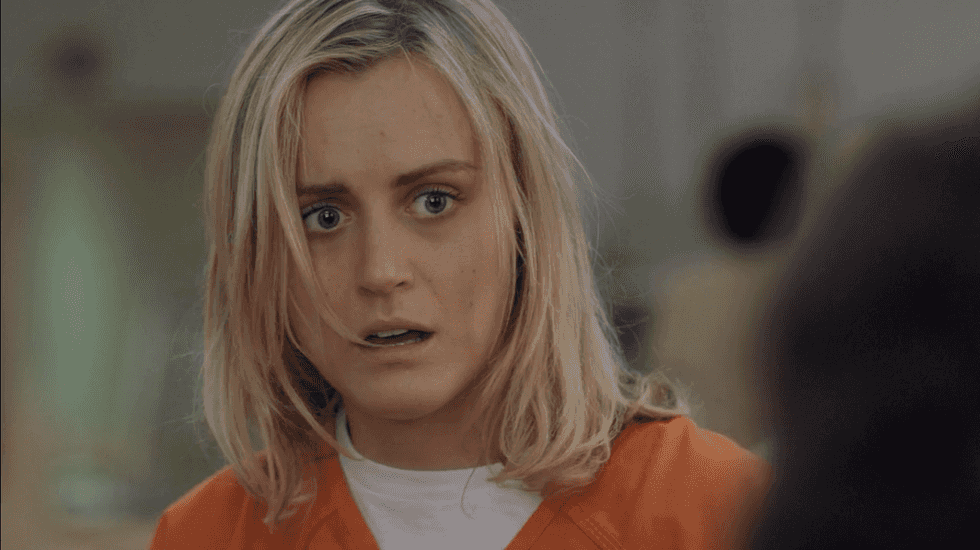
In the first episode of "Orange Is the New Black," when Piper Chapman has to tell her family why she is going to prison, she mentions her then-girlfriend Alex Vause. When asked if she was a lesbian, she reluctantly answers, “… at the time.”
There’s nothing wrong with experimentation, of course. But over the past three seasons, “Orange Is the New Black,” Piper has been in relationships with both men and women, and has experienced sexual attraction to both. So has Lorna Morello, who had an on-again/off-again relationship with Nicky Nichols before marrying a man at the end of the third season. Yet both of these characters are dubbed as either straight or a lesbian, depending on their partners at the time.
Proper representation is important, and too often bisexual characters are either only viewed as sexual objects or as someone going through a rebellious phase. By refusing to call these characters bisexual, or even say the word, further removes it from society’s radar and does not help negate the stereotypes. The stigma will not go away unless we incorporate the word into our vocabulary in the same was that “gay” and “lesbian” has been.
Similarly, The CW drama “The 100” has been critically acclaimed for Clarke Griffin being the network’s first bisexual main character, as well as one of the first bisexual main characters of all network television. However, the show refuses to verbally acknowledge the fact.
Clarke has had both male and female partners, and the writers of the show themselves have confirmed her bisexuality, but they insist that “labels don’t matter post-apocalypse,” which is when their show is based. Hopefully, in the future, labels won’t matter.
But right now, they do. Right now, we live in a society where labels are very important to some people, and there are a lot of people (especially young ones) who are questioning and trying to determine their sexuality. By portraying strong, intelligent, independent characters, who are also bisexual, it can help those who are struggling to come to terms with their identities and also break the negative stigma that surrounds bisexuality.
The point I’m trying to make is that it’s not that hard to acknowledge it. In fact, The CW’s “Crazy Ex-Girlfriend” even included a musical number to describe bisexuality, and it’s fantastic. So it can be done, and it can be done with ease. I hope society will follow suit.