“White fear”, a familiar term by now, has most certainly manifested itself into a distinct American vocabulary -- one that comes alive when issues of race, racism, and identity emerge from the surface. The short phrase is a loaded one, but when condensed is generally used to describe a kind of unfounded White paranoia that is exhibited towards people of color when power and privilege appear to be slipping away from White hands. But what is almost comical about this White fear is that its very presence depends on non-White “victory”. In other words(yes, I said it), this fear depends on a long-awaited justice for people of color. It depends on our successes, on what has been taken away from us, on what we have been denied and are attempting to take back.
The world of American poetry publications is without a doubt a world that lacks a great degree of diversity and inclusion. Though poets of color are making incredible strides when it comes to visibility and inclusion, and though these same poets are producing remarkable and thoughtful work, the gatekeepers of American poetry are not always so “ready” for these voices to be heard. But, before I remark on poet Michael Derrick Hudson’s transgressions and its connection to issues of diversity and racial nepotism in American poetry, I’d like to begin with a poem: Tony Hoagland’s “The Change” to be exact. I know I’m asking a lot, but I ask that you read it before I say anything, really read it. Here it is below:
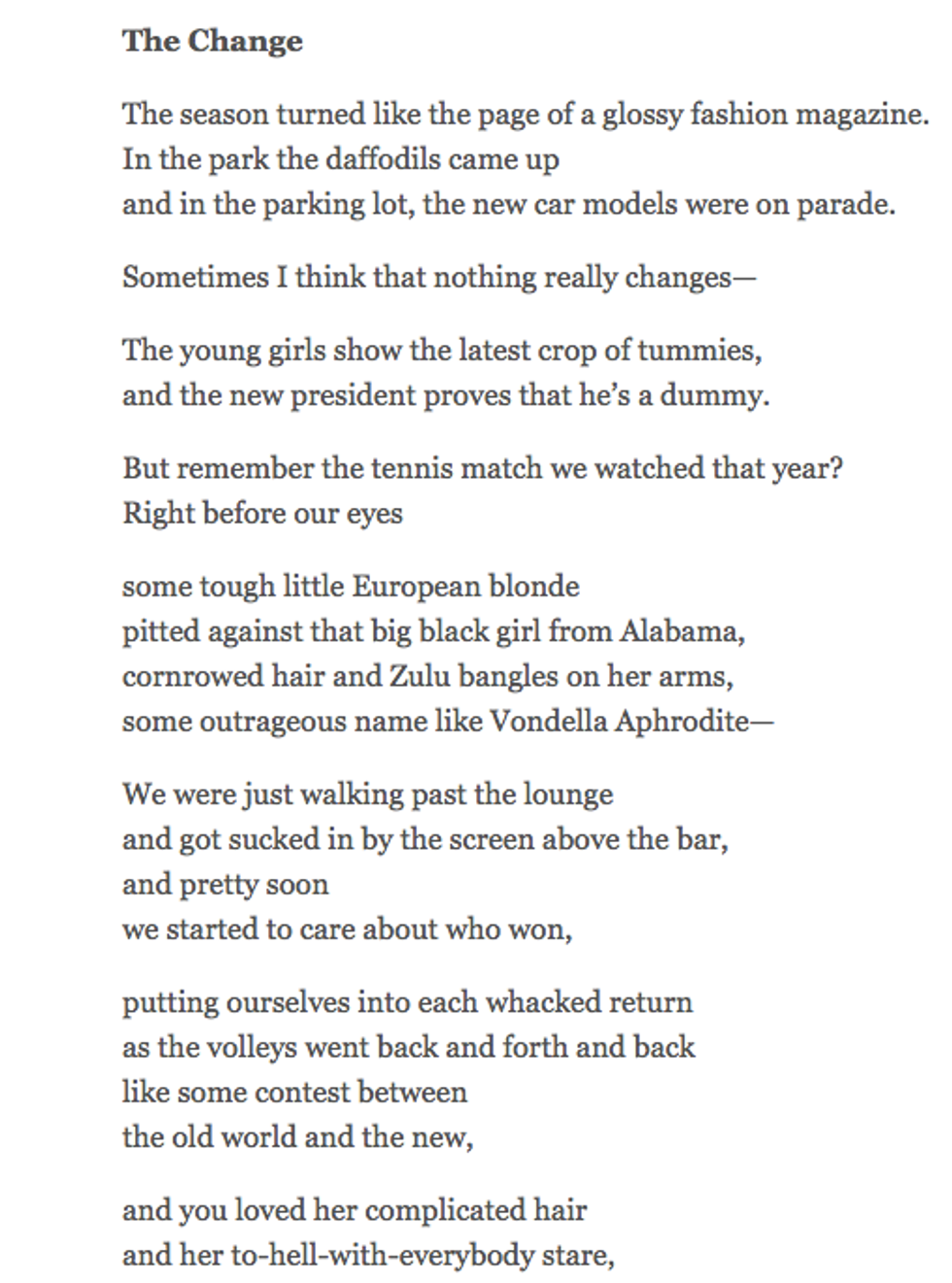
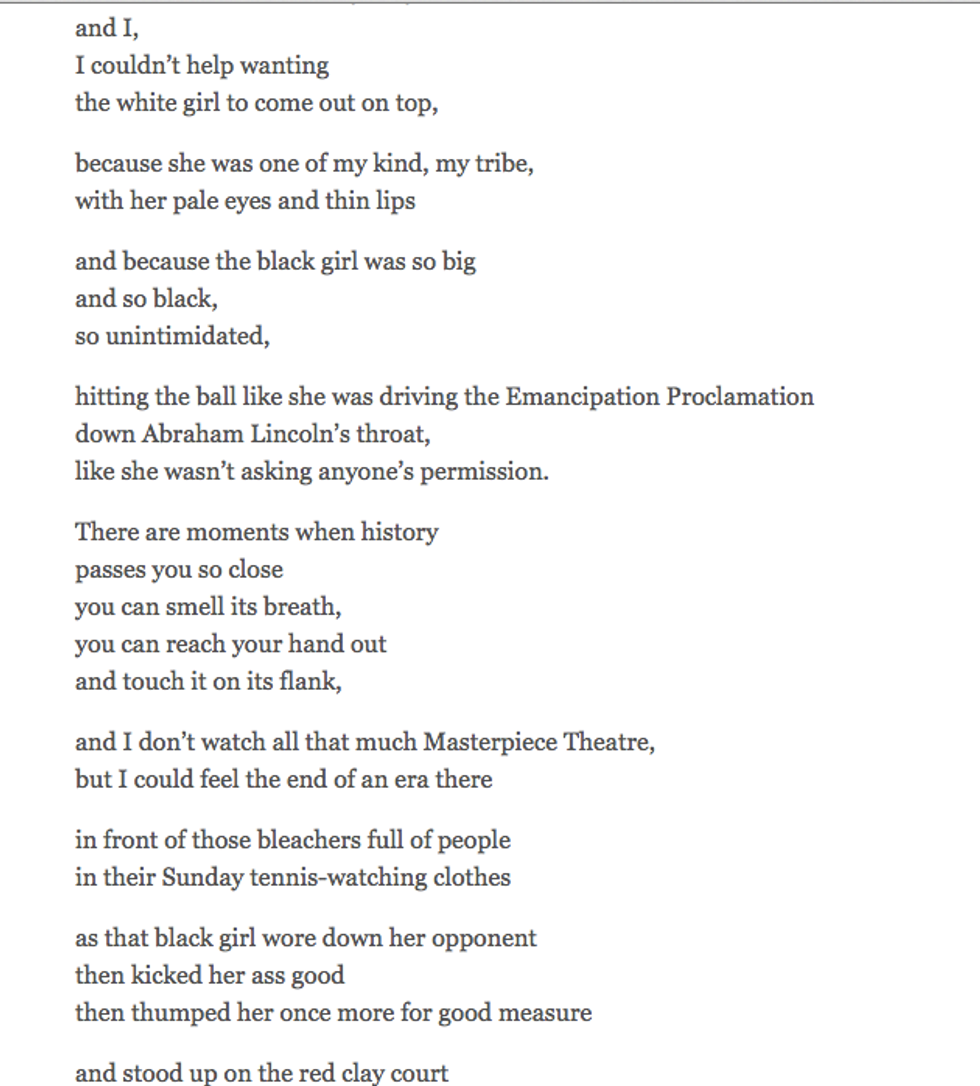
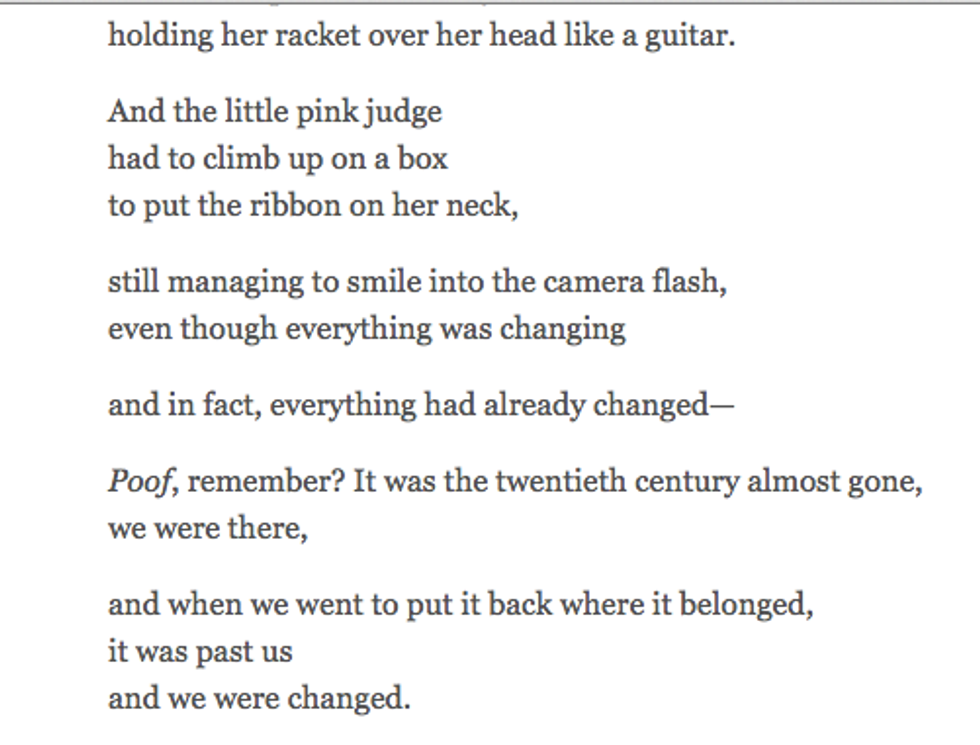
The poem above is complicated for a multitude of reasons. As a result, both the poem and the poet received a lot of backlash and criticism in the poetry community, with many deeming the poem racist. When read aloud in a Stanford poetry seminar last spring, Stanford students became outraged, and many thought the poem should not have been published or tolerated because of its “racist” message. But one thing remains clear: the poem is an uncomfortable one to read. Phrases like “big black girl from Alabama” to describe a Black body would make anyone uneasy. Lines like “some outrageous name like Vondella Aphrodite” and the litany of stereotypes associated with Black women that are used throughout the poem are problematic at best. Also, note the way the speaker’s loyalty to the White tennis player is only fueled by the fact the he, too, is White and so considers her a part of his “kind”, his “tribe, with her pale eyes and thin lips”. There does seem to be something inherently racist about this speaker. But, as a poet and a woman a color, I hesitate to call Hoagland or this poem racist. Here is why:
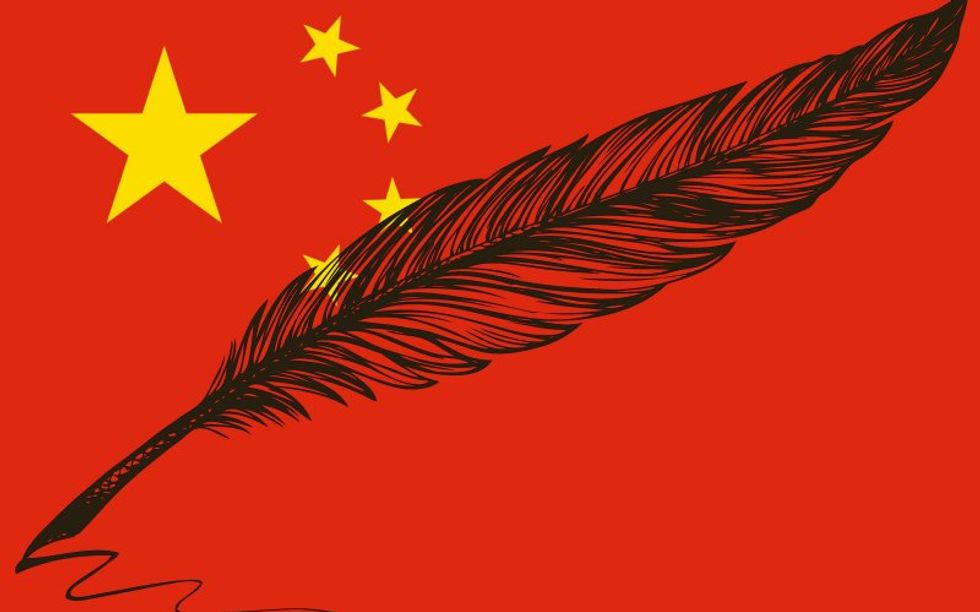
What this poem is really about is “the change”, a transfer of power, a departure from an old era into a new one. To be more specific, an era where White power, as we’ve always known it, is dwindling, is losing its hold. That’s why this poem is more important than ever. What Hoagland has just documented, what he has just given a language to is the very idea of White fear I mentioned earlier. What Hoagland is writing about is this imaginary White world that is disrupted, and even destroyed, when people of color enter through a door they’ve been denied entry for centuries, a world that is destroyed when people of color are visible and stronger than ever. That is what the speaker of the poem fears, and this fear, this White fear, is exactly what the poet Michael Derrick Hudson carried with him when he chose to submit countless poems under his Chinese pseudonym, Yi-Fen Chou.
The Best American Poetry, an annual anthology of verse, included a strange biographical note from a White Indiana poet this year. Michael Derrick Hudson, whose poem was included in The Best American Poetry 2015, writes, “There is a very short answer for my use of a nom de plume: after a poem of mine has been rejected a multitude of times under my real name, I put Yi-Fen’s name on it and send it out again. As a strategy for ‘placing’ poems this has been quite successful ... The poem in question … was rejected under my real name forty times before I sent it out as Yi-Fen Chou (I keep detailed records). As Yi-Fen the poem was rejected nine times before Prairie Schooner took it. If indeed this is one of the best American poems of 2015, it took quite a bit of effort to get it into print, but I’m nothing if not persistent.”
In other words, what Hudson wants to say is that he feels cheated as a White, male poet. Perhaps in his daze of holding on to some antiquated version of America, he truly believes that writers and poets of color are receiving special privileges just for being non-White. He really thinks that poets of color are simply fulfilling diversity quotas, and spaces that should belong to him and his posse of White, male poets. He cannot even imagine the possibility of a poet of color writing a good poem that is deserving of inclusion and publication(I mean, that would be nuts, right??). It remains clear that this kind of thinking is actually quite racist, and completely unfounded. But, as a means of feeding this big, White fear, Hudson decided to take on the identity of an Asian poet as a way to benefit from what he saw as the product of racial bias. Here is why he was wrong:
To begin with, Hudson starts with the assumption that poets of color, specifically Chinese-American poets in this instance, are only getting published because of their identities, and not because of the the merit of their own work. He assumes that they do not have stories worth telling, that they do not have voices that deserve to be included in spaces like The Best American Poetry. He assumes that their histories and their names speak for them, and not the reverse. He assumes that their biographies outweigh their craft as writers and storytellers.
Additionally, Hudson’s use of a Chinese pseudonym is actually one of the most violent acts of appropriation and erasure. By using a Chinese name, he is erasing all the obstacles that poets of colors face when telling these important but oft ignored narratives. In claiming this name as his own, he diminishes the struggle of inclusion that plagues much of the American poetry scene, and he erases his own privilege and shortcomings as a White male, and a poet. To be more specific, he ignores that fact that more White, male poets are being published than any other community out there. Ken Chen, the executive director of the Asian American Writers’ Workshop in New York City paints the picture quite clearly during an interview with NPR: He states, “American literature isn't just an art form — it's a segregated labor market. In New York, where almost 70 percent of New Yorkers are people of color, all but 5 percent of writers reviewed in The New York Times are white. Hudson saw these crumbs and asked why they weren't his.” And these numbers are not only limited to the city of New York. This is a national problem, and for Hudson to not see that is simply outrageous, and incredibly ignorant and hateful on his part.
Poets of color exist. They are writing books. They are getting published. They are winning awards. And they are telling their stories. And to be completely honest, this is frightening news for some people. But this White fear is not restricted to the world of poetry... it is ubiquitous, it is hungry, it is alive and well. When three White men stood outside of my hotel’s lobby earlier this summer holding giant confederate flags, I did not see strength in them. I saw fear. I saw them wanting something that used to belong to them. I saw a black slave-girl running away for freedom. I saw the last day of the Civil War. I didn’t see courage. As Hoagland reminds us “There are moments when history/ passes you so close/ you can smell its breath,/ you can reach your hand out/ and touch it on its flank, // and I don't watch all that much Masterpiece Theatre,/ but I could feel the end of an era there.”
And for a significant portion of White-Americans, this feeling is all too familiar. It is this same hysteria that Hudson bought into, and it is a hysteria that we need to confront and shutdown. As people of color, we’ve all encountered it in some shape or form. Whether it is the boy who claims you only got into [insert university name] because you are Black/Latino/Asian, or the security guard who follows you throughout a store, or even the President of the Russian Tennis Federation who called Serena and Venus Williams “The Williams Brothers” and remarked “it’s scary when you really look at them.” White fear is grounded in the idea that people of color belong in certain spaces, and do not belong in others. It is grounded in insecurity and centuries of racist and oppressive policies aimed at keeping brown and black folks down. It is grounded in a powerful failure of the imagination, and a stubborn resistance against truth and justice.
But yes, that’s right : POOF…it was the twentieth century almost gone. You were there, and when you went to put it back where it belonged, it was past you.