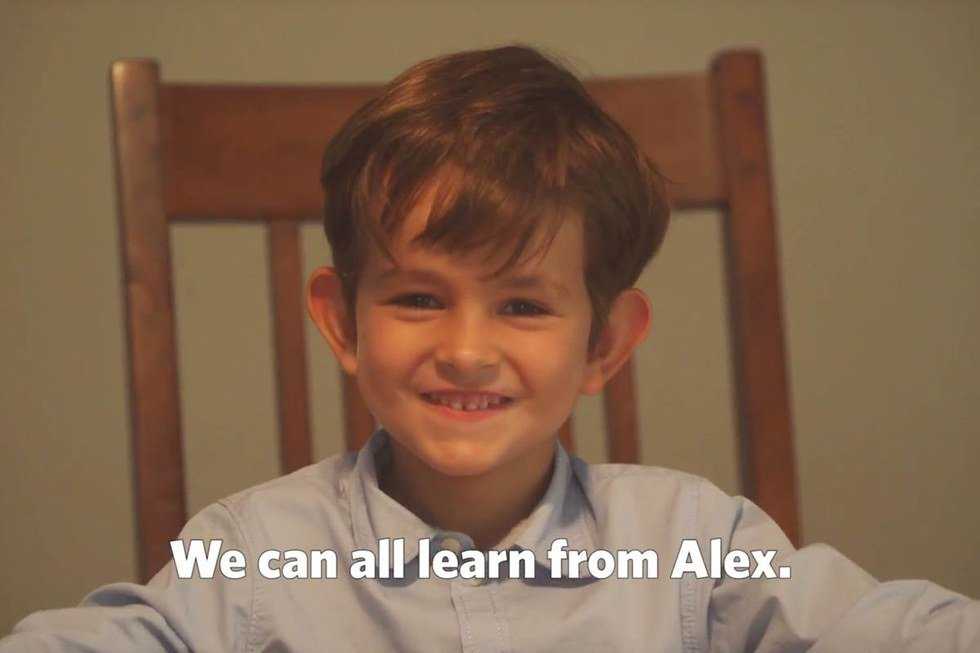
Have you ever watched a video and just gone: How did we get here? How did this 6-year-old see what we didn't? Why are we letting our cynical views of the world get in the way of doing what is right? We live in a country that was built on immigrants who were trying to get away from the tyranny of another country. Why are we denying that same right to others who need help? Because we are afraid? This 6-year-old boy isn't afraid. The world isn't always black and white, it is full of color and this little boy still sees that. Alex simply wants to help another human being by giving him a home and a family. As President Obama said in the video, "He teaches us a lot. The humanity that a young child can display, who hasn't learned to be cynical, or suspicious, or fearful of other people because of where they're from or how they look or how they pray. We can all learn from Alex."
Remember the little boy in the ambulance, and the way your heart bled for him as he was pulled out from under rubble in Aleppo? This 6-year old boy wants to give him a home and a family. He saw the video and didn't think, "Oh, that's awful" or "I can't imagine what that child is going through." Instead he thought, "I want to teach him how to add and subtract. I want to share my toys and teach him how to ride a bike. I want to give him a home, friends and family." Not once did race or religion factor into the child's thoughts about giving him a home. He doesn't care, just as we shouldn't.
Maybe it’s naïve to think that everyone will see this video and think the same things. We should be doing more to help these refugees because if we were in a similar situation and needed help we would ask the same of them. Alex, a 6-year old boy reminds us all that we can't ignore what is going on in Syria. We at least owe refugees a little bit of kindness and a lot of compassion. As Herman Melville once said, “We cannot live only for ourselves. A thousand fibers connect us with our fellow men; and among those fibers, as sympathetic threads, our actions run as causes, and they come back to us as effects.”