

Rape: it's the issue that everyone needs to discuss, but people are too embarrassed to talk about.
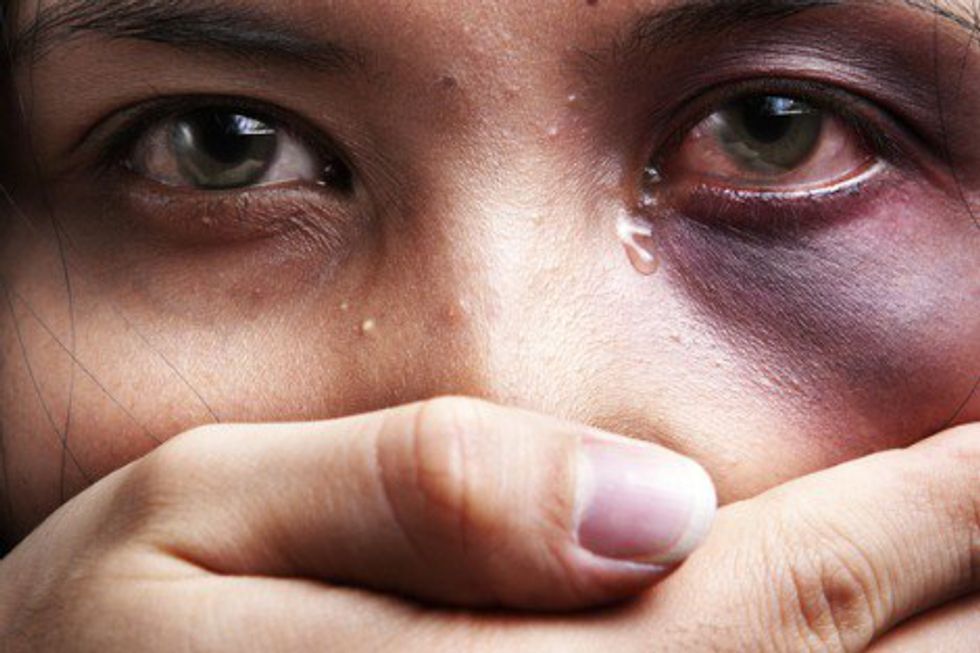
Why is that? There is an enormous shame associated with the word "rape." Victims are frequently too ashamed to speak up and get help. When victims do muster the courage to seek help, they too often are blamed for these horrible life-scarring experiences. What were you wearing? and Were you drinking? are typical questions asked of rape victims. It's ridiculous. Imagine having your house robbed and the police saying, "Well, you shouldn't have left your house if you didn't want it robbed," or "Maybe you shouldn't have bought so many nice things." It doesn't make sense. You wouldn't blame someone for being stolen from, so why would you blame someone for being sexually assaulted?

If someone is wearing sweatpants and a hoodie or a crop top and shorts, it doesn't make a difference. Whether someone is stone-cold sober or drunk, it doesn't make a difference. Regardless of clothing choice, regardless of alcohol abuse or not, the victim is never responsible for their rape. The excuse that a woman's clothing choice provoked a man to rape her is completely unacceptable. Clothing does not equate consent. Being drunk and unable to say no does not equate consent. The sooner we come to terms with these facts and stop blaming victims of sexual assaults, the better off we will all be.

It won't happen to me.
According to a recent study, nearly one in five females in an unnamed university in northern New York were reported victims of "an attempted or completed rape" during their freshman year of college.This does not account for rape victims that were forced into silence—women who felt too ashamed to speak up. It is difficult to find an accurate and trustworthy statistic for women on a national scale due to shame, fear, and hiding of the truth. However, we can assume, based on the upstate New York university statistic that the odds will be quite similar at other universities and colleges as well.
What happens when people do speak up?
Huffington Post recently collected data from approximately 36 universities and colleges. This data revealed that students who were "found responsible for sexual assault were expelled in 30 percent of cases and suspended in 47 percent of cases." This does not account for rape cases that were reported and declared to not have significant evidence. The data collection also found that "at least 17 percent of students received educational sanctions, while 13 percent were placed on probation, sometimes in addition to their other punishments." These are horrifyingly low percentages. Can you imagine being forced to share the same college campus as your rapist? This is a terrifying reality for a great deal of young women attending colleges and universities today.
Sadly, universities and colleges care far more about their reputation than the safety of their students in most cases. No parent would willingly send their child off to a university or college that declared in its acceptance letter that their daughter has approximately a one in five chance of being sexually assaulted during her freshman year. This would drastically decrease the amount of money the university or college made, so sexual assault cases are swept under the rug. Students that come forward are told there is not enough evidence to prove their case. If someone is raped by a college athlete, forget about it. Most universities and colleges are more concerned with even athletics than they are with the safety of their students, females especially.
What can we do?
In order to avoid lawsuits, colleges and universities are responsible for posting their rules, regulations, and number of sexual assault cases online. These numbers are also extremely low and undoubtedly not accurate due to the number of sexual assault cases that are dismissed or never reported at all. If you are curious, I strongly encourage you to seek out this information.
Saint Michael's College recently released their updated yearly security report. In this report, you can find the college's definitions of sexual assault and sexual harassment, which is another important issue pertaining to college campuses which should not be ignored. During the year 2014, there were four total forcible sexual assault cases reported. There were four total forcible fondling cases reported, as well. In 2013, only one forcible sexual assault case was reported . Clearly, these numbers are not what we are are really dealing with.
I called Saint Michael's Public Safety department and was unfortunately unable to receive any additional information at this time. However, I encourage you all to remain aware that the information provided regarding sexual assault on college campuses may not always contain the full truth.
We must speak up and stand up for ourselves and those who might be too afraid to do so for themselves. We must be smart. Know your college/university's statistics and definition of sexual assault. Always ask for help, and never be afraid to contact the police if you feel that what your university is doing is not enough. You are not alone.
National Sexual Assault Hotline (RAINN): 1.800.656.4673
Saint Michael's College Campus Switchboard: 802.654.2000
Saint Michael's College Emergency Number: 802.654.2911