1. Eat less meat

Eating less meat would cut down more than ½ the usage of synthetic nitrogen fertilizer (nitrogren runoff is leading cause of stream and river degradation), would lead to a decrease of 40% of manure, and would cut down your carbon footprint.
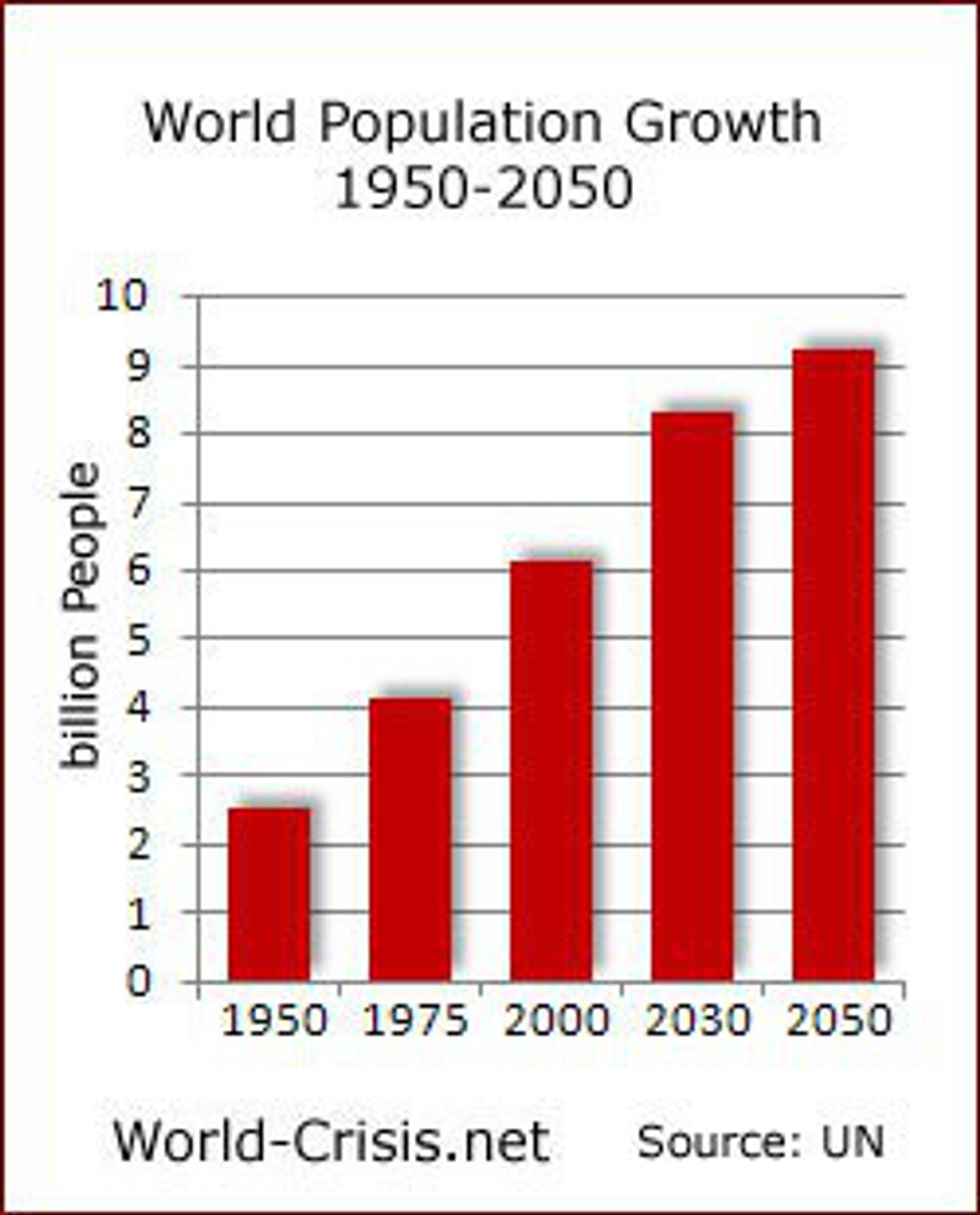
2. Global human population has increased by 50% since 1980 (currently at ~7 billion)
3. The world population is expected to increase by a billion people by 2024
4. There has been an increase of 40% of atmospheric carbon dioxide since the beginning of the Industrial Era
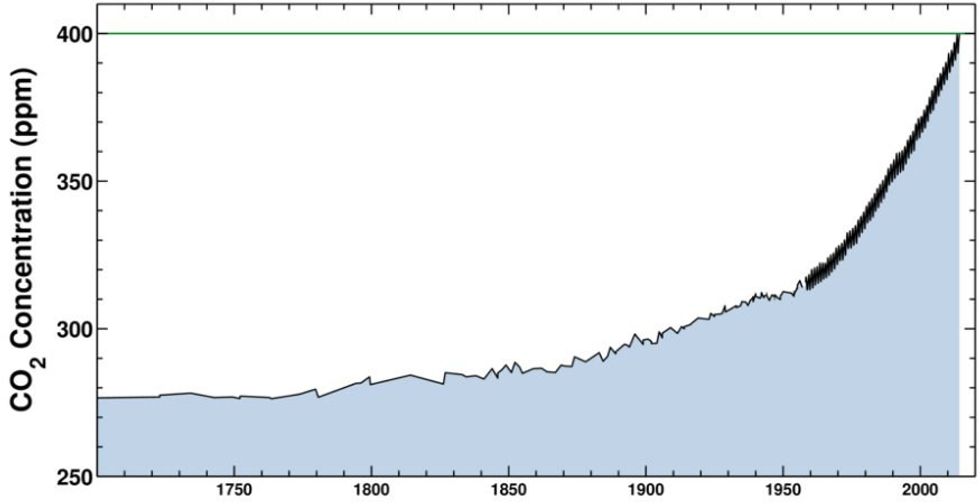
Atmospheric CO2 is currently at 400 ppm.
5. Since the Industrial Era, global temperatures have increased by .85-degrees Celsius
This may seem like a relatively small number, however, scientists predict that a global 2-degree Celsius increase would have catastrophic results on the World.
6. Atmospheric carbon dioxide has a lifetime of 10,000 years
Even if we cut emissions tomorrow, the current levels of CO2 would not decrease for years to come.
7. Methane is >100 times more powerful as a greenhouse gas than CO2
Methane has a 12-year lifetime in atmosphere and causes short-term warming.
8. Thawing of permafrost predicted to release massive amounts of methane in the future
9. By 2030, it is predicted that polar regions will be ice-free during the summer
10. There has been a global sea level rise of 20 cm – projected to rise significantly in the future

11. 90% of all top predator fish are gone from the ocean
12. 70% of all US streams are now degraded and unfit for aquatic life
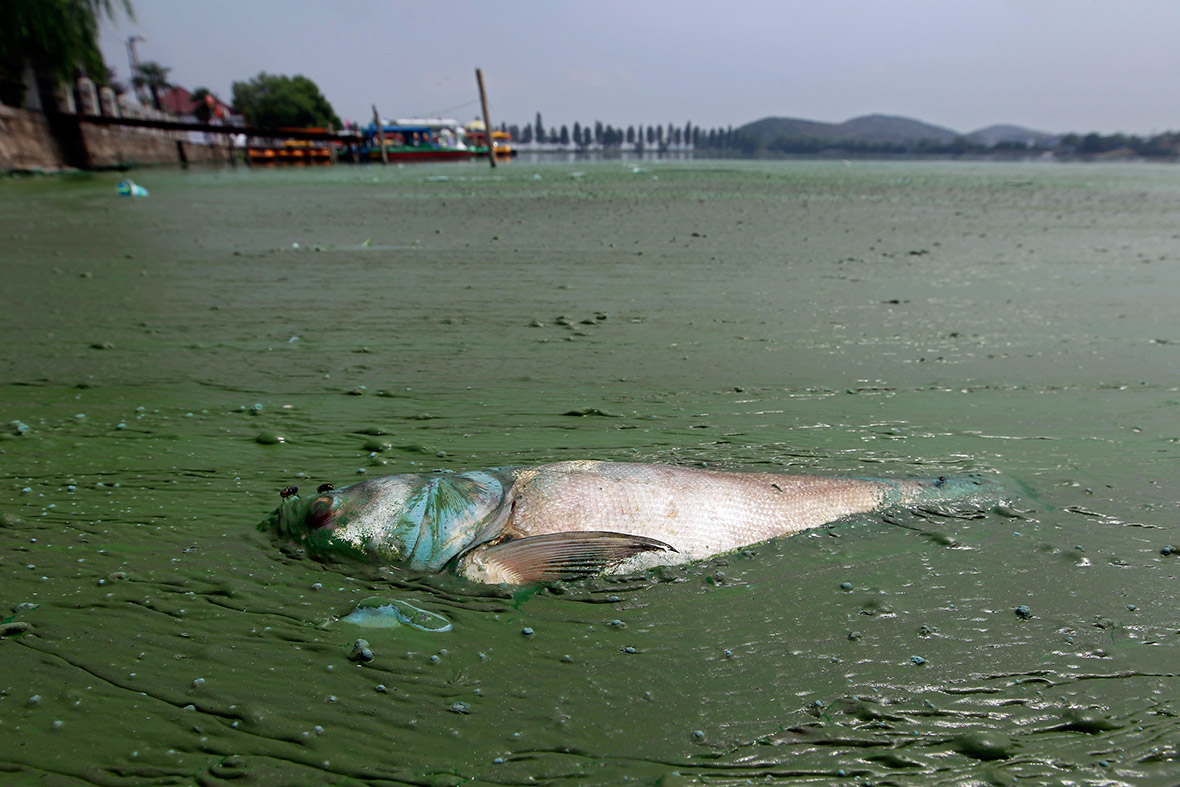
13. The ocean has absorbed 30% of all the carbon dioxide emitted
14. Ocean acidity has increased by 26% as a result of carbon dioxide absorption
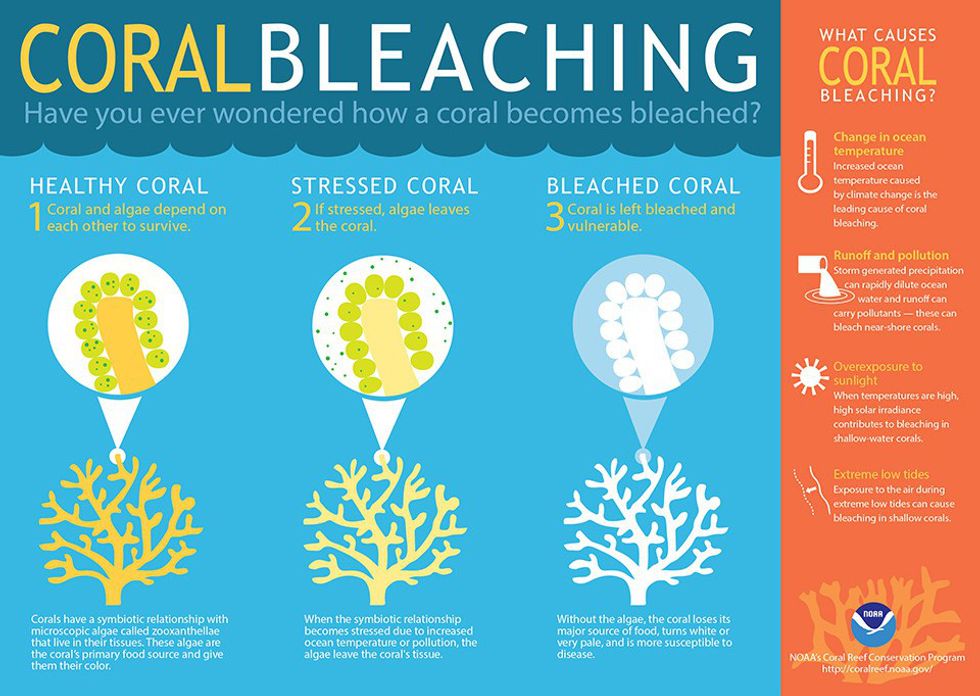
15. 27% of coral reefs are gone due to coral bleaching and disease
16. The ocean has a higher heat capacity than land
This means that the ocean can absorb more heat and not change temperature as fast as land
17. Climate change is expected to increase food security issues
Decline in crop yields as temperature and precipitation rates increase
18. The world currently emits about 50 gigatons of carbon a year
Scientists predict that the Earth can only ‘handle’ 500 gigatons of carbon before surpassing the 2-degree mark of global catastrophe
19. The world has entered it’s sixth mass extinction, and it is largely our fault.

It can be said that current human actions are on the same scale as an asteroid hitting the Earth
20. To quote my professor, the world is in deep s*** if nothing is done to address the current environmental issues caused by greenhouse gases and humans.