Over half of the United States allow the use of the death sentence, but Nebraska, California, and Oklahoma are entering a crucial campaign stage ahead of election day. In those three states, laws or amendments are on the table to change those numbers. In California, voters will be asked to repeal capital punishment altogether, or voters can alternatively vote to speed up the death penalty process in a separate proposition. In Oklahoma, voters will be asked about a possible amendment to the state constitution specifying that the death penalty cannot be considered a cruel or unusual punishment. Finally, Nebraska voters will be asked to either uphold their current ban on capital punishment or repeal the ban and reinstate capital punishment.
The death penalty can, at first glance, appear to be a complicated issue between different laws in each state and the various ways it is enforced. Because of this, it isn't very often that one finds a person with a hard opinion on it one way or the other. You might say, well sure we aren't barbarians who stone people for their crimes, but the current system isn't that inhumane. Well, which system are you talking about? Alternatively, you might find someone who says "I don't agree with the death penalty in most cases, but if I knew he was guilty then I'd be fine with it."
I've wondered for a long time about how to talk to people who aren't familiar with this issue about their opinions. As a Political Science student, knowing things is my job, my ability to explain things is sometimes hindered, simply because I'm constantly reading lengthy reports and laws that some people have never heard of. Despite all of this I think I've come up with the perfect way to explain this with no walls of percentages or drawn out quotations from the law required: Harry Potter.
For anyone who isn't as familiar with the Harry Potter universe, I promise I will try to make things as colloquial as possible so that you can still understand what I'm talking about from more common knowledge or movie trivia.
So, a lot of the arguments I hear in favor of the death penalty start with, "Imagine you had a foolproof way to ensure they were guilty..." and luckily that is more or less what we have in Harry Potter. In the Harry Potter world, there is a truth potion known as "veritaserum" which basically renders the drinker unable to lie until the effects wear off.
Veritaserum is extremely powerful, and there are other very credible ways that one could confirm testimony through magical means in the Harry Potter world, such as Legilimency (essentially a way of mind-reading), or the use of a pensieve (an object which allows viewers to watch someone else's memories). This is the closest thing a defendant in a Wizarding Court could hope for in terms of an ironclad case.
And yet, it is not foolproof, for the same reasons that polygraphs aren't foolproof. Its limitations are largely due to ways in which someone can believe something that isn't true and tell their beliefs without intentionally lying. For instance, if I am color blind, and the sky looks green instead of blue, I could say say "The sky is green" under the effects of veritaserum, and not be lying because I sincerely believe the sky to be blue.
At the same time, legilimency can be counteracted with occlumency (trained ability to resist legilimency), and pensieves, like veritaserum rely on individual perspectives, which are oftentimes laced with bias. If a prosecution brought forth an extremely biased witness against the defense, they could have interpreted the events. Thereby their memories appear to leave no doubt of the defense's guilt, but that is entirely subjective, because to some degree, we all see what we want to see.
But, maybe you could argue that if there was an opportunity to use all three of these to confirm the testimony of every other medium, then it would certainly be a trial to deliver a verdict beyond any doubt whatsoever.
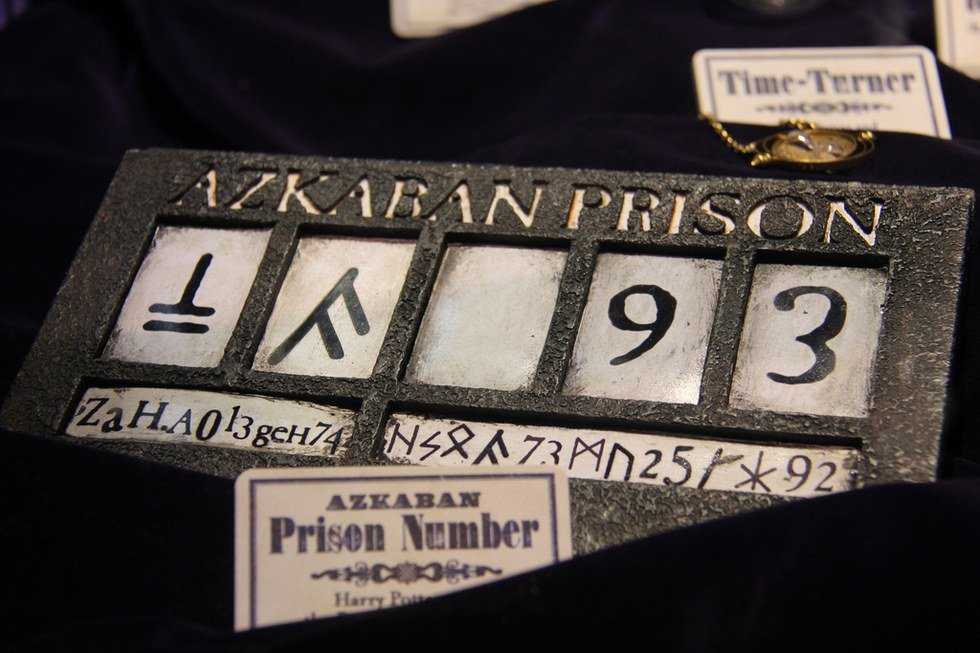
However, even if this was a foolproof way of assuring that someone was guilty, remember that humans run the trials, and humans aren't foolproof, even if magic is. Take Sirius Black, for example. Sirius is Harry's godfather, and he is sent to jail for twelve years for the murders of thirteen people--murders that he did not commit. Eventually he escapes from prison, but he's believed to be extremely dangerous and murderous, so he is sentenced to the Dementor's Kiss, a fate worse than death. He narrowly escapes this fate, and has to live the rest of his life in secret for fear of discovery until he dies trying to protect Harry and his friends two years later.
You would think a punishment this severe would be only allowed in the most severe of circumstances, when not even a shred of evidence could be doubted. However, this is not the case. Despite spending twelve years in prison and being given the harshest sentence possible in the Wizarding World, Sirius Black never even saw a trial. Back when he was first arrested, the authorities were of the opinion that the evidence against him was overwhelming enough for a trial to even be necessary, and so he was sent to prison immediately. He was convicted by the unsubstantiated opinion of a select group in charge of the trials. No jury, no day in court, no chance to defend himself, only judgement.
That's a rather extreme example, but it gets my point across. Even in a world where the impossible is possible, there will always, always, be cases in which innocent parties are sentenced to the harshest extent of the law, if it is allowed. Whether it is the Ministry of Magic or a small town in Oklahoma, or Nebraska, or California, innocent people will eventually die because of the death penalty. A fair trial is the ideal, not the reality, for many. How many Sirius Blacks do you think have slipped in among the nearly 3,000 inmates on death row in the United States?