This week, I had the chance to travel from my family's apartment in Portland to Central Washington in order to celebrate the holidays with my extended family. As my father and I drove home, we ran into a rainstorm that had a little bit of oomph to it, which quickly turned into snow. Unfortunately, my biggest discussion point became my dread that the next several Snapchats I would receive would be of this momentous event.
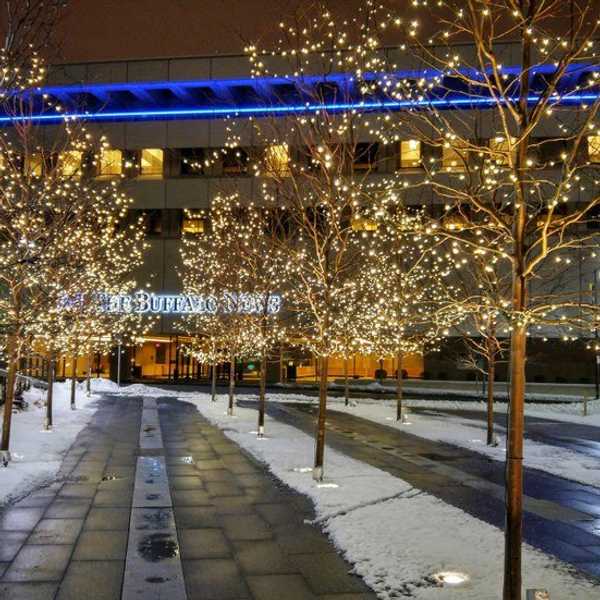
Snow in the Pacific Northwest is a big, big deal. Though I lived in Portland and Seattle for over 18 years before going to college in sunnier climes, I can still count the amount of times I saw snow on the ground on two hands, and the times school was cancelled on one. When the rain we are so used to begins freezing, everyone just seems to stop and marvel for a while. And in the digital age, that means pointing your phone out the nearest window and taking a Snapchat to send all your friends.

The thing is, though, I think of snow differently than I used to. It's hard to say whether I've become a grown-up or a grinch, but when I see snow I can't help but think how much harder the night will be for people who are experiencing homelessness.
I remember my first encounter with snow in Portland; it was right after I moved to the city in the fourth grade. Caught up in the dual forces of social isolation and youthful exuberance, my siblings and I went sledding in the two inches of snow. We must've stayed out there for hours, or at least until the snow became slush, and the slush became too gross to ride our homemade toboggan on. Exhausted, we ran inside to strip off our soaking, freezing jackets, shoes and socks and relax by a roaring fire.

This summer, I had the chance to talk extensively with a person I met walking to work about his experiences in the snow that same winter. The thing is, he didn't have a roaring fire to come home to because he didn't have a home. Though he normally dealt with plain rain just fine, when you begin piling frigid slush a few inches deep you can't help but soak your shoes through. For a couple of weeks, he told me, Seattle was his own damp-socked slice of Hell.

Hearing his story reminded me of a mantra repeated often at Real Change, the street paper I was working for at the time: "Without shelter, people die." The thing is, shelter doesn't just mean a roof and four walls, though that is the ideal solution. It doesn't have to be big, and it doesn't have to be expensive. Shelter can be something as simple as an extra pair of dry socks you carry in the winter time, something you can give to someone who needs it more than you do right now.
I don't mean to say that people are ignorant or cruel when they send Snapchats of their excitement in the snowy landscape, or that this is an issue specifically with the Pacific Northwest. In fact, since you're reading this, you're probably a friend of mine from this general area (who else reads the garbage I write?), and you may even see something from your Snapchat Story in this list (Sorry! It's totally anonymous, I swear.)
All I want people to know is that what beautiful to some may not be to others.