1.) There is a difference between "Hispanic" and "Latino".
Hispanic roughly** translates to people of Spanish-speaking descent. Latino on the other hand, refers to people of Romantic-language-speaking descent within the Americas, which would include Brazilians**.
**There are more specifics and examples, but going into that would mean entering the world of über-political correctness, which is not a world I enjoy or choose to enter in.
2.) We are not all Mexicans.
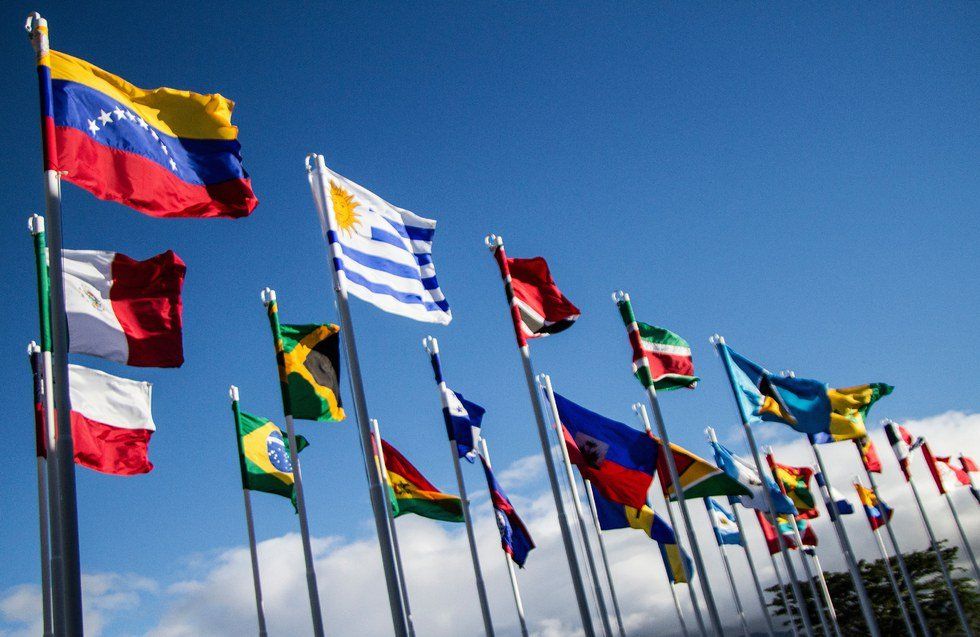
I know this sounds awfully redundant, but stick with me here. If all English speaking expats and immigrants were called Canadian, I'm sure some people would start to get a little angry. There's nothing wrong with being Canadian (a citizenship used solely for the sake of this argument), just like there is nothing wrong with being Mexican. However, there are twenty-one Hispanic and Latino nations and each one of them has their own unique culture, from the food to the colloquialisms and accents, to everything in between. We just want people to acknowledge that we are not all from the same country. If you are curious about where we are from, just ask! While a few may get offended if you ask, "are you Mexican?", (that alone is another issue for a different day), the majority of us will appreciate you asking, instead of assuming.
But! While we are on this heated topic, allow me the chance to stoke the fire...
2.5) Yes, a lot of us have similar features.
(There it is, I said it!) Before the hate starts pouring in, let me explain. We look the way we look based on where in the world our ancestors were born and where they moved since then. Political borders have nothing to do with our appearances, geography does! People from the same area do not magically start look differently themoment someone draws a line through the middle of said area on a map. The majority of our native lands have the same kind of environment, so unless our ancestors moved around a lot, the majority of us will have similar skin tones and facial features.
And as for those of us who do not appear like the majority? Because both the Latino and Hispanic definition have to do with languages and borders, neither are considered races. This is why Hispanics and Latinos range from being native, white, black, Asian, or, most commonly, mixed.
That being said, it still is not okay to say we are all from the same place.
3.) We are not all illegal.
This should go without saying, but unfortunately, I would not be writing this if I didn't think it has yet to sink in. It is simply insulting to assume someone is breaking the law based on their country of birth.
4.) Poorly spoken English does not mean we are stupid, or that we are not trying.
As a former ESL teacher, I know from experience that the older a student is, the greater the difficulty. I have witnessed my own family members being grossly disrespected because they were struggling to communicate fluently, while I, with my "perfect" accent, was left unscathed. The presence of an accent is not directly correlated to one's intelligence. Learning a second language after adolescence is immensely difficult, assuming someone is not trying hard enough to learn English is simply daft.
5.) We are not stealing jobs.
Immigrants are much more likely to work service occupations than native born Americans. Illegal immigrants only make up 5.1% of the US workforce, a percentage that is actually fueling the economy.
6.) No one chooses where they are born.
Isn't it funny, how the rights we are born with are dependent upon the global coordinates of our birthplace? We did not choose where we were born, so we should not be faulted for it. Even "anchor babies" (those born on American soil to illegal immigrants) did not choose where they were born.
7.) Immigration is not a black-and-white topic.
Every personal immigration case is layers and layers of nuances and far from black and white. In theory (theory being the operative word here), immigration law works best by simply determining whether someone is in this country legally or not. Unfortunately, life is not that clear cut, and treating it as so leads to broken families, parent-less children (children who, as mentioned above, had no choice in the location of their birth), etc.
These issues are not limited to illegal immigrants either. For example, I immigrated to the US with my mother and sister in 2001. It took four years to get one of my brother's visa's approved, five years and a lengthy investigation to get our Green Cards, and fourteen years to get my other brother's visa approved. None of that would have been possible without the help of nonprofit organizations and hundreds of hours spent with our immigration lawyer. And despite our doing everything by the book, challenges were countless, even to this day. And still, our experience has been relatively easy compared to that of many other legal immigrants.
8.) Immigration reform is imperative to the future of our country.
No matter what political party you identify with, we can all agree that the current immigration system is in need of changes. We've actually been agreeing on this for quite some time now, yet little has been done. The beauty of America is that we have the power to make those changes! Talk to your state representative and turn immigration reform from a political debate topic to legislative action!
You can find out who your representatives are here.
9.) We love America.
Granted, there will always be some outliers, but don't let anyone fool you, the mass majority of us love America. The day I become an American citizen will be one of the proudest days of my life, and I know I am far from being alone when I say this. If you don't believe me, I suggest going to a naturalization ceremony.