There are hashtags, petitions, and all sorts of news stories about what happened at the Cincinnati Zoo on May 28, 2016. A boy fell into the gorilla enclosure which resulted in the gorilla, Harambe, being killed. The incident has been covered by various media outlets and video of the incident has even been provided. Opinions from every view are being exposed to the public- some say the zookeepers didn't have to the gorilla, some say the boy was not really in harm, some say the boy should have been watched more carefully. But these are all perspectives from zoo attendees and not from someone who has actually worked in a zoo.
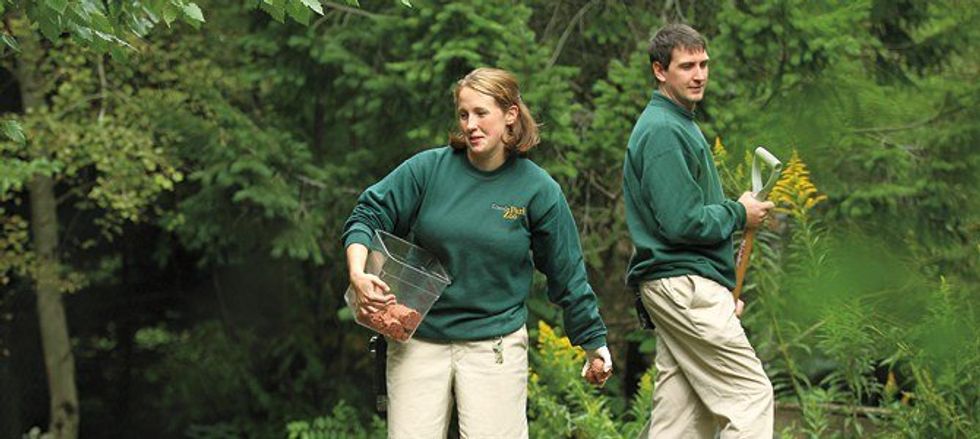
I have interned at two zoos in my life: Folsom Zoo Sanctuary and The Alaska Zoo. Both allowed me to interact with various animals from around the world and learn things about the creatures that I never dreamed of being able to know. But I learned even more than animal facts. I was able to learn just what went into taking care of these animals and what went into running a zoo. Let's just say, there's a whole lot that the public needs to understand when going to these places.
First and foremost, zoos and the zookeepers are not your babysitters. It sounds ridiculous and probably like common knowledge but it's not. There are countless times when I would stumble upon small children with no guardian even near them, or if there was one they weren't paying attention. Most of the time the kids are harmless but there are occasions where they are taunting the animals or attempting to cross barriers because an animal looks fun to pet. In this case, it falls on the parent. Children need to be watched and monitored until they can completely understand that some things should never be done. Sometimes there are even adults that break the rules and cross barriers, such as the incident with Binky the polar bear, which raises the concern that children also follow in their parents' footsteps. As for the keepers, we have a job to do. We are constantly double and triple checking locks as we take care of animals and feed them. In a sense, we are babysitting ourselves while on the job and do not have the time nor patience to monitor all of the children that step into the zoo that day. The main point here: Watch your children.
Secondly, the animals we take care of are our family. We spend time with the animals and get to know their personality, how they act, and even what their favorite treat might be. The public eye might think that these animals are nothing more than creatures that we throw in a cage and occasionally come to feed a couple of times a day. This is an extremely incorrect statement. Those creatures become such a part of our lives that when we aren't at the zoo, we spend time figuring out what treats they might like or what form of enrichment we should make for them the next day. Most of the time we care more about taking care of our animals than we do cleaning up spilled ice cream or fetching a phone someone dropped in an enclosure. Our focus is our animals, our family. Not the people.
And finally, when we have to put down an animal because of the poor responsibility of people, it breaks our hearts. It is not an easy decision to make and is only made if absolutely necessary. There is a part of us that dies along with our animal, especially when it must be done so because of people attending the zoo are failing to follow rules.
Being a zookeeper brings me such joy and, boy, do I miss it. But as fun as the job can be, the public can be such pressure on us and our animals. Just remember that as zookeepers, our job is to take care of these marvelous creatures so that you may have the chance to see them and marvel at their beauty. It is your job to obey the posted signs, to watch your children (should you have any), and enjoy your time at the zoo in a safe manner. Let us do our job, and you do your job.