As you might have seen from the news, the Iowa caucuses are the latest buzz. But what is a caucus? What is the importance of it? And why should Iowa, of all places, be allowed to potentially determine who the Presidential primary winners are for the nomination of each party?
On a basic level, at caucus, voters gather and discuss who should be the Party's nominee for the Presidential ticket. In Iowa, GOP caucuses include people giving speeches and then everyone casting a private vote. The Democratic caucus is a little bit weirder than that, in which voters must publicly declare who they are voting for by physically going to a corner of a room. From there, you can attempt to persuade other people from their corners to come join you. The lack of anonymity in this case, to some, seems unfair. If you want to vote for a less popular candidate, the idea of casting your vote publicly in front of your teachers, your boss, your bus driver, and your colleagues may dissuade you.
The Iowa caucuses often get low voter turnouts when compared to the general election, most likely because it is a lot of work. It will take about an hour of your time, whereas voting in a private booth takes a matter of seconds. It takes place in the nighttime, which is inconvenient for families, or people who are working inflexible schedules. Absentee votes are not allowed, which bars many college students native to Iowa from voting. Thus, the people who attend the Iowa caucus tend to be wealthier and older.
It seems a lot of importance is put on Iowa. Candidates have been there for weeks, giving speeches, eating at local diners, and taking selfies with their hopeful constituents. But Iowa only has on percent of the total delegates needed for a Party nomination, so why do they matter?
Maybe because every candidate but one in the past 40 years who has won Iowa and New Hampshire, has gone on to win their party's nomination. Iowa is often described as having the Rube Goldberg effect -- once you pick up momentum and people start believing you can win, you do. So it does make sense that Iowa is suddenly all the candidates' favorite state.
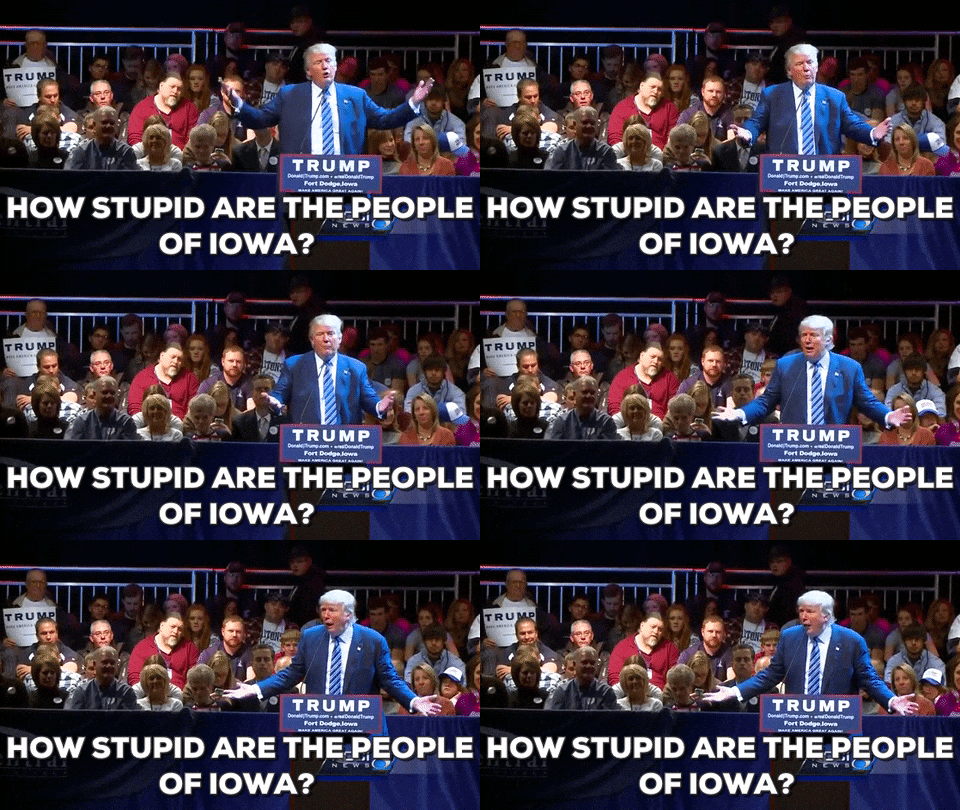
Or maybe not.
But why is Iowa first? Mainly, because Iowa said so. It's actually written into the Code of Iowa that their caucus must be held at least eight days earlier than the scheduled date for any other primary or caucus for the presidential nominating process.
It doesn't hurt, either, that so far $6.5 million have been poured into the Iowa TV market from the candidates.
People who are pushing to end the caucus, and have all states have their primaries on the same day often make the argument that Iowa is not representative of the whole country. While their median age and income reflect that of the US average, Iowa has less people of color, as does New Hampshire. In theory, coming together as a community to debate, discuss and elect a representative is one of the most democratic ideas ever put forth. In practice, the caucus means a few people in a Midwestern state get a disproportionate say in who will win the election.
There's a story about the Iowa caucuses from the Kennedy-Carter election that goes like this. There were 50 people on one side of the room for Kennedy, and 50 people on the other side for Carter. A lone girl stood in the middle, undecided about her vote, while people from both sides tried to convince her to join their party. Finally, her father stood up and shouted, if you don't come here and stand with Carter, you are grounded for life. And Carter went on to win that district.