If there’s one thing that Republican candidates have used without fail to save themselves in light of criticism during debates, it’s the condemnation of political correctness. When policies seemed skewed, or attitudes prejudiced, candidates have thrown up their hands in victimized exasperation, exclaiming the persecution levied against them by the language policing left wing.
The right stands indignant in response to criticism regarding stances that are deemed prejudiced, towards women, Muslims or black people. They claim that their speech is being censored, that the truths they aim to seek plainly are being suppressed. These candidates are hypocritical, ironically decrying the regulation of ideas and words while their political base has always been more concerned with censorship than any other group.
Religious conservatives have historically led the charge in censorship, FCC and MPAA content guidelines are obvious testaments to that fact. The frustration and anger of the right is finally being held accountable for their policies and refusal to progress. Discussions of racial and gender equality, as well as homosexuality, have long suffered popular ignorance as a result of Conservative censorship in the media and art.
The FCC states that “obscene material is not protected by the First Amendment,” curiously suspending a freedom so beloved. Of course, obscenity seems subjective, but the guidelines have an apparently specific kind of virtuosity in mind, giving three qualifications. The first: “an average person…must find that the material, as a whole, appeals to the prurient interest.” For the layman, the material is considered obscene if it encourages sexual interest in an excessive way. The second quality: “The material must depict or describe, in a patently offensive way, sexual conduct.” What qualifies as patently offensive is difficult to say, but the discretion is at the mercy of the head of the FCC.
The third quality: “The material taken as a whole must lack serious literary, artistic, political, or scientific value.” This is where censorship becomes dangerous, as artistic value is the most subjective judgment possible. Allen Ginsburg, one of the most important figures in the Beat Generation, faces an obscenity trial in California over his epic poem, "Howl." The trial, though not by the FCC, demonstrated that in modern times, art still has to justify its existence to those who do not agree with it.
What the right has deemed threatening to the interests that sustain its power, they have always historically labeled offensive. While admonishing the protests over systemic racism, saying that they aimed to suppress the rights of white people, Conservatives have simultaneously gone to great lengths to impede minorities’ ability to vote. While saying that proponents of gay marriage sought to force homosexuality on everyone, the right has actively attempted to rob people the right to refuse heteronormativity. While claiming to be censored, they have banned depictions of homosexuality in media for fear of corrupting impressionable youth.
The PC movement is an imperfect one, that label itself carries a pejorative connotation, but it is not a united or organized front. "PC" is the label put upon any challenge to prejudiced speech. To attack "PC" culture is not a heroic effort, it is one that underscores the values of those that earnest discussions would undo.
When these candidates make a show of fighting against the "PC police," they are not assuming the mantle of free speech. Speech that threatens the right of others to feel safe and secure is not justified by the Constitution. The decision to say that an entire country is made of rapists or a religion made of terrorists, is not valiant. There are no ideas censored when people are offended by their own dehumanization, their sensitivity does not quell a discussion that seeks fairness.
Statements that broadly categorize groups of people should be admonished not because they encroach on some denied truth, but because they aim at an impending discussions. Prejudiced speech is what is censoring, it is using language to oppress others and to reduce complicated issues to easy slogans. What Conservative candidates are concerned with is not the First Amendment, but a growing awareness of ethnocentricity and misogyny that threatens their political power — they fear the disarmament of prejudiced language that has protected them.
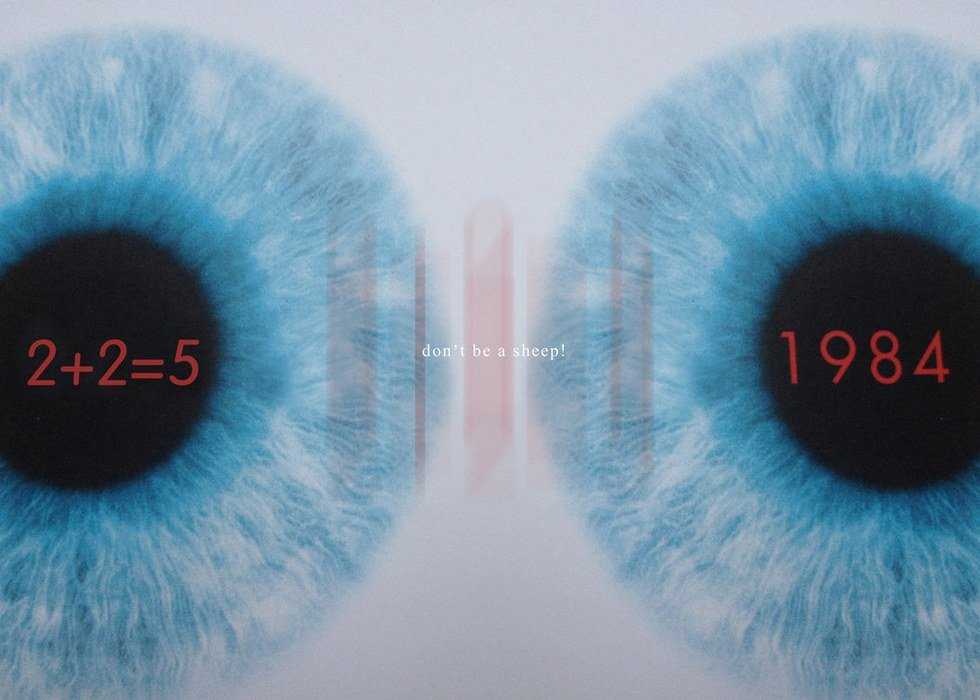
Often in these discussions of censorship, Conservative candidates decry the rise of Orwellian government by leftist word-policing. One must imagine that they are willfully forgetting — or perhaps have not read the book at all — that in "1984," Big Brother was very much concerned with suppressing sexuality — a staple of conservatism, not liberalism.
Big Brother’s editing of the past, the sustaining of a military-industrial complex, reduction of political discussions to catchy slogans, and rigidly distinct class system, are all paralleled by conservative policies to a disturbingly explicit degree. It’s almost absurdly ironic, the way in which the right quotes Orwell in reference to the left, while laying down the political framework for the dystopian world themselves — the hypocrisy of their outrage over political correctness is no different in that respect.