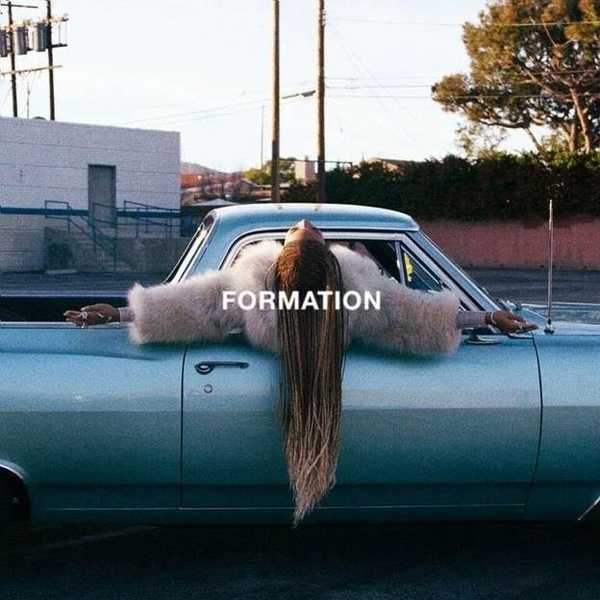
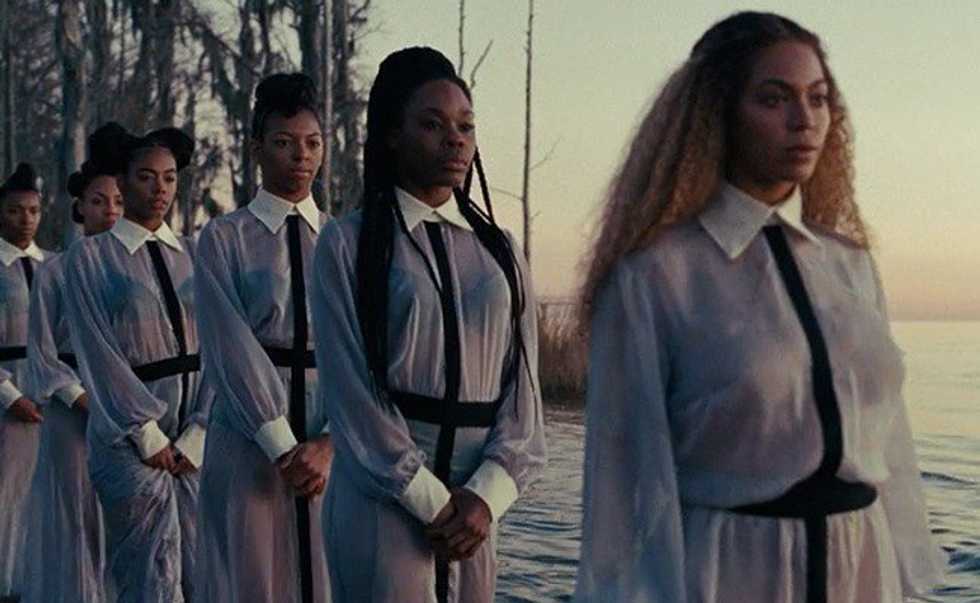
"Today I regret the night I put that ring on," sang the epic album-dropper in her song Sorry. And with these lyrics, Beyonce took me back to the experiences of my mother, my aunts, my cousins, and close friends. All female. All black. Some Christian. Mostly religious.
In the African American community there are a lot of single mothers. Of course, this may be true for other races, but in my race this statistic is the most notorious, the most unfortunate. In fact, ACT Rochester reports that the residents of African American families lead in single parenthood, and this is often due to infidelity. Infidelity is rampant in my community. There are so many colored women that I know or I've heard of who have been on the receiving end of adultery. So when Beyonce unleashed her heart in Lemonade, songfully documenting the alleged extramarital affair between her rapper spouse and another woman, many ladies of my race identified with the album, claiming certain songs as their anthems and declaring the songstress the relayer of their woes.
This was certainly true for me at least. Beyonce sung of very identifiable and, for many, relatable emotions. She recorded the suspicion one has when they suspect their significant other of cheating, then the subsequent denial of such thoughts. She recorded the anger, inserting Malcolm X's belief that the most unprotected women in America were the black women. She followed this understandable anger with apathy, then emptiness, then accountability. Finally, she concluded these roller coaster emotions with reformation, forgiveness, resurrection, hope, and redemption.
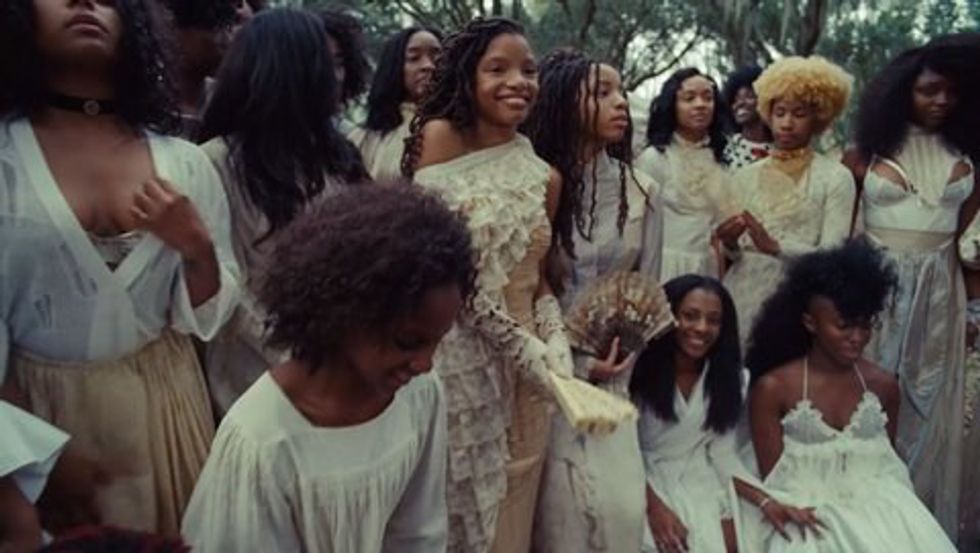
When I finished her visual album, I felt as if she told the songs of every African American woman, some of whom may not have known infidelity personally and others who have known it too closely. So upon reading an article published by Christian media The Blaze, which goes on to attack Beyonce's album, I could not help but feel as if my entire race was being attacked and not just our representative. It seemed like our woes were being undermined, shoved aside for lack of understanding.
To summarize my comprehension of the article, which goes into questioning the empowerment of Beyonce over young girls, writer Matt Walsh, who seems as white as it could get with his plain tee and Newsboy cap, criticizes the naming of the album, calling it an "overused cliche." Now this criticism seems purely spiteful. Plus, art that has originated from Christian producers could use name facelifts if you will for their cliched-ness, i.e Facing the Giants. Perhaps Mr. Walsh overlooked the fact that this quote unquote cliched album title means something to the artist, for Beyonce recites a spoken word detailing how her grandmother, the alchemist, passed on the healing recipe of lemonade to her daughter, who then passed it onto hers. This criticism alone made me feel offended for the women of my race, but I did not dwell on it.
Walsh continues. He acknowledges that because of Beyonce's race (and dancing abilities), this renders her the pinnacle of feminist iconography. After a moment of hesitation, I found this to be true. There are not many black female celebrities as powerful as Beyonce when it comes to bringing out your inner Sasha Fierce. So with this point I agreed, feeling like a betrayer to my skin. However, as I continued to read Walsh's insight, I found that I agreed with more and more of his points, which worried me.
While most of Walsh's article seems to be a personal lament against something he was set to chide from the start, he is not entirely wrong. While some of his article seems manipulated to support his views, his views also aren't entirely wrong. Beyonce does not empower your girls with a closer examination of her lyrics. Should I go as far as to say she's destroying your daughters? Well, not she alone, for discretion lies within the parents. But I think we African American women have overlooked the effect of her words in our community in order to claim something that seems to represent our struggles and woes.
But what of the black female Christian?
Now, I am in no place to question someone who claims to follow Christ because that's something akin to the speck and the plank. However, Beyonce seems more of the religious type of woman than a true believer. Some of her song lyrics serve as evidence to this, in which she makes true love with another man as comparable to the power of Christ (i.e Love Drought's "you and me could move a mountain"). Her Southern Gothic account of her relationship problems is most certainly religious as well, and by religious I mean it praises God in one verse then uses expletives in many others. So since she's most likely not a true believer, Beyonce should not be held to the same standards of a Christian artist. She is not obligated to convey God's message, which is why discretion lies with the believing parents when revealing her songs to their daughters.
So should Beyonce be the person in whom I, like many African American women, find my identity?
While her story in Lemonade is easily identifiable, she should not be the end-all-be-all of my identity. My identity is in Christ, which frees me of any obligation to man. Sometimes I think we as humanity rely so much on what our race has to say on a certain issue or what our race quickly identifies with that we forget the freeing power of placing all of our duties and actions to God. We shroud our eyes to the truth in order to agree with what our race interjects.
So while Beyonce makes a compelling tale of a black woman's strife, I am not obligated to proclaim it as my anthem. I don't need to be offended by criticisms against her work for they aren't, or most of them at least, going to be attacks against my race but against her abilities as a songstress. In the end, my identity is in Christ, which is something worth repeating, like a hook in a pop song.