
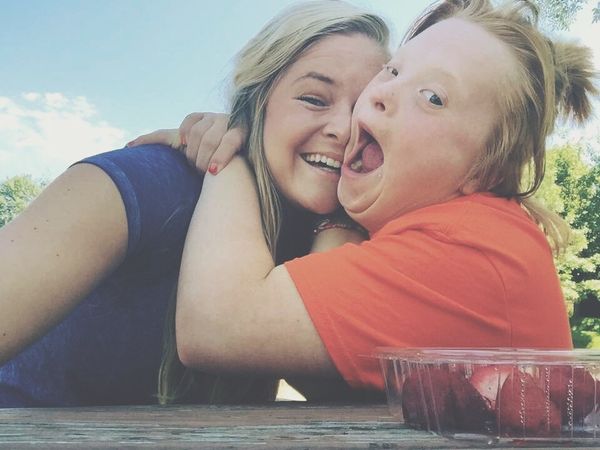
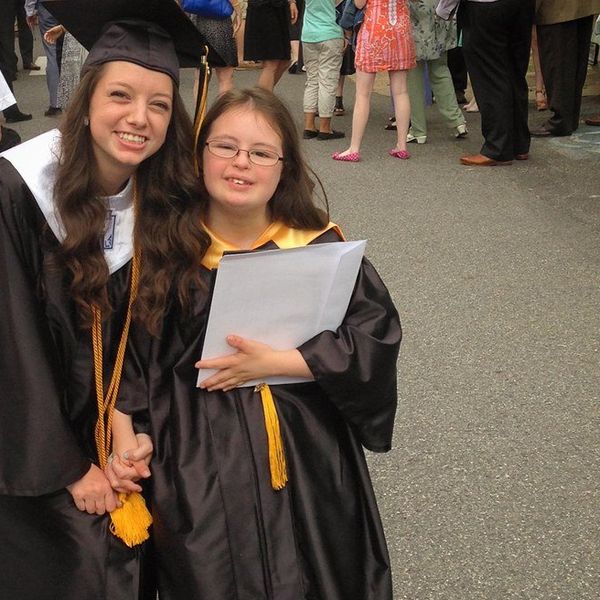

If you know anything about me, you’ll probably know three things, at least. I love One Direction shamelessly, my favorite food is any kind of breakfast food, and I work at a summer camp for neuro-divergent kids and adults, some with physical disabilities as well. The add-on that you should also probably know that goes along with that fact is that I love every single camper I have, fiercely and ferociously.
So, predictably, I pretty vocally hate the use of the r-word.
Earlier this month was the National Awareness Day for eliminating the use of the r-word. On that day, the campaign that runs this day, the “Spread the Word to End the Word” campaign, shared a post on their website that went pretty viral. The post was an open letter from John Franklin Stephens, a Special Olympics athlete with Down Syndrome to Ann Coulter, who had used the word as an insult on Twitter. The article is an amazing read, but here I’d like to talk a little more specifically about the answer to the question that baffles me most: when people ask me why I care so much if it doesn’t affect me?
I’ve found that the same people who still use the r-word, or many other slurs, in conversation, are the same kind of people who won’t put out a cigarette if it bothers a non-smoker in the group. As well as, someone who won’t turn closed captions on the TV for their friends who can’t hear as well, or who wouldn't hold the door for strangers. They’re the same people who claim “the world needs to stop being so sensitive and PC”. What I’ve discovered they really mean by this is “the world needs to stop asking me to be considerate because I don’t want to be."
Imagine I’m in a group, responding to the story of someone’s day. If I use the phrase “Wow, dude, that's so [r-word]”, it isn’t very descriptive. You don’t know what connotation I’m trying to put on the phrase, which meaning of the word I’m choosing to use, or what I’m feeling about whatever happened in the first place. It’s a lazy word choice, but let’s keep going. Something else I don’t know when I use the [r-word] is who in that group might be offended by it. By saying it in the first place, I’m taking a conscious choice to potentially upset someone I’m talking to.
So why do I do it? Do I stop when someone tells me it upsets them, or do I keep going? You’d be surprised how many people keep going, sometimes spitefully. It’s usually followed by a claim of freedom of speech, or saying how language evolved and it isn’t a slur anymore. There are arguments for each other those points, and there are also counterarguments, but this is a fight I’m tired of having because no matter what way you try and spin it, it just doesn’t make sense to me.
The r-word has been a slur since around the 1400s, and since then, it has only been used to hurt and exclude people from what is considered “normal” society. It helped create a verbal exclusion to the literal exclusion happening when people with different handicaps were shuttled off to hospitals that acted more like prisons, and it left a painful wound on a huge community of people. Unlike the LGBT community taking back the slur “queer” and making it an umbrella safe term (although this also has its own politics and semantics), like many other marginalized groups have done with slurs, the r-word remains incredibly hurtful to this day. It is a word that really only exists to marginalize, exclude and insult.
I’ve seen the effect this word can have on many people before. I've had campers crying on my lap because some kids on the playground called them names, just for playing and having fun. I knew friends in high school that dealt with hearing it day in and day out, directed at them for doing nothing but exist. Even if I hadn’t seen it up close and personal, just taking the word of people who say it has hurt them would be enough for me. One of my favorite lines from Louis C.K.’s comedy show is, “if someone tells you that you hurt them, you don’t get to decide that you didn’t." I, personally, will never understand making the conscious choice to potentially hurt someone specifically (and contribute to something that hurts many people even indirectly), just because the slight effort of picking a different word is too much to go through. I won’t ever understand holding your own stubbornness above not hurting another person needlessly.
This article isn’t meant to make anyone feel bad, but offer people a different perspective. Next time, if you’re around someone who tells you they don’t like the r-word, understand that they aren’t trying to make your life difficult just because they spite you, or because they’re too sensitive and can’t take a joke. They’re telling you that something is hurting them, and from then on, the ball is in your court. It’s your choice to continue to hurt someone, or you can pick a different word and make someone else’s day just a little less difficult.
Maybe thinking of it that way will change your mind.

















