
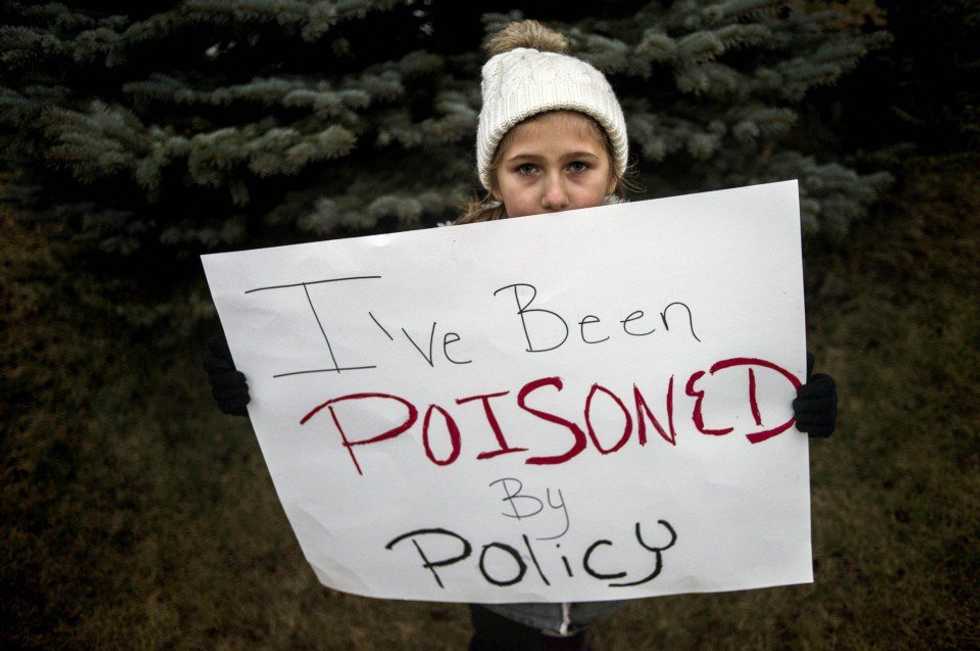
We all know about Flint. It's been plastered all over the media. Governor Snyder, whose criminal actions resulted in lethal levels of lead in the water, willfully poisoned his own people. Pictures of the toxic water went viral, the affected began to speak up, and protests broke out. Our news screens were filled with accounts of the failure of the city government: one mother spoke of being ignored by officials although her daughter lost chunks of hair in the shower, doctors in the city were stonewalled by government officials after detecting raised levels of lead in children's bloodstreams. Flint was painted as a city traumatized by crime and poverty, a morass of problems. We all know the reasons behind the raised levels of lead: the GOP governor switched the water source from the Great Lakes to Flint River.
But this is only one part of a national problem.
I found it all too easy to distance myself from Flint. I watched the story unfold with interest, but water is a part of my life that was always there and always safe. But Flint is only the tip of the iceberg: the problems the city faces are not unique. They're occurring all over the country.
Levels of lead in the water comparable, and often worse than Flint have been detected all over New Jersey and within Essex County.
The problem with water in many places begins with the infrastructure. Flint represents a worst case scenario of what happens if our infrastructure fails, but things aren't rosy right now, with the American Society of Civil Engineers rating drinking water and wastewater a solid D and water infrastructure earning worse. Our water barely passes regulation. And in cash-strapped cities, oftentimes water infrastructure seems like a service that can afford to be cut. But things may become still worse: climate change will only exacerbate the stress already placed on an outdated, aging water system. Flint is only the tip of the iceberg and we are on the edge of a calamity that is beginning to manifest itself.
In Newark, where officials found raised levels of lead in the public school water, parents are being told to tell their kids why they can't drink water in schools and how to recognize the signs of lead poisoning. This is not an isolated incident. Due to a lack of understanding, and aging infrastructure, a water contamination problem has spiraled out of control in New Jersey with no end in sight. 1 in 20 children has elevated levels of lead in their blood in Newark, compared to 1 in 33 in Flint. 11 cities in New Jersey have higher rates of lead poisoning than Flint, and water plays a major role in this. Similar tests have found lead in Morristown Medical Center, as well as supply lines that supply water all over New Jersey. However, at the time, the how long the contamination has existed is unknown, which means generations of children could have been unknowingly exposed to a harmful neurotoxin.
New Jersey has a crisis on its hands, one our state government should be scrambling to fix. Water, a basic human right, something necessary for survival has been found to be unsafe in many areas. In Newark, the protocol has been followed by shutting off the water in public schools and conducting initial testing, but the fact still remains that raised levels of lead have been found in ten other cities. And this is only what we know about. Activists have been calling for stricter regulations, as well as funding for the Lead Control Assistance Fund, which would protect children from further lead poisoning, as well as investigate this problem. In January, Chris Christie refused to sign off on a bill that would supply this organization with ten million dollars, calling the reaction to the water crisis "overdramatic." He has diverted this money to pay for other programs.
Children, especially those living in low-income communities, need more. With crumbling infrastructure and a lack of information, it's clear that we may soon have a crisis on our hands. This is something that affects each and every one of us. It's a crisis unfolding right next door and it's time we let others know about this problem. Only then will things begin to be fixed.