

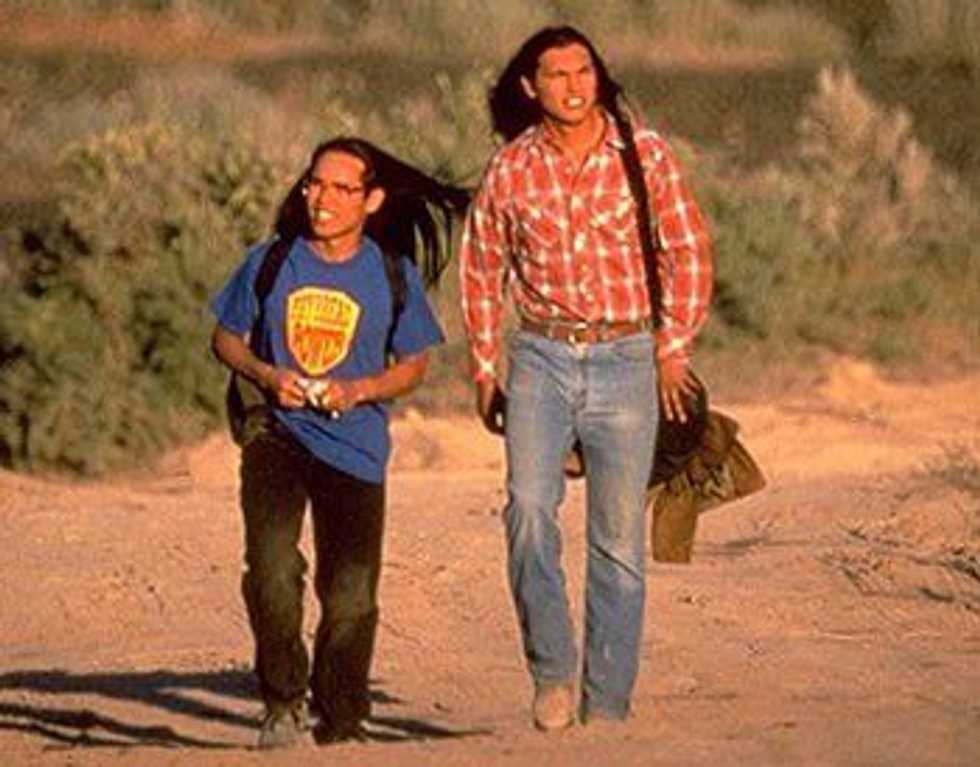
Throughout the years many movies have come and gone, but none have quite made the impact that "Smoke Signals" has. The first time I saw this, I was in my sophomore year of high school. The impact of this film was significantly lessened for me as my maturity, mentally and spiritually, left me unprepared to handle its weighty themes.
I wouldn't see this film again until I entered my 20s and by this time every time I watched it, it meant something different to me depending on where my mindset was at the time. That's one of the best things about this movie. You can watch it over and over and learn something new every time. Or perhaps it leaves you perplexed and wanting for a deeper meaning you can't quite decipher. I've been there both times.
Finally, after coming back from a week in Honduras and having attained a radically different perspective on life, I watched "Smoke Signals" for the fifth time. As the credits rolled, I asked myself this question: What really speaks to me in this movie?
This time, I actually got an answer that satisfied my wondering. It's more than the fact that this movie is funny and quirky in a way that's different from any other movie out there. It also gives a voice to those who are rarely heard. The marginalized and the broken have a chance to speak. Because that's all of us and none of us at the same time. None of us will have the same experience. Even if we're the same race, gender, ethnicity or if we come from the same culture and socio economic background. We can come close, but the understanding of another person's life and experience will never fully be there. Yet there is one theme that remains with human existence; our brokenness and the need for a savior.
Early in the film, Thomas states in a monologue that, "There are some children who aren't really children at all. They're just pillars of flame that burn everything they touch. And there are some children who are just pillars of ash that fall apart if you touch 'em." This line had me baffled for a long while. It made me question how there can possibly be reconciliation, not just within families, but across ethnicities and generations as well.
When the movie was over, I directed my attention to a verse in Isaiah 64. It gives a message of ultimate hope in God the Father saying, "But now, O Lord, you are our Father; we are the clay, and you are our potter; we are all the work of your hand," (Isaiah 64:8).
We are all children born of flame, and only the restorative hands of God can restore that pillar of ash and quench the fire that's burning inside of all of us. At no other point in life would this message have made sense. And even though it took a few times, it made the impact of this film all the richer.
I'd highly encourage everyone to watch it. The story is unique and gives a voice to those rarely heard, yet its meaning translates across all barriers. Come with an open heart and mind and remember: