Elephants have been my favorite animal since I was a child. They are majestic, intelligent creatures, worthy of admiration and respect, and they are illegally slaughtered daily. Elephants are not killed for meat or for any human life need; elephants are murdered needlessly for their ivory tusks. The ivory trade, a barbaric reminder of humanity’s dark past, claims the life of an elephant every 15 minutes. The existence of the ivory trade is an evil which cannot be allowed to continue.
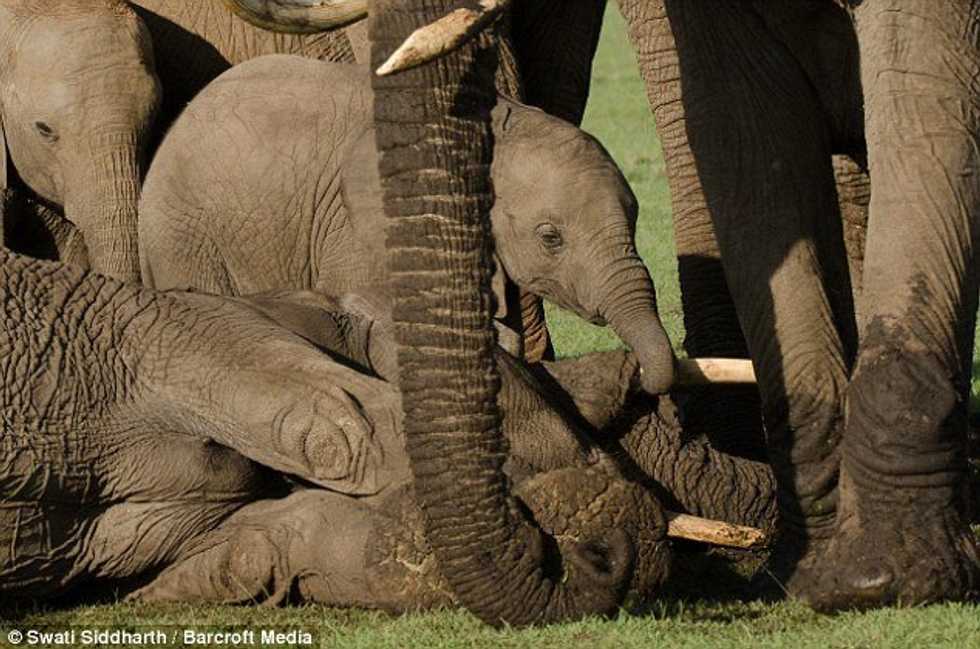
Elephants are a splendor of the animal kingdom, with tight family groups strung together in herds, led by a matriarch. They have stellar memories and near-human emotions. Elephants form close bonds with each other and show both attachment and empathy. They are capable of joy, love, jealousy, compassion, sadness and grief. When confronted with the loss of a loved one, elephants cry, they weep. The feelings of grief and sadness that elephants feel are almost unique within the animal kingdom. Elephants will rarely leave the sick or wounded behind, they grieve for stillborn calves, and they will even return to the death site of close herd members years after their deaths. Sadly, the besieged elephant population of the world experiences grief far too often, as poaching for ivory destroys elephant lives at an increasing rate.
The ivory trade itself is illegal, banned in 1989. However loopholes surrounding antique ivory, and the release of existing stockpiles in the 1990s rekindled the trade. Two of the largest offenders, China and the United States, have previously done little to end the trade. Although China put in place a one-year ban on all ivory sales recently, the demand is still vast. Some governments, such as that of the United Kingdom, have made all sales of ivory illegal in order to stop the trade, and others such as that of Kenya (along with other East African countries) have publicly destroyed existing stockpiles and confiscated ivory. In June, the United States destroyed a ton of ivory in Times Square. Nevertheless, more must be done to stop the ivory trade.
Elephant protection is one such objective, with rangers focusing on anti-poaching efforts in elephant inhabited areas; these rangers are funded by a mixture of regional governments and non-governmental agencies, yet still lack equipment and personnel. However, some argue an even more effective tactic is to increase the punitive actions against poachers. Existing punishments range from light sentences to life in prison, depending on the area and circumstance. In 2013, Minister of Natural Resources and Tourism of Tanzania, Khamis Kagasheki, made a statement that executing poachers on the spot would bring an end to the trade. He cited the violence of poachers towards wildlife and rangers as a reason why efforts against them must be merciless. He stated that soft measures had done nothing to stop the illicit ivory trade, as poaching levels were only increasing. In the decade 2003-2013, 1,000 rangers lost their lives defending wildlife, and between 2010 and 2013, Tanzania, home to a quarter of the African elephant population, lost half of its elephant population to poaching. Additionally, it is predicted that African elephants could be extinct in the wild by 2025 if current poaching levels continue. Taking those three factors alone into account, Kagasheki’s urgency is understandable for a man in his position.
As an advocate against the ivory trade, I realize the enormous challenge stopping it. At this stage, the situation is dire and people must be made aware of that fact. However, raising awareness is difficult, especially within an apathetic student population and a society ignorant of the evils of the ivory trade. Although it is an uphill battle to end the monstrosity that is the trade in ivory, it would be a betrayal of responsibility not to fight that battle. Those who do not seek to end the trade are complicit in it, as their silence prevents the actions that need to be taken from having enough support. To all reading this article, I encourage you to research more about the ivory trade, and if you can, donate to causes fighting it. A trustworthy organization is the Big Life Foundation, which seeks to protect elephants and rhinos. Please consider getting involved in the anti-ivory trade movement, as the besieged elephants need your support.