In my second week of classes at Pacific Lutheran University, we were visited by activist and author Anastasia Tolbert, whose answer to a simple question would set the stage for a multitude of experiences I’ve had here at PLU.
Despite my interest in creative writing and poetry, it was not Anastasia Tolbert's experience in those skills that impressed me the most; instead, it was her focus on activism through her writing and the ways in which she used her poetry to create meaningful discussion. We came into class that day having read some of her work, which allowed us to ask questions about specific aspects of different pieces and receive feedback from the author herself. As you would expect, a majority of the questions asked were questions Anastasia had probably answered a thousand times and had well-rehearsed answers to. However, as the period came to a close, one of my classmates raised his hand and asked a question about her poem entitled “What To Tell My Sons After Trayvon Martin”.
To provide a little background, “What To Tell My Sons After Trayvon Martin” is a work written in response to the recent upswing in police violence directed towards people of color. It is narrated from the perspective of a black mother who is trying to advise her sons, also of color, on how to avoid confrontation with the police. Tolbert comments on the double standards set for the black community and does a wonderful job highlighting the ridiculous nature of the situation. This work is one of many already presented to me that have made me more motivated than ever to seek real change for marginalized populations.
Anyways, the question raised by my classmate related not so much to the content of the poem but instead to the issue itself; he asked how we could help. Now, being a young, white male, it’s pretty safe to assume that by “we” he meant something along the lines of the white community. Anastasia paused for a minute and then replied, “I think your question is a step. I think one of the biggest issues with racism is that we choose not to talk about it. It’s not like having this conversation is stopping something that’s happening around the corner, but it’s important in this room. It’s the dialogue that matters. Sometimes, as a black woman, the only thing I want you to do is walk up to me and say ‘That shit is messed up! I’m so sorry that this happens to you!’ And I would just be like ‘Yes! Thank you!’” She then transitioned into the second part of her answer, which I didn’t have time to transcribe, but essentially boiled down to the argument that young people need to use social media to start the dialogue she had been referring to before.
A similar argument was made by Dr. Kevin O’Brien, the Dean of Humanities at PLU, at a presentation he gave two weeks ago that addressed the issues of race from a Lutheran Perspective. Toward the end of his talk, he argued three main ideas; white people shouldn’t tell people of color how to protest, that white people have to stop seeking validation from black people, and that we need to start or continue (whichever the case may be) the dialogue surrounding race in America. However, when a young, white person asked what they could do to help during the “Question and Answer” part of the session, Dr. O’Brien’s answer was very familiar. He told the student that he needed to stop seeking validation of his actions and use his resources to start discussions within the communities he had access to.
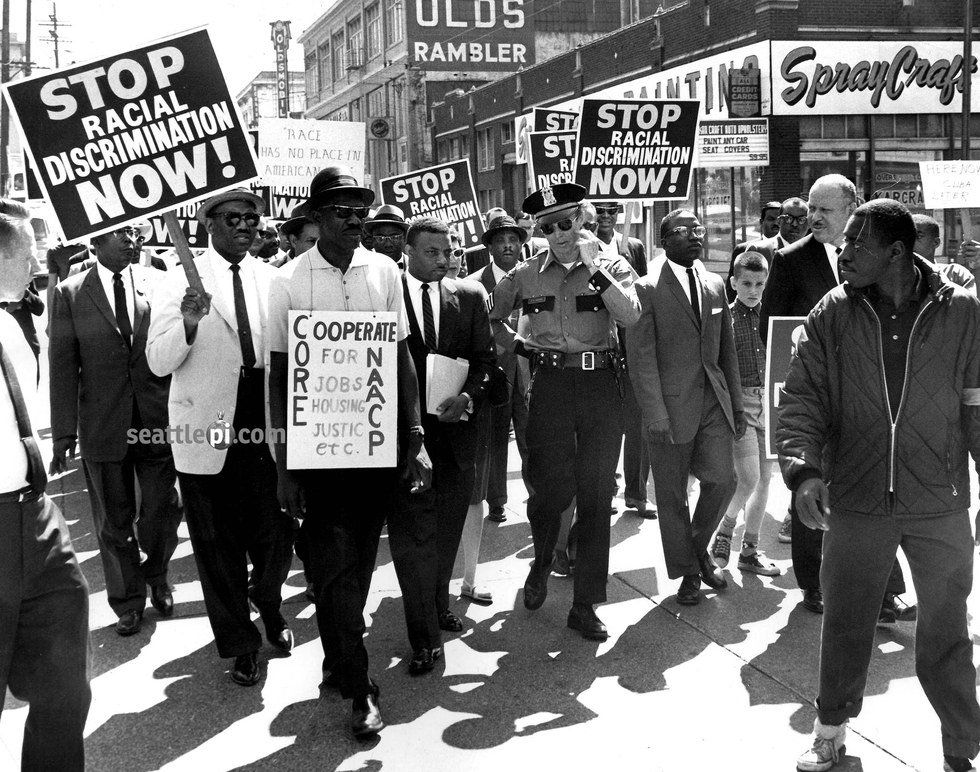
Now, despite the awe I felt being in the presence of individuals of this academic caliber, I found these answers to be extremely frustrating (Keep in mind these are just two examples of a reoccurring conversation). I am a young, white male of a median socio-economic class and I would love to help. And, moreover, I know there are others like me, probably thousands, who are fed up with the way people are treated in this country and would be willing to spend their lives fighting for the equality of all citizens. Yet, it is extremely disheartening to constantly be informed that there is nothing we can do. I understand that we have access to social media and the internet, but it isn’t as if posting a status on Facebook is going to have a meaningful effect; it won’t affect anyone outside of my circle of acquaintance and these people are already familiar with the dialogue I would be looking to promote. This sentiment has been echoed to me time and time again. I would go so far as to argue there is a huge population of college students who are tired of the marginalization in this country and would be willing to take action for real change if a means of enacting that change was presented to them. But, instead of being empowered, students are told there is nothing they can do, that there is no way for people like them to make a change. And as a student who has done a comparatively extensive study into multiple campaigns including the Civil Rights Movement here in our own country just over 50 years ago, being told that the students of our nation are too powerless to have an effect is both disheartening and historically incorrect.
PLU has done a terrific job of presenting me with a series of issues concerning our society today and starting the conversation. However, the way in which that dialogue is often presented leaves myself feeling powerless to work towards change, which is rather counterintuitive to the promotion of dialogue in the first place. Despite my complaints, I would also argue that conversations like the ones constantly being at PLU are close to unique for people of my age across the country and that this issue is systemic. We, as a country working towards equality, need to seriously reevaluate the implications of the discussions we are having and promote empathy and action instead of snuffing it out.