
For most Americans the theft of Native American land by the American government is part of the distant past. It’s something they read about in a textbook and felt mildly guilty about for a few minutes before turning their attention to the other 'current' issues. For many Natives, however, it’s an ongoing war. I fought one of the most recent battles of this war in the Wakarusa Wetlands in Lawrence, Kansas.
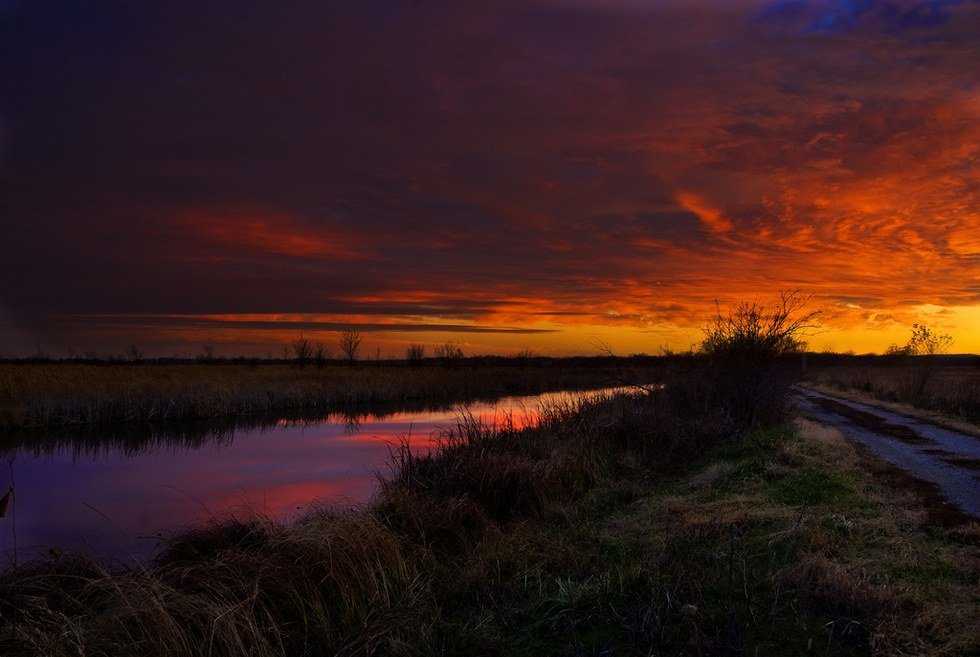
The Wetlands are as much my childhood home as any house has ever been. I spent my summers and weekends there, eating mulberries straight from the tree, going on long walks with my mother and learning about the complex web of life in its diverse biosphere. Sometimes elders would take us out in their canoes or perform sacred healing and celebration rituals. Native children have been brought up here, in this way, for centuries.
The Wakarusa Wetlands are all that’s left of the Wakarusa Bottoms, a wetlands system that once stretched for 18,000 acres. Now there are just 600. The rest was drained and developed by white settlers in the 20th century. The remaining land still holds its sacred value, and it even gained additional importance for many of us in the late 19th and early 20th centuries — during the genocide-by-assimilation taking place at the nearby Haskell Institute.
The Haskell Institute was founded to carry out mass assimilation. It was one of many boarding schools where young Native children were sent after being violently removed from their families. At the school, children were not allowed to speak their native tongue, participate in Native religious rituals or contact their family. This program was often referred to as, “Kill the Indian, Save the Man.” During the execution of this program Native families would camp out in the wetlands to contact their children, and children would sneak out to perform rituals and to be educated by tribal elders.
In the mid-1990s — just before I was born — the Wakarusa Wetlands again became a site of controversy. The government proposed the South Lawrence Trafficway, a ten-lane highway, that would go right through the Wakarusa Wetlands. This would destroy more than 50 acres of sacred wetlands and bring massive amounts of noise, air and water pollution to what would remain. Native American and environmental activists together fought tooth and nail for years. I remember countless hours by the side of the road begging people to pay attention. I remember bookmarks and pins to distribute at school. I remember prayer circles and clean-up drives. I remember white people throwing trash on us from their cars as they drove past. I remember my mother crying.
In 2012, the lawsuit that had been keeping the highway project on hold was thrown out. In 2013, construction began. Nearly two decades of blood, sweat and tears went to waste. My entire childhood spent fighting was left unrequited. There were no more protests in the weeks leading up to the construction, just a memorial service.