Now, I probably know what you're thinking: "Oh God, not another political editorial." Well, yes and no. As much as I'd like to tell you who to vote for while you make a mental list of all the reasons I'm wrong before we both go our merry ways, there is a more pressing matter I'd like to address:
Facebook.
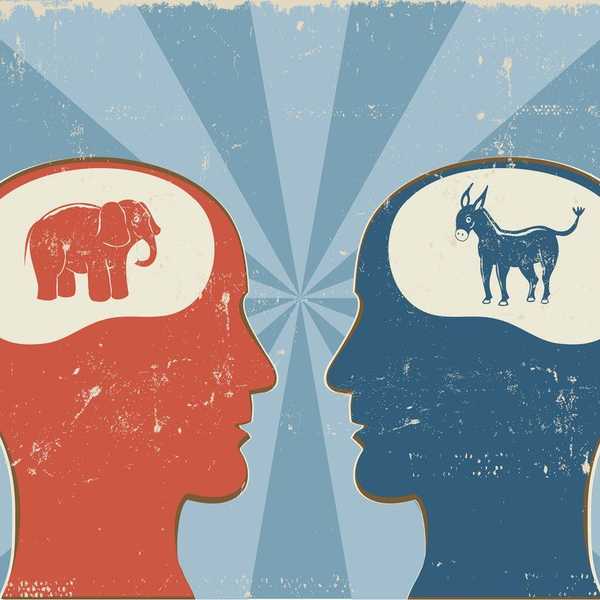
The truth is, I fear that what we share there (and on any social media platform) will have a far greater effect on the future of our country than who we vote for. It may seem petty, but how often do you see posts saying some candidate is "literally Hitler" or that some other candidate's supporters are crybaby communists, not to mention the kind of vitriol that is now circulating regarding LGBTQ+ issues? It's clear to me that political discourse in America has gotten toxic. Instead of engaging those we disagree with -- even marginally -- we resort to rhetorical bullying. It's far easier to share some snarky soundbite that totally proves you were right all along and leave it at that than to legitimately engage the people you disagree with. I'm certainly guilty of it.
Unfortunately, that's not helpful at all. We end up using these oversimplified political jabs to talk past each other. Those who agree with you don't benefit from them; those who disagree probably just unfriend you. That's the ironic thing about billy club rhetoric; it in no way wins supporters to your side. In fact, you're more likely to polarize people further, pushing them toward the same values, beliefs, and candidates you're trying to argue against. This is why caustic rhetoric is so dangerous. When citizens can no longer resolve their differences or deal with them in healthy ways, society fragments. As we all know, "a house divided against itself cannot stand."
Not to be overly dramatic, but the division that results from our political bad habits threatens to undo America — perhaps more so than any political party or outside group (no matter how much one demonizes them). This isn't simply wild speculation or fear mongering; just ask sociologist Emile Durkheim. Back in the 1800s, Durkheim noted that without mechanical solidarity — that is, the basic "sameness" that holds social groups together — social groups will need to find other types of social glue, such as religion, shared values, or physical and financial interdependence. Otherwise, the social group will fragment and fly apart. For a long time, shared nationalism acted as that social glue, but in this age of division, even that has become a rhetorical weapon. A person one disagrees with is not only someone with a different opinion, they are unpatriotic — un-American, even.
If love of country will no longer bind this social group together, then I hope that love of each other will. I know it sounds trite, but in practice, it means not comparing your opponents to Nazis, or attributing their political beliefs to some malicious agenda. It means listening and responding rather than reacting. It means thinking twice before sharing that thing from Tumblr or The Blaze, or commenting in all caps.
I'm not asking you to compromise your beliefs to spare someone's feelings. Rather, I'm asking you to take a break from being a keyboard warrior and recognize that a difference in opinion is not always a vote worth fighting over. Your vote matters, but so does your voice. So cast your vote for whomever you want. Argue for them in writing and in speech, but when you do so, realize that you're casting a very different kind of vote, and it's either going to be for decency and civility, or for division.