

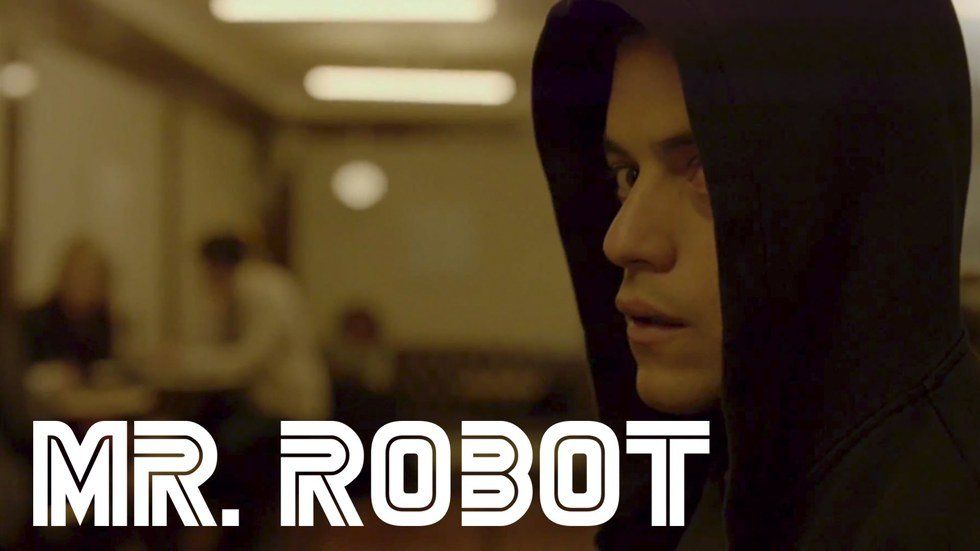
When Creator Sam Esmail released his psychological, dystopian thriller, Mr. Robot, starring Rami Malek (Elliot) and Christian Slater (Mr. Robot) this past June, he possibly took the biggest swing at corporate America in the history of fictional television.
“There’s a powerful group of people out there that are secretly running the world. I’m talking about the guys that no one knows about, the guys that are invisible: the top 1% of the top 1%, the guys that play God without permission” –Elliot’s opening monologue of Season One.
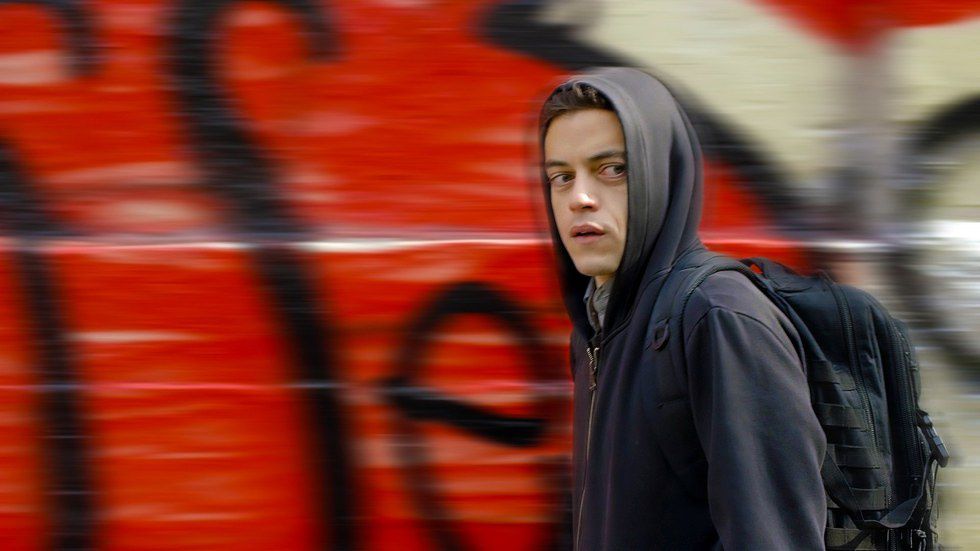
The USA network show takes place in modern society New York, and follows the mentally ill mind of a young, computer hacker, named Elliot Alderson who has a vigilant ambition. Working as a cyber security engineer for the corporate world, his ethical views and conspiracies contrast with financial inequality, causing him to devise a plan to hack and destroy the financial status of the 1 %. This 1% is a fictional conglomerate called E Corp that owns 70% of the world’s consumer debt, which Elliot calls Evil Corp.
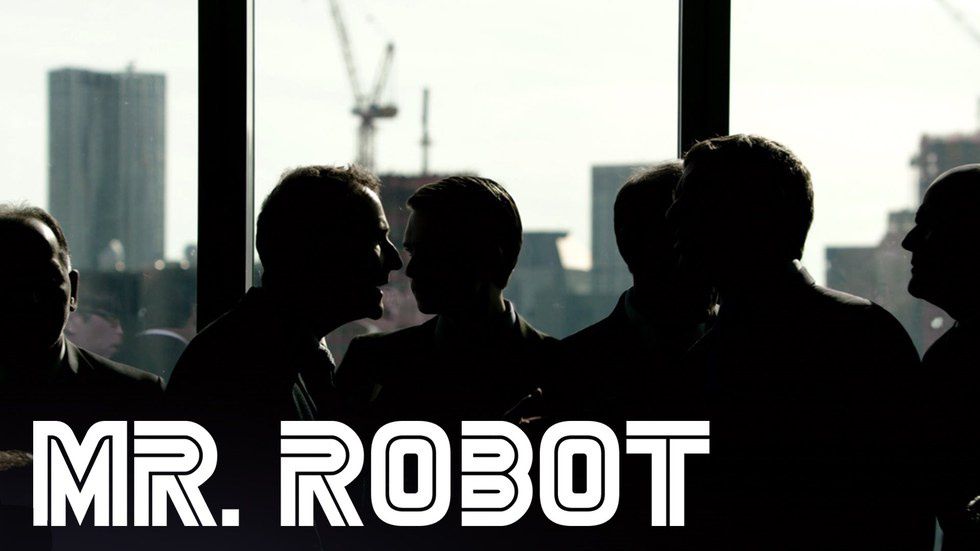
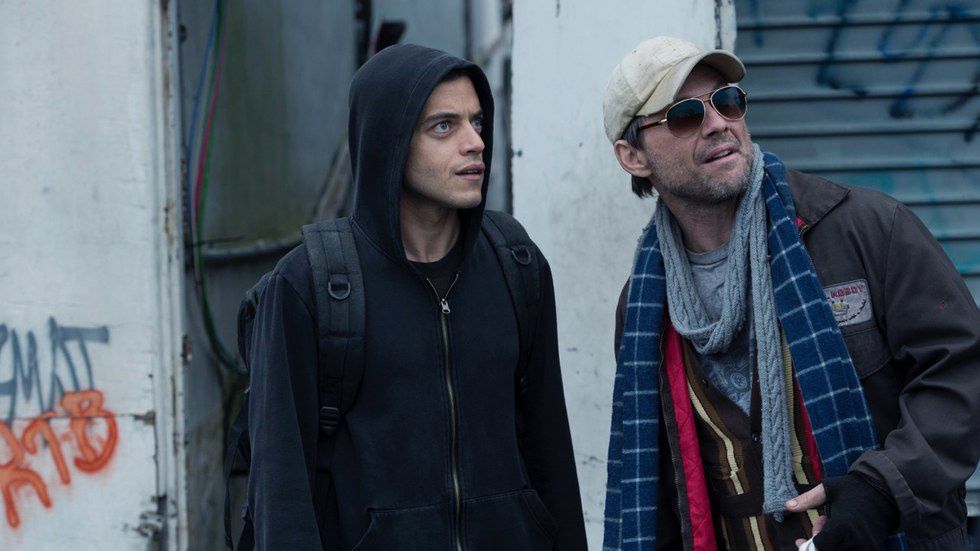
Elliot endures an unprecedented mental illness: a torturous mix of amnesia, schizophrenia and undefined conversion disorder. He finds himself communicating with inner voices, seeing people who are not there, and constantly forgetting whom his own sister is. But through it all, he has one driving emotion that keeps him productive: his hatred for the social injustice that is the 1%. Pursuing crafty plans, the anti-social, Freudian nightmare teams up with a peculiar anarchist named Mr. Robot. Backed by a hacker crew, the group calls themselves F-society, with a plan to take down a world run by E Corp.
But the dystopian world in Mr. Robot isn’t entirely fictional. Esmail explicitly bases Elliot’s world on corporate America, and our digital society as a whole. It references real-life companies, public figures, and socioeconomic problems.
In the season premiere, Esmail immediately establishes an anti-capitalist standpoint through Elliot’s consciousness. When Elliot’s psychiatrist asks him why he despises the world, he reviews the Rich Elite:
“Maybe it’s because we collectively thought Steve Jobs was a great man when we knew he made billions off the backs of children,” Elliot says, as the episode shows real pictures of sweatshop children working for Apple.
“Or maybe it’s that it feels like all our heroes are counterfeit,” Elliot continues, as the camera showing clips of Lance Armstrong, Bill Cosby, and even Tom Brady.
“Or is it that we are spamming each other with our burning commentary bulls**t masquerading as insight” Elliot adds, while the clip of Wall Street’s real-life twitter plays (which later leads to clips of Occupy Wall Street protestors from 2011).
“Or maybe it’s that we voted for this. Not with our rigged elections but with our things, our property, our money. I’m not saying anything new; we all know why we do this…because we’re cowards. F**k society."
By using specific references to reality and mirroring the crisis of financial inequality of America, Esmail exhibits his arts audacity throughout the season. Manifesting the political and socioeconomic opinions of millenials, the show particularly bothered conservative viewers and critics.
“USA Network’s original series Mr. Robot, which premieres on June 24, may be the most objectionable series on TV,” wrote Rick Moran at PJmedia. “The pilot episode could have been written by an Occupy Wall Street activist. Perhaps it was... An economic catastrophe would cause massive job losses and lead to societal chaos. Yes, but at least the rich would get what’s coming to them... Series creator Sam Esmail will probably be speaking at an Elizabeth Warren rally near you.”
Moran initiates his Mr. Robot article with a disclaimer, saying to not read if you are a person liable to throw up over Occupy Wall Street’s “rancid” agenda.
With candidates like Bernie Sanders and world figures like Pope Francis, people of the real world are advocating financial equality more than ever, supporting the end of the Rich Elite. While millenials are battling with college debt, minimum wage, and manipulation of Congress and the Conservative Party, a digital attack on banks and conglomerates is not a joke anymore. Being more familiar with technology than the baby-boomers, millennials—if they haven’t already--could gain the power to hack the government, and financial credit around the world. A digital revolution, like Esmail portrays in Mr. Robot, could very soon be a reality.
After all, the show has already seemed to mirror current events. In an interview with Hitflix, Esmail discussed the parallels his show has accidentally made to reality, specifically the recent hack on the notorious infidelity website, Ashley Madison.
“Just to speak to the specific Ashley Madison line. That was originally in the script. If you remember from the pilot, that's one of the things Elliot hacked about him, and one of the things Elliot used to manipulate him,” said Esmail. “I wound up cutting it before we were shooting it. And then literally, the news happened again. It's almost as if the world wanted me to keep the scene as intended.”
The Mr. Robot finale was scheduled to air on August 26th, but was postponed. The news reporter shooting that happened in Virginia earlier that day was too similar to one of the scenes in the show’s final episode.
Season One of Mr. Robot is available on USA Network and Amazon Instant Video. It has been rated: 9/10·IMDb, 98%·Rotten Tomatoes, 9.1/10-TV.com

















