
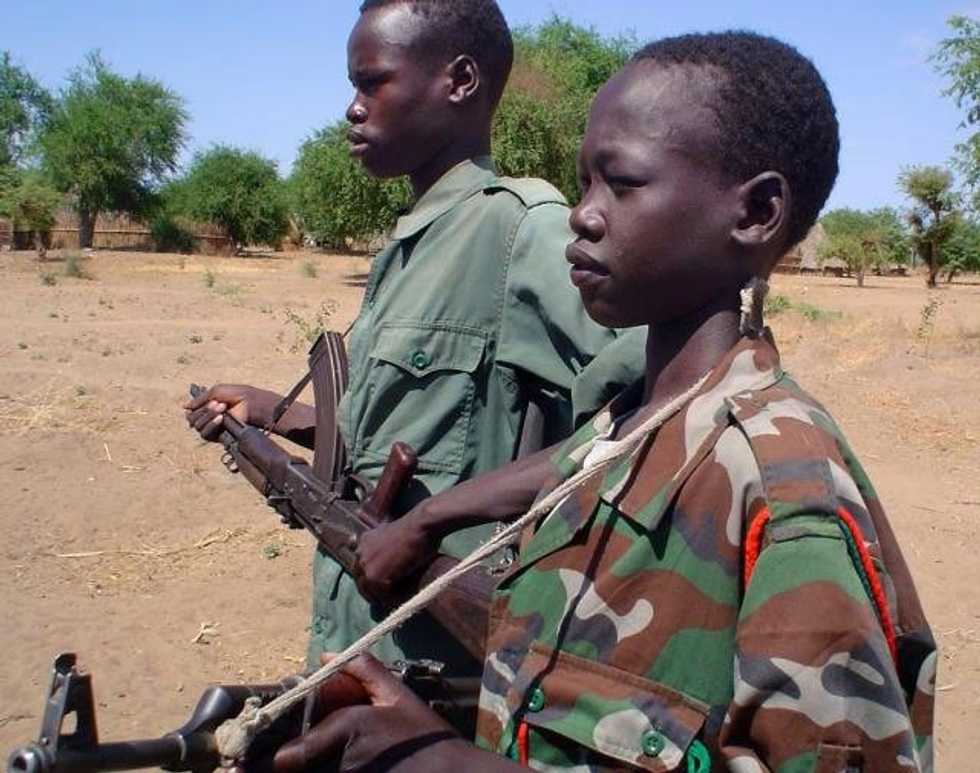
The earliest years of life are the most crucial. Influenced by the nation, current state, parents, friends and education, child development shapes the character and future of the child, who acquires the skills to meet the demands of adulthood at an early age. Some children, however, lack the safety of a stable government, the guidance and love of a guardian, the joy of friendship and the lessons from attending school because they are surrounded by the violence and horrors that accompany a civil war. In the Central African Republic (CAR), many children are either dragged into the center of violence or volunteer for survival. Throat slitting, gun shots, rape and looting become normal aspects of life for these child soldiers who are recruited by armed groups. Each day is marked by life threatening moments and arduous tasks that strip them of their innocence and demand a level of maturity that exceeds their age groups. Following international campaigns and ceasefire negotiations, rebel groups have begun releasing some child soldiers, but their struggles do not end. Reintegrating children back into society has been confronted with countless challenges, and each child meets the reunification with varying success.
The conflict in CAR which had been brewing even from the beginning of the century culminated in a coup orchestrated by the rebel group, Seleka, which was met with resistance from the old government under the President Bozize and another militant group, anti-Balaka. According to UNICEF, over 6,000 children were recruited by these rebel groups. The recent political history of CAR is of rebel takeovers, shifting power and ceasefires. With the Seleka group gaining control of the capital of CAR in 2013, a new leader was put in power who would later dismiss the very group that had placed him in power. UN, French and American forces became involved with the affairs of the nation in the light of the issues that manifested themselves, such as ethnic cleansing and arms trading. Transitional governments guided the country in that during that time. Possible augurs of a more permanent government, presidential and parliamentary elections have been conducted in CAR. UNICEF describes the effects of the battles, however, as still evident in only one functional health facility for children, one-fourth of children at an unhealthily low weight, and less than one third of children attending school. The militant rebels are still active, and they still have some of the child soldiers with them.
These child soldiers may have either experienced sexual assault, witnessed murder, carried guns or fired weapons at civilians. Those who are fortunate to have been released are not always welcomed into society. The stigma of being child soldiers isolates them; they are targeted and attacked for having been a child soldier. Others face isolation from family members who are fearful of having ex-soldiers living with them and will refuse to take care of them. Guilty and undesirable to others, children who were taken as sex slaves find difficulties in receiving care and acceptance from their community. Others have no option of returning home since they have no family members left, or they have no way of locating their families who may have either been killed by the rebels or taken as child soldiers as well. Some child soldiers are trying to move forward and establish a future for themselves although others are not so avid. For example, Charly is disappointed that he had to leave Seleka because the life he knew as a child soldier was a life of power, control, money and freedom. Obeying an authority, such as a parental figure, has posed an obstacle for some child soldiers who are accustomed to having a gun that granted them power. Whether the child soldiers were willing to leave the rebel groups or not, reintegrating themselves into society from previous isolation has been a difficult process.
Fortunately, international groups are providing aid to release and help the children transition. UNICEF calls upon the government and nations to demand action on behalf of the children. They provide healthcare through immunization, support clinics that previously were closed, supplying educational material and counseling child soldiers.