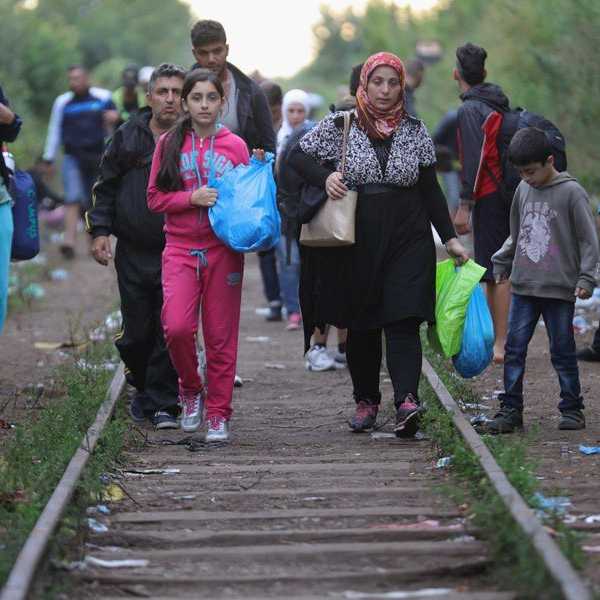
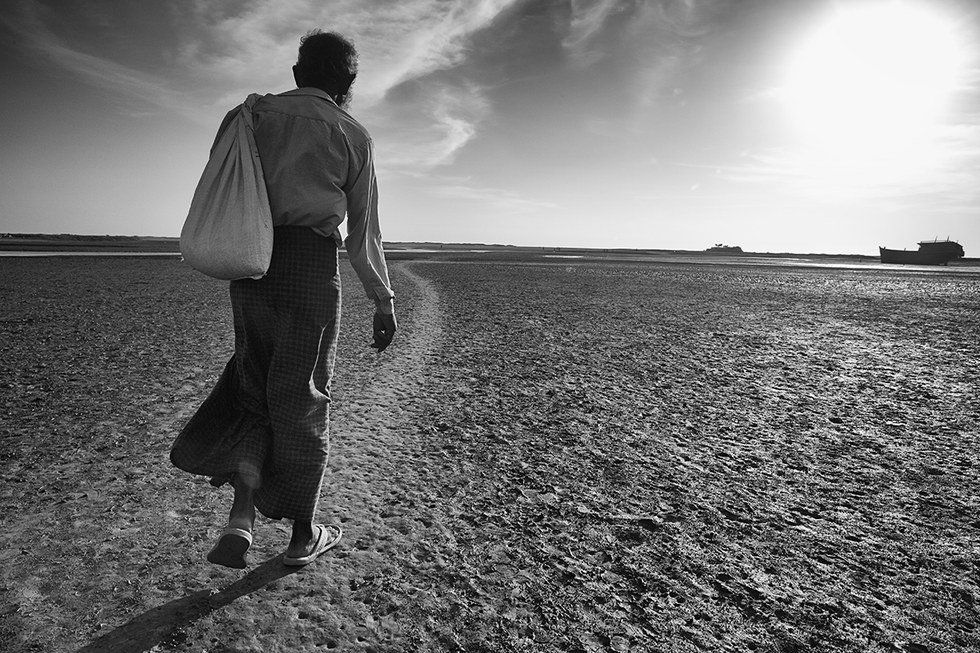
Day after day we see more and more conflict with refugees, but why is this? Every day is a struggle for them trying to search for a better life for their families. I had the opportunity to hear from 7 refugees from different ethnic backgrounds share their heartfelt stories of what life as a refugee is really like
Amira Elamri
She and her family experienced the Syrian refugee crisis first hand, but before it happened she lived a normal life where she was an elementary school teacher. In March of 2011, it all started to fall apart for her. The government wouldn’t let her leave her house and every day she heard explosions, and missiles. She became a master of depicting which sounds were explosions and which ones were missiles. As the violence got more intense her house had been vandalized and she received threats which led her to take her family and move to Lebanon. In Lebanon things only got more difficult for her and she decided to attempt to move to the United States where it took over a year for her to get a visa to travel. After she got her visa they started to ask her millions of questions like “why do you want to come here?” or “What are your plans for the future?” In 2014 Elamri, her husband, and two kids arrived in the US where she had three suitcases to her name. She lives in Watertown, MA where she is a preschool teacher and her two kids are involved in the community.
Max Michelson
He is originally from Latvia, but he shared that he is a survivor of the holocaust. Within seven days of the Holocaust he lost his mother, and in 1941 he lost his father. Michelson found himself alone at a very young age where he spent four years throughout ghettos and concentration camps. When he was liberated by the Soviet Union he stated that he “was practically dead” as a result because he had nothing to go back to or to look forward to. He was left with his stripped pajamas, so what was he really free? Originally the Soviet Union wanted to send people back to their original homes, not knowing that there was nothing left of them because the Nazi’s destroyed all homes during Kristallnacht (Night of Broken Glass). Overall he ultimately felt free after the war when he first came into the United States. He wondered the streets and no one bothered him. Michelson spoke very highly of the United States and said that he felt very welcomed and is pleased to be a resident at Lasell Village
Dana Al-Refae
She works for Lasell College as an analyst and Syrian developer was fortunate to come to the United States before the real violence in Syria occurred. Al-Rafae is from Damascus, Syria where tension was rising within the community. Her father moved to Saudi Arabia after her brother’s school bus exploded, but her brother was not on the bus. The whole crisis moved Al-Refae and it was heard through her voice while she stopped several times because it was too emotional. No one deserves to be put through such horrible tragedy.
Mary Black
She is from Austria, England and was a citizen of three countries at one point in her life. Life in Autsria was terrible overall due to the unemployment was rising, so her family moved to England where she became a typical English girl going through the school system. It was “The Greatest experience of her life” she stated while she lived in England. In 1939 the Nazi’s invaded Poland and England declared war. Thousands were evacuated because of the bombing and her father sent her to Canada for a better life. She waited in a hotel to get approved for her visa at age six. They considered her an alien because she had been born in Austria. After the war, her family remained to keep her in Canada where she is a proud mother, and grandmother. Black lives in Lasell Village where she is pleased to spend the rest of her life there.
Leonard Tshitenge, Richard N. Lundula, and Marie Jose Mbuyi Tshidibi
They all are from the Democratic Republic of Congo where they experienced genocide. Tshidibi escaped her village, but as a result to this she witnessed women being tortured, raped, and murdered as she hid in the bushes. The violence against women was very horrific. Lundula never went a day without someone dying and people would work for $20/month to support their family. They recruited boys to join the army and if they didn’t comply they would rape and kill their mother, sister, etc. in front of them. They didn’t come into the United States for the beautiful houses, and glory, they came into the US because they didn’t benefit from their country because the population was very poor.
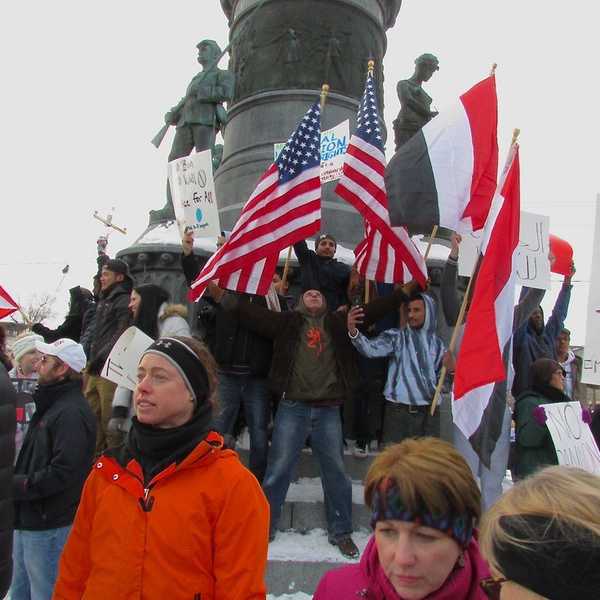
This problem continues to rise in society and although as US citizens we are not directly affected by it, we should take into consideration that there are people who are struggling. Refugees are people too and we need to start treating them like citizens and welcoming with open arms into our country and stop stereotyping, discriminating, and deterring them as second class citizens.