

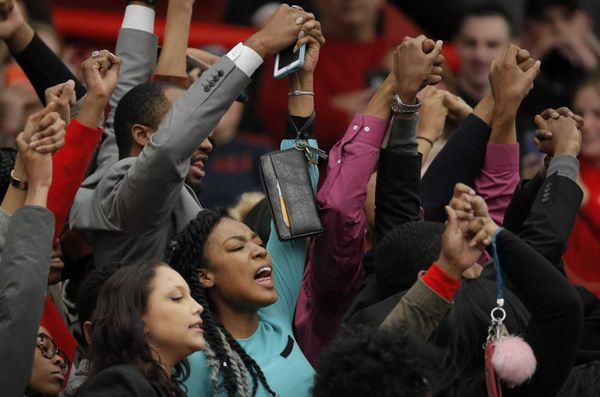
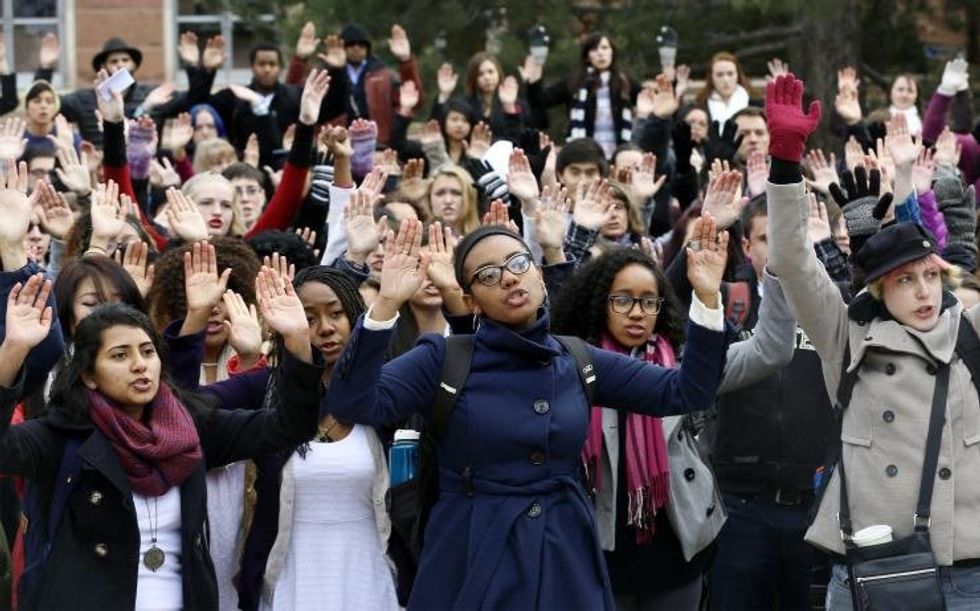
Students at the University of Missouri (Mizzou) were encountering racial slurs, swastikas and other racial threats on campus. When students became displeased with the action, or lack there of, Mizzou's president, Tim Wolfe, was putting forth on these incidents of racism on campus, a couple of students decided to confront him. It has been said that, when President Wolfe drove off without responding, he allegedly hit graduate student Jonathan Butler. Police have found no proof of this claim.
After this incident, Butler started a hunger strike. It seems he took Mahatma Ghandi's approach of striking back by fasting. Black student leaders and other African-American students made known their displeasure with the school's response to these incidents shortly after Butler's strike began. The football team, along with other organizations, called for the resignation of President Wolfe. Wolfe left his position, stating that, "This is not -- I repeat, not -- the way change should come about. Change comes from listening, learning, caring, and conversation." He also asked that students and faculty, "Use my resignation to heal and start talking again."
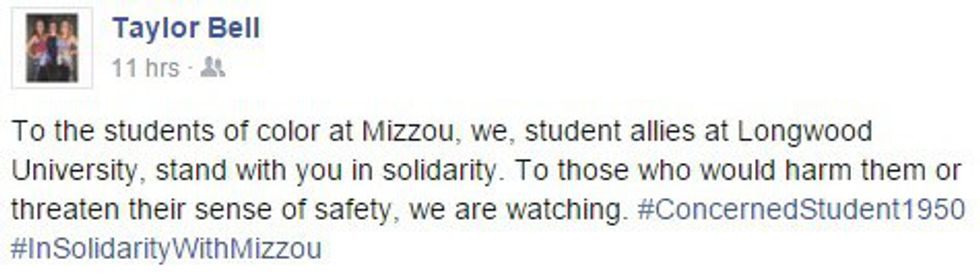
It isn't only the students of Mizzou who are concerned. Students across the nation stood in solidarity with the colored students of the University of Missouri. All institutions for higher education were faced with this question after the incident at Mizzou: what are the implications for their institution?
Longwood University took little time to respond to this incident. The Black Student Association (BSA) held a meeting to talk about what happened at Mizzou and what this means for Longwood. Dr. David Magill and Courtney Addison held a discussion for students and faculty to talk about these incidents and how our university can help end any and all racial incidents on our campus.
Many students and faculty members attending this meeting asked why there wasn't a policy already in place for racial equality. Our campus has Title 9, gender equality, so why not Title 6, racial equality? It was brought forth that policies won't fix the issue at hand, but they do lay a foundation. Another concern voiced was the amount of training all members of Longwood receive. Faculty and staff have training, but what about students? A lot of students have said that, since New Lancer Days (the weekend before freshman year begins), they have not had any training on how to handle racial incidents. All institutions of higher education should be looking at the implications of this incident at Mizzou for them.
There is always a whisper before the scream. Hear the whisper before it's too late.

















