People have argued about which books are worth reading for as long as books have been around. We debate the conventions which set a work of literature apart from the rabble as one of quality. Our educational systems tend to praise and emphasize the work of old, dead, white guys while discounting the majority of contemporary literature written from other perspectives. I think this applies to film and television as well--any form of storytelling, really. Although I'm focusing primarily on the written word, keep that in mind.
A creative writing professor of mine, Dr. Darrell Spencer, often says that contemporary writing and literature is a search for the truth, not the Truth. He makes sure to emphasize the importance of that lowercase 't.' Why? People find their truths in their own experiences and the experiences of others--not in a grand, all-encompassing hypothetical philosophy with which they cannot relate.
The search for universal Truth can be found in most works written before the peak of the Romantic era (around 1800-1832), like Plato, Aristotle, Socrates, Descartes, Jonathan Swift, etc.; you know, a bunch of guys who liked to philosophize. Their work is valuable, but it is not--as some believe--of the most importance.
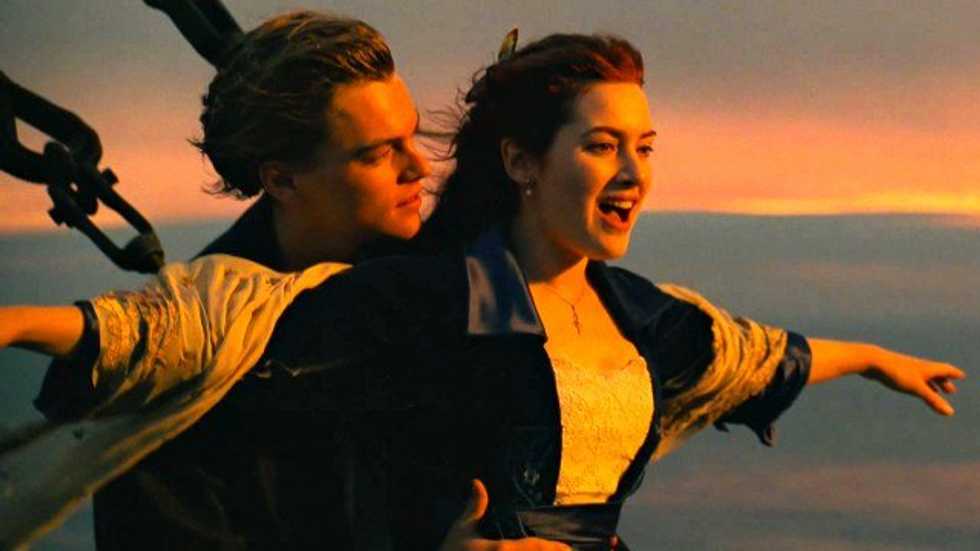
Pop culture example time. The sinking of the RMS Titanic in 1912 is a universal Truth; it happened, and more than 1,500 people died. But that was a long time ago, and that's a pretty unfathomable number. I mean, can you visualize what 1,500 people looks like? Then, in 1997, James Cameron's film "Titanic" is released. Whether you think it's a quality film or not, it tells the story of a small group of characters who were part of that disaster. The film allows us to experience their individual truths, connecting the event and making it more concrete for us as a modern audience. After listening to Rose's story, Brock Lovett, a present-day character in the film, says, "Three years, I've thought of nothing except Titanic. But I never got it. I never let it in." Then he sheds a single tear (along with our five billion) and we realize that now he has. Even though it was told through (mostly) fictional characters, a universal Truth was made individual, and it became a part of all parties involved. Does that make sense?
Samuel Johnson, who wrote one of the world's most influential English dictionaries in 1755, believed great art is an imitation of what is universally True--a mirror of life stripped of the nitty gritty details of everyday life to instead show the big, incomprehensible picture. If Johnson’s mirror of life were real, if it were concrete, it would reflect the entire planet from a distance--all that would be seen is the blue of the oceans, the brown and green of the land, and the white of the snow on the mountaintops. I believe Johnson had it dead wrong. I think a modern and accurate mirror of life would reflect the faces of each person living on the planet, and their reflections would be ultimately more important.
Globalization has made the world an increasingly interconnected and diversified place--no longer can we live in one portion of the planet without having knowledge of or experience with the rest of the population. Our instincts might tell us that this increased exposure to all cultures and happenings in the world would lead to a more universal approach to literature and storytelling, but the opposite tends to be more accurate. As the world becomes smaller, modern artists have turned ever inward with their work in order to share their individual experiences with modern audiences from around the globe. The craving of modern readers to experience the individual truths of those similar to them as well as those vastly different is evident in the present popularity of not only fiction and free-form poetry, but also memoir, biography, and self-help literature.
If you've stuck with me this long, thank you and congratulations. I'll try to sum this up one more way, just in case it doesn't make sense yet: read everything you can possibly get your hands on. Read the work of old, dead, white guys, but also, read the work of modern writers of every culture and color. Read comic books, read newspapers, read short stories, read cereal boxes, read all kinds of poems and novels. You should determine your own definition of quality, and let that be your guide; if you're reading, you're learning. Don't let laziness or fear of the unknown prevent you from attempting to become familiar with the ways in which other people live and express themselves on this lovely planet of ours. It is only by willingly taking part in the individual ideas and experiences that others have bravely chosen to share that we knit a tighter web of human understanding and empathy.