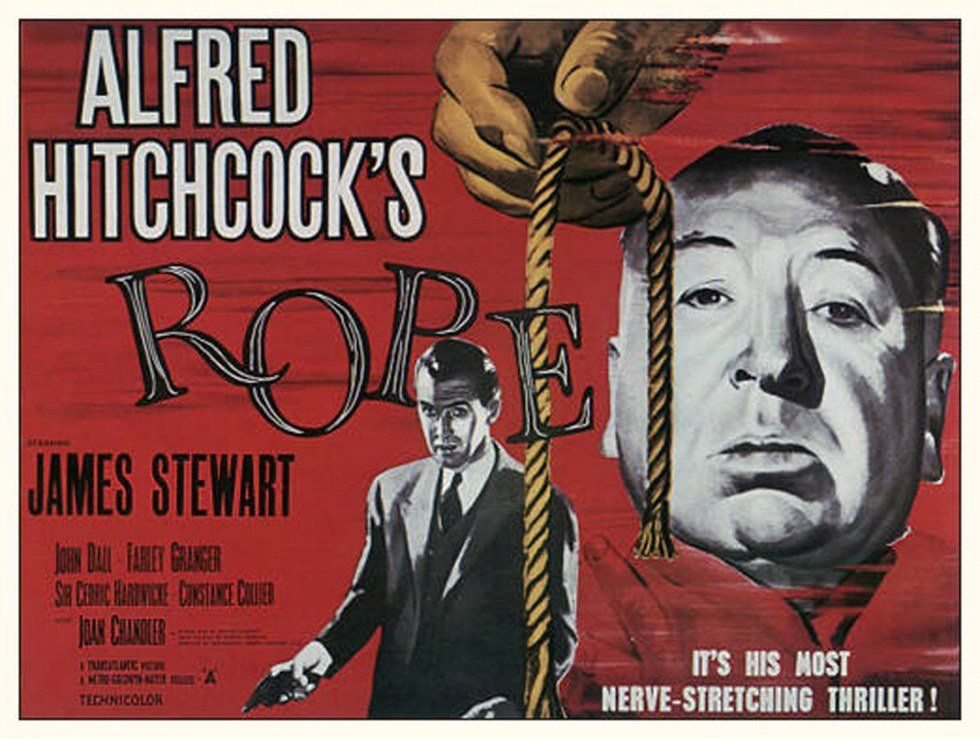
Alfred Hitchcock made his debut into the Technicolor film world with the 1948 murder-thriller “Rope.” The film was shot on a single sound stage and made to appear as in real time with slight of hand camera tricks to divert the attention away from audience realizing there was a hidden cut. Back then, reels of film only lasted ten minutes, so in order to change out these reels, Hitchcock had to cut.
In an effort to keep the seamlessness to the picture, he would have the camera move along someone’s back or behind a dresser and as the screen went black the reel was changed without the audience knowing the better. Technically, this is one of the most astonishing and ambitious films to date.
Beyond the more gimmicky ambition of having a 90-minute long uninterrupted shot, the subject matter was far more disturbing and provoking to the audience than most of Hitchcock’s films. “Rope” revolves around two young yuppie types named Brandon and Phillip as they try and pull off the perfect murder. The film opens with the two men strangling a former classmate named David and stowing the body away in the living room chest.
After Brandon delightfully boasts about what they’ve just achieved, Philip can’t seem to get ahold of his composure throughout the film. They invite others to join them for a dinner party just to see if they really can pull off their crime. Some of these individuals they invite include David’s father, aunt, and girlfriend.
After they sit and drink for a while, we are introduced to Brandon and Philip’s former schoolteacher, Rupert Cadell, whom they still regularly talk to. Rupert is a snarky middle-aged gentleman with a background in discussing the bounds of philosophy.
This is why Brandon wanted to invite Rupert over. Within their fantasy, Rupert would find out what they did and then maybe he would be the only one who could understand why they did it. In an ultimately awkward and all too revealing conversation on the subject of reasonable homicide, Brandon and Philip discuss, in front of everyone, why they feel that murder is justifiable in cases where the individual being murdered is somehow “inferior” to the ones who are committing the murder.
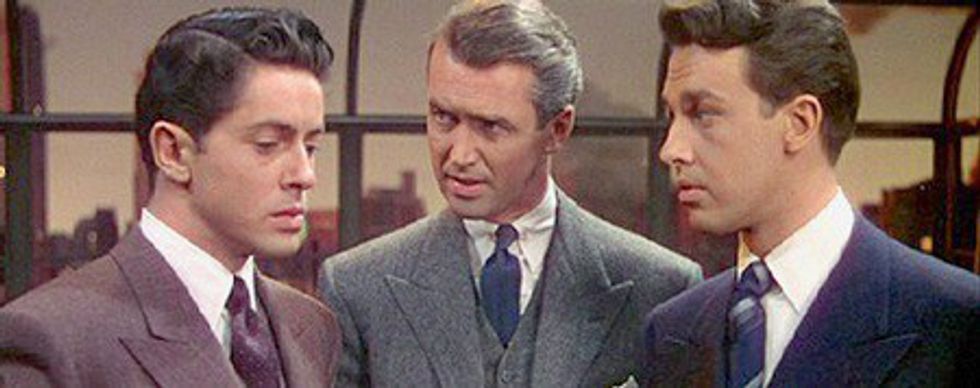
After an outcry from David’s father on how obscene the conversation is, Brandon keeps pushing his point, which leads Rupert to confront him about these dangerous notions he was getting at. In the earlier conversation, Rupert played along and teased at the idea that murder could be justifiable in some cases.
All of the philosophical gesturing towards the ideology that many of us entertain in our heads, and often repress, about killing people we believe to be lesser than us is ultimately what Hitchcock wants us to recognize.
Rupert’s character finds out what these two former students of his have done to David, someone who Rupert also communicated with during his time a mentor, and becomes instantly troubled. Rupert knows that the horrific notions they discuss should be kept within the space of our minds and are no humane man or woman could ever commit the thoughts to action.
That’s the main reason to love this film. It pokes fun at the study of philosophy when the girlfriend of David, upon hearing that Rupert writes for magazines of the subject, says, “Philosophy? Small print, big words, low pay.” I think this notion of the philosopher is still apparent in today’s “post-modern” society.
But the contrast given by the characters of Brandon and Rupert gives meaning to how the horrific events that occur in many films are a fallacy. They’re an illusion to the viewer and meant to incite emotions and provoke thoughts that we didn’t realize were even there.