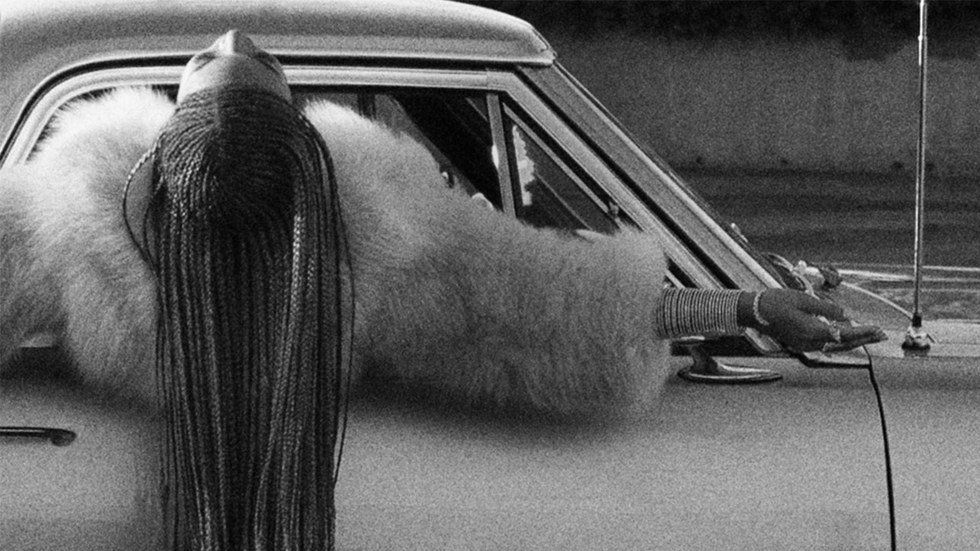
Many people look to Beyonce Knowles for sheer entertainment. She’s known for her angelic voice, perfectly sculpted body and infectious dance moves, so it was a surprise when the release of her video “Formation” was filled with so many underlying political messages.
The “Formation” video touched on the human rights violations against the black transgender community by using voice-overs with the voices of “Big Freedia” and “Messy Mya," While to many, the bubbly, feminine voices that were being used seemed to only add a humorous and even sassy factor to the video, what a lot of people are not aware of are the faces behind these voices and their stories. The voice that welcomes the viewers even before Beyonce’s was that of “Messy Mya," who was shot to death on her way back home from her unborn son's baby shower. The murderer, Jason Hamilton, confessed to the crime not long after, but had all charges dropped against him when he changed his story, claiming he had not been where the shooting happened. The excuse Hamilton had for his change in story, according to his lawyer, was his “bipolar” disorder that he had not been taking medication for when he initially confessed.
The story of “Messy Mya” is all too common in the United States of America among transgender people, but especially with black transgender women. In 2015 alone, 22 transgender women were killed, and out of those 22, 19 were colored women. Names like Lamia Beard (30 years old, died of a fatal shooting), Micelle (Yazmin) Vash Payne (33 years old, died of stabbing), Penny Proud (21 years old, died of a fatal shooting), and Bri Golec who was stabbed to death by her own father at the young age of 22 are names that never seemed to have made big news.
In the black community, topics of sexual orientation carries a heavy weight of prejudice, especially against black males. These deaths never made the front page papers or received the obsessive 24-hour coverage of the finding of the killer.
These women died, and the United States population seemed to stay silent, caring more about their next phones than the brutal murder of young innocent women. Is this because of the prejudice against transgenders? Does the fact that they are black add on to this discrimination? Do African-Americans themselves care about these deaths?
Despite the video touching on many current negative exploitations in the black community, it was able to shine a positive light on how to deal with these issues. There is a scene in the video that involves a young African-American boy, possibly 7 or 8 years old, dressed in all black with a hoodie, dancing in front of a formation of police officers. While the young boy is dancing, the row of police officers raise their hands, as if to say that they surrendered their militant force. This scene was so profound because of the message against violent retaliation and resistance and that problems such as the issue of police brutality can be solved on a peaceful level; in the case of the video, with a young boy dancing and showing the humanity and innocence that child had, regardless of clothing or race.
This idea of peaceful protest and civil disobedience can clearly be traced back to history in the lives of Nelson Mandela, Martin Luther King, and Ghandi. There is a scene in the video where an older black man is holding up a newspaper with a picture of Dr. Martin Luther King Jr. and a title of “More Than a Dreamer” on the front page.
Some see this image as a question if Dr. Martin Luther King Jr.’s dreams was just that; a dream. Is what he dedicated and lost his life for being accomplished and lived out today? If he were to walk through the streets of New Orleans and see the legal socioeconomic (synonymous to race) segregation, would he feel as though his life’s work had been accomplished?
The question then becomes; why? Why, after years of fighting for civil rights, of lives lost and tortured in the name of desegregation, of voices threatening to be silenced forever from speaking out against legal discrimination, why, does nothing seem to work? When studying the tactic of civil disobedience that Mahatma Gandhi used in order to overthrow the British colonization rule of India, there was one powerful tactic that he used that no one, not even the great minds and powers in Britain could stop; unity of the people. Gandhi was able to successfully unite the population of India to peacefully rebel against the British rule, and history has written itself; India is now liberated. Problems began to surge once the separation of the people began, with the creation of Pakistan and other religious separations.
One of the main problems with the black community is the lack of unity, the lack of equal passion for freedom, the lack of formation. Beyonce Knowles has successfully, and beautifully, called the black community to unite and get information in order to successfully create a formation. The question now becomes, will the community answer on the call?