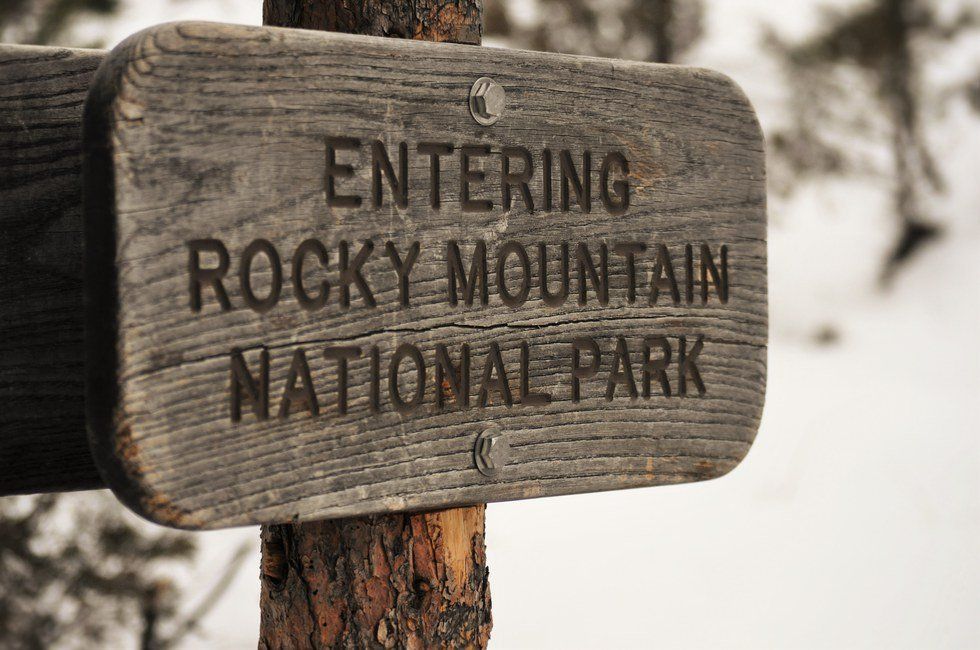
What do you think of when you hear "National Parks"? For me, the first thing that always came to mind was green mountains, flowing streams and the bright blue sky of Rocky Mountain National Park. Growing up in Colorado, the beautiful flower filled meadows and abundance of wildlife were an all too familiar mantra of life and created my expectation of what a National Park should encompass.
This past weekend marked the 100th Year Anniversary of the United States National Parks Service. Western State Colorado University hosts a number of conferences throughout the school year to talk about different aspects of the Environment and Sustainability Major, which has been a huge success at the school. This particular Headwaters Conference, as they are named, was focused around the essence of National Parks, the National Parks Service and the other organizations that surround them.
Going into the conference with a previous expectation for what a National Park consisted of, I was excited to learn more about the beautiful, effervescent areas that were so dear to my heart. As we walked into the first night of the weekend-long conference, I looked up at the screen to see the title of the keynote speaker who would set the stage for the conference. The words posted at the front of the auditorium read "The National Park Service and the Paradox of Progress."
A paradox? It didn't make any sense. I racked my brain, nearly missing the entire first part of the speech, for first the real definition of a paradox, and any possible connection between a paradox and a National Park. But through the course of the weekend, I began to realize what this idea actually meant.
It is a paradox to say that National Parks act as a singular facet. The Golden Gate bridge in San Francisco, CA is a national park and one of the biggest issues they face is off-leash dog walking, of all things. On the contrary, Arches National park, in all its photogenic glory, is one of the largest tourist attractions in Utah. Then there exists the Vallas Caldera National Preserve in New Mexico, a Park that I had never even known existed. Although all of these places share the common ground of being part of the National Park Service, each and every park or reserve plays an entirely different role in the community in which it resides.
I think that my biggest takeaway from this conference was not only that we, as citizens, are not nearly educated enough on the National Parks, but also that so many of us lack the understanding that polarized, opposite norms exist all over our seemingly "united" country. And this is exactly where the paradox lies, our National Parks are not understood on a national scale.
In essence, the world is a huge place. Every person comes from a different background, has a different story, and not a single person can say that they fully understand the one sitting next to them. We spend so much time trying to collaborate and indulge ourselves in the others around us when in all reality the complexity in every human interaction comes from the fact that we are so incredibly different. This is ultimately what I learned from something as simple as our National Parks. In sharing and educating on something that is meant to be shared as common ground, even amidst a field of individuals that are increasingly diverse, we may be able to find a little bit of peace in our paradoxical world.