

Tackling the answer to why there is evil in our world is difficult and nearly impossible. We often wonder how people are turned to commit awful acts of violence and crime. Many believe some individuals are born evil, others think they are raised in a harsh environment, and few believe it wasn't the individuals fault that they committed evil deeds.
This is were film comes in.
Much like literature and other forms of art, film is used as a vehicle by directors to convey different ideals and philosophies they hold. To understand these varying perspectives, we'll examine some of Hollywood's most infamous villains and films. Then we're going to divide them into different categories based on the antagonist's personality, upbringings in villainy, or philosophies. Star Wars, the Dark Knight, Casino Royale, and Halloween are just a few of the films that are being examined. So shall we take a step into the dark side?
Generic Villain (Darth Maul, Count Dooku, and General Grevious):
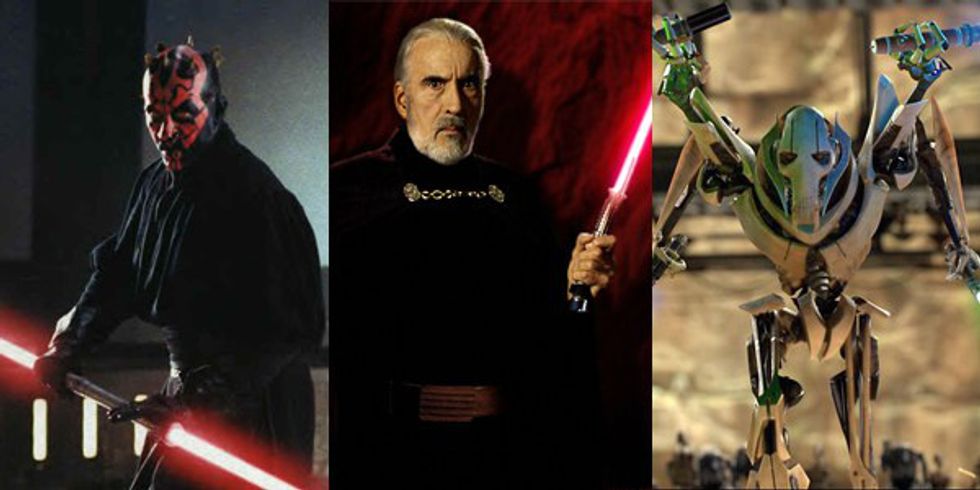
Most action films today are plagued by evil doers such as Darth Maul, Count Dooku, and General Grievous from the Star Wars prequel. These are people who have little to no backstory and no clear motivation to commit the evil deeds that they do. The three Star Wars prequel antagonists are nothing more than fancy light saber duelers that follow whatever Darth Sidious tells them to. These villains are not only badly written but give a false narrative on how dark deeds occur in our world because life isn't so black and white. Most evil doers have a backstory or a motivation rather than just being bad because they wear black or have a red light saber.
Victim of Desperation (Le Chiffre):
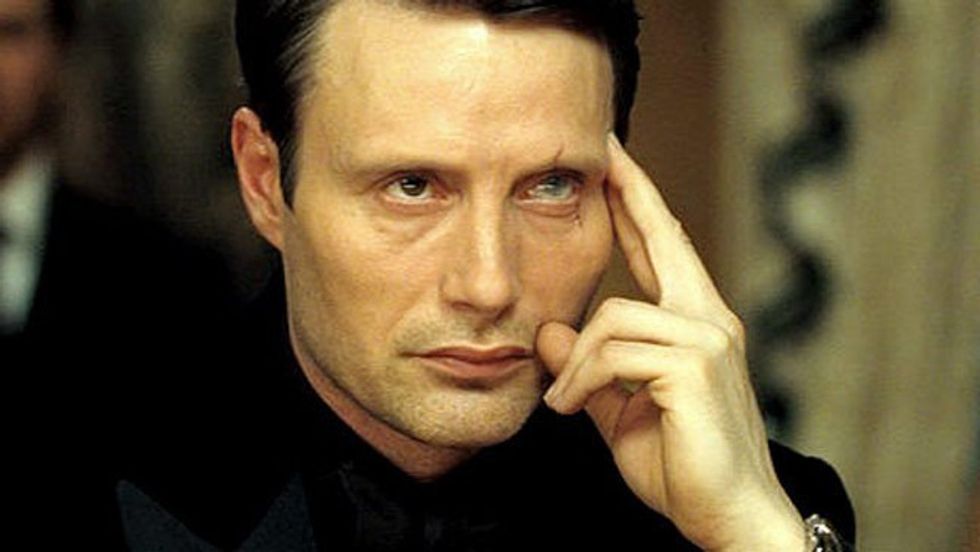
Bond villains are notorious for being generic wrong doers with a goal of destroying the world just to be evil. It only took Mads Mikkelsen's performance as Le Chiffre in Casino Royale to change that stereotype of one dimensional antagonists. A financier of several criminal and illegal activities, Chiffre is desperate during a poker match against James Bond because his life is being threatened by Ugandan terrorists he owes money to. When Chiffre loses he resorts to kidnapping Bond and brutally torturing him until he reveals the code for the bank account. He is then subsequently murdered by Mr. White, a higher up in the crime syndicate Quantom. Chiffre resorts to such heinous acts as practically mutilating Bond but is it justified. If someone put a gun to your head and told you to do something or they'll shoot you, even if it's something awful there's a pretty good chance you'll do it out of desperation to save your own life.
Tragic Hero (Anakin Skywalker/Darth Vader):
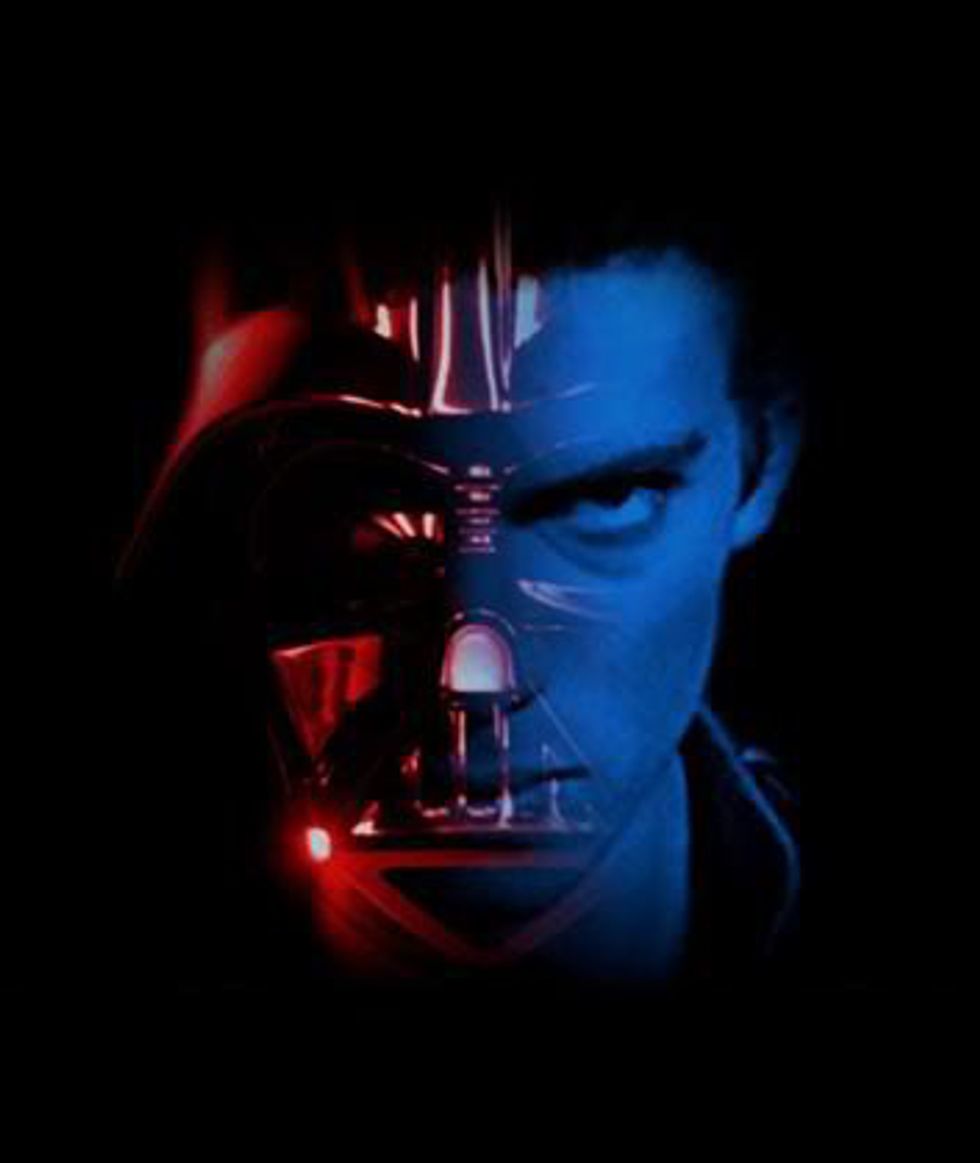
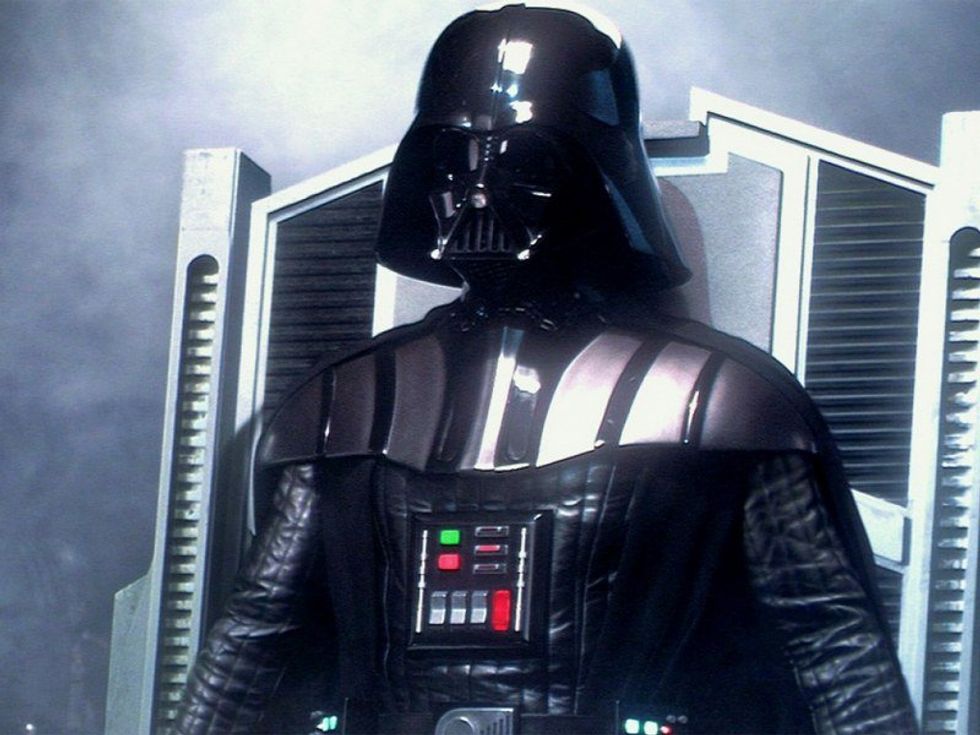
Watching the unfolding of Anakin towards the dark side is a tragic tale of manipulation, death, hubris, and love. He is the perfect example how people can become evil by trying to perform something that is morally good. Skywalker didn't want to lose his wife like he lost his mother. He was torn by the Jedi's code to not hold emotion towards others while being frustrated by their lack of recognition for his talents. Add a sith lord whose flattering him constantly with promises of unthinkable power and you turn a conflicted hero into a ruthless killing machine. Stories like Anakin's are cautionary tales to the dangers of passion, excessive pride, and manipulation. His fall to evil can happen to any one of us with seemingly good intentions. What lengths would you go to save a lover or to uphold justice?
Nihilists (The Joker and Anton Chigurh):
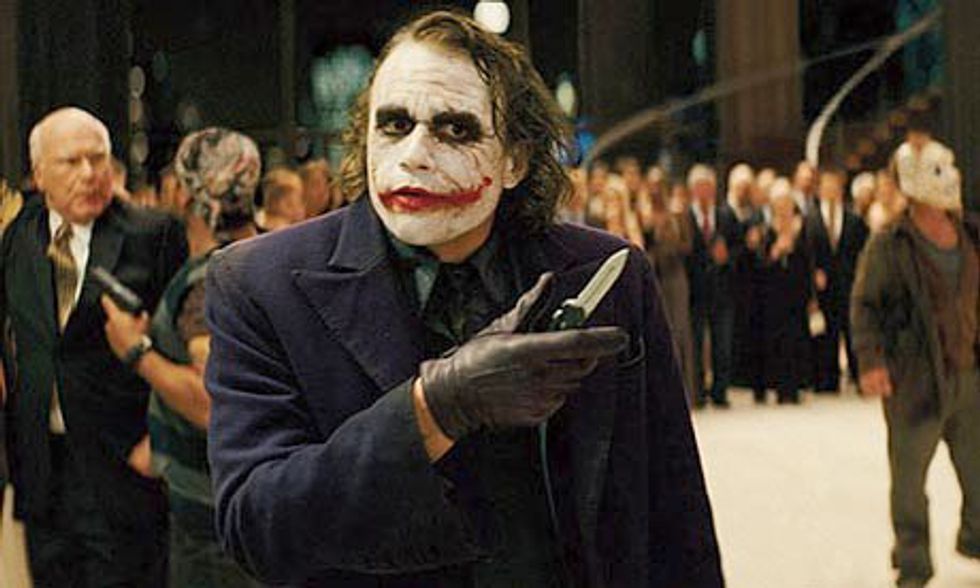
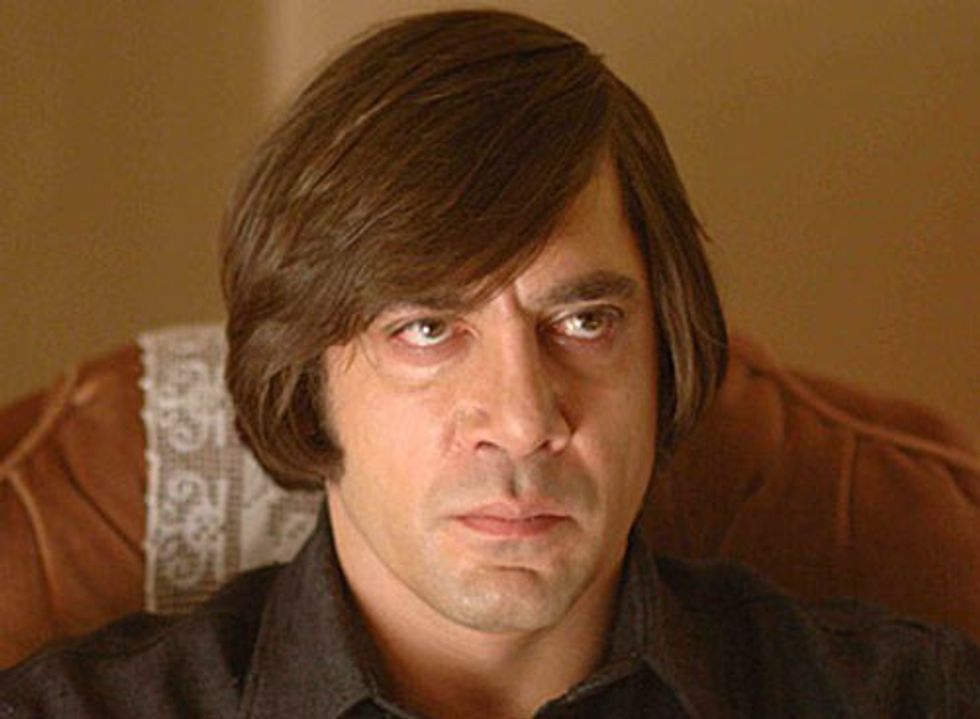
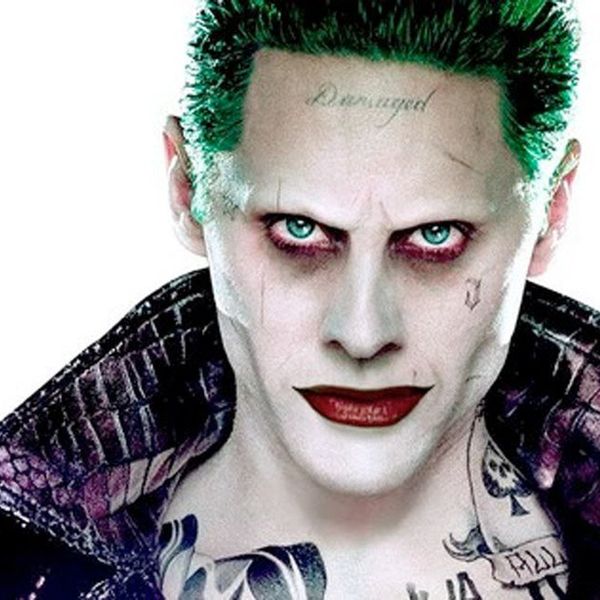
As Alfred famously put it, "Some men just want to watch the world burn." Antagonists such as the Dark Knight's Joker and No Country For Old Men's Anton Chigurh separate themselves from generic villains because they have a motive and principle. Both are the embodiment of different forms of Nihilism, a philosophy focused on the rejection of any beliefs and the affirmation that the world has no meaning. The Joker is an absolute nihilist, believing the world has no meaning and is attached to no belief or moral system other than his own. This makes the Joker a scary individual because he decides exactly what he feels is right or wrong. It's what allows him to kill others without remorse and to create these demented games to simply make a point. Chigurh on the other hand is a ontological nihilist, he believes the universe has no meaning or order and is controlled by brutal chance. Twice in the film he is seen deciding the fate of another person simply by the flip of a coin (chance). He kills almost everyone that comes in his path as if they were animals. While one can be a nihilist and still have good intentions for the betterment of society, it's those who see the world as meaningless and want to instill their radical values that we should be afraid of. This is one of the scariest forms of evil since it can't be reasoned with.
Omnipotent Evil-Doers (The Grim Reaper and the Classic Slasher Monsters):
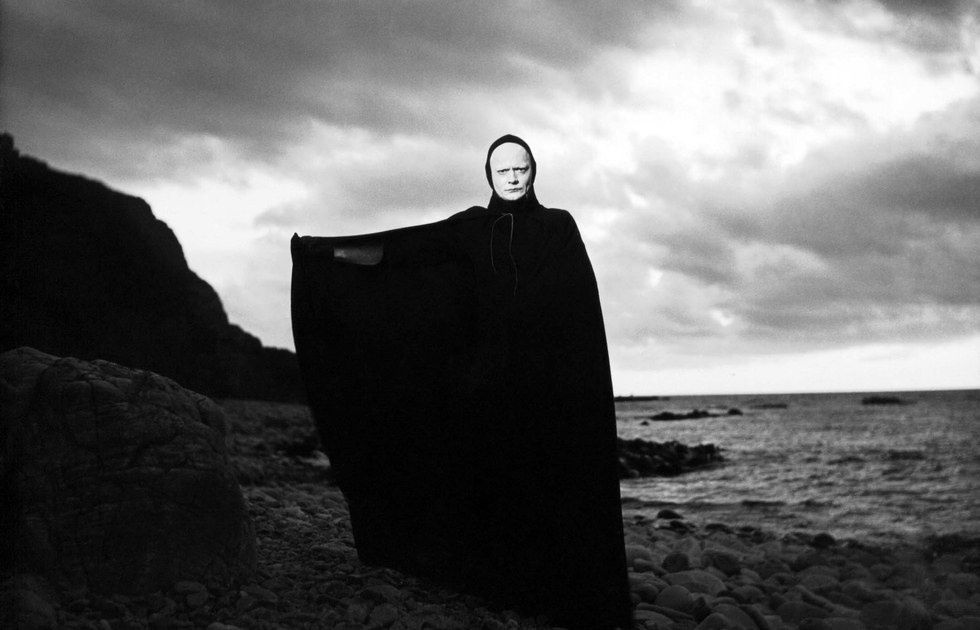
Nothing says evil more than Michael Myers, Freddy Krueger, Jason, and the Grim Reaper. We love these guys because they scare the hell out of us and are entertaining but what do they represent? They're the evils of our mind. Our deepest fears and anxieties that are ever present. For example, the xenomorph in Alien was actually designed to be a physical representation of rape. Its oblong shaped head paired with a second mouth that shoots strange goo are only some of its uncomfortable traits. The Grim Reaper in several movies personifies our constant fear of death. Michael and Jason are seemingly hell spawn who can not be killed (no matter how many bad films they're in). These monsters embody the evil that is ever present in our imperfect world.
Bystanders (Most of the participants in the film The Experimenter):
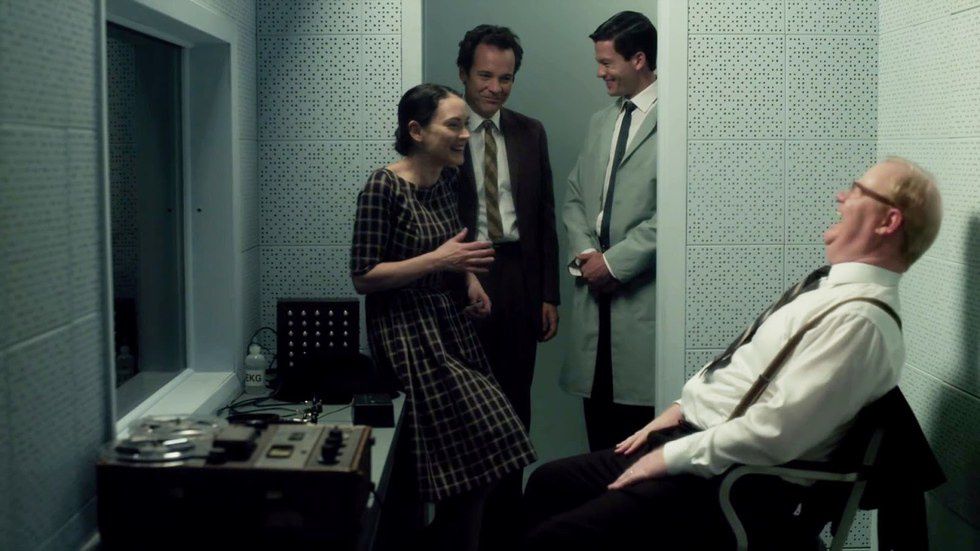
This isn't a famous film but it is based off of a very infamous psychology experiment performed by Stanley Milgrim known as the "Obedience Test". The premise of the experiment is to find out how far people would go under pressure of an authority figure. The participant is placed in a room with a machine that sends fake electric shocks and an overseer of the experiment who plays the role of the authority figure. The participant is told that they will shock the person in the opposite room if they answer a question wrong. The more wrong answers, the higher the voltage. As the experiment went on an voltage increased, the actor would ask the participant to stop shocking him since it was hurting him a great deal and he had heart problems. If the participant complained to the scientist, he or she would tell them to continue with the shocks. Ultimately a majority of the participants continued administering the shocks even with a clear indication that they may have killed the other participant. This may just be the greatest representation of evil because it could easily be done by all of us. While none of the participants physically hurt another person, they showed the world that we could murder another person if put under enough pressure.
Film is can be a great tool for learning about exactly how the world works. We more often than not look at something terrible that happens in our world and run to the conclusion that people are just evil, the generic villain. In reality there was something much more intricate behind their motives. Desperation, being a bystander, or any of the other pressures or motivations that turn people to perform evil deeds do not justify them in the slightest but rather give us a better understanding as to why they occur.















