"Unbreakable Kimmy Schmidt" has been celebrated and recognized for its stellar cast and clever wit. But perhaps the theme that deserves the most praise is the Netflix series’ skillful way of handling important, and usually sensitive, topics.
Throughout its two seasons, "Kimmy Schmidt" has taken a shot at grappling with themes that need some well-deserved attention in the comedy world. The topics range from race to gentrification to trauma and alcoholism.
These themes are not new to the sphere of entertainment, and they often receive attention in films and stand-up, but "Kimmy Schmidt" brings new light to the topics.
The show is unapologetically self-aware. It knows no bounds and isn’t afraid to go outside of the typical safety net that television holds.
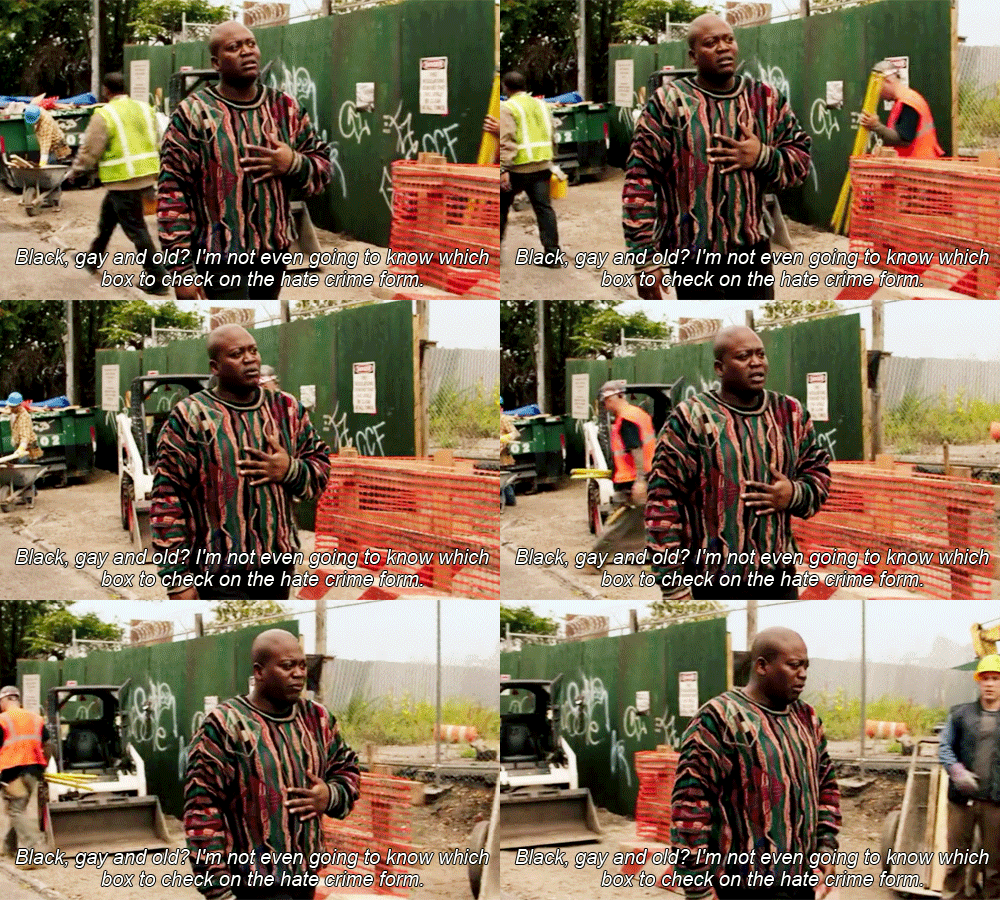
Tina Fey is no stranger to the topic of race in her writing. In fact, she’s often been criticized and labeled as “insensitive” for her over-use of the topic. But her message is always clear and has a grasp on exactly what it is trying to portray. One that is clear in "Kimmy Schmidt."
Tina Fey’s method is one that involves consciously acknowledging the problems associated with race in America. Pretending these problems don’t exist and painting every character in a cheerful, magical world where race isn’t a problem is not only unrealistic, but contributes to the stereotypes and continuous problems that people of color face.

A topic that is widely explored in season two of "Kimmy Schmidt" is gentrification. Told through the eyes of the kooky landlady Lillian, the topic of gentrification is both heartbreaking and hilarious. With the caricatures of the hipsters that invade their New York City street and Lillian’s pursuit of bringing them down, the audience can understand the growing problem plaguing communities across the country, especially in poorer neighborhoods like Lillian’s.
Another new topic addressed in season two is Kimmy’s struggle with trauma. Surprisingly, the topic was one that always lingering in the background of season one and most of season two, but was not addressed until mid-way through the series’ second run.
Kimmy’s trauma is coupled with the storyline of her newfound friend and therapist, Andrea, played by Tina Fey herself.

Andrea slowly (with a moderately realistic timeline for television, I might add) helps Kimmy grapple with her trauma from the bunker, while simultaneously battling her own alcoholism. Andrea shows up drunk to the majority of their therapy sessions and almost too-accurately describes how an attempt at rehab would play itself out.
The topic is one that deserves more time and attention in the series, but is a refreshing change of scenery for Tina Fey’s television wit.