

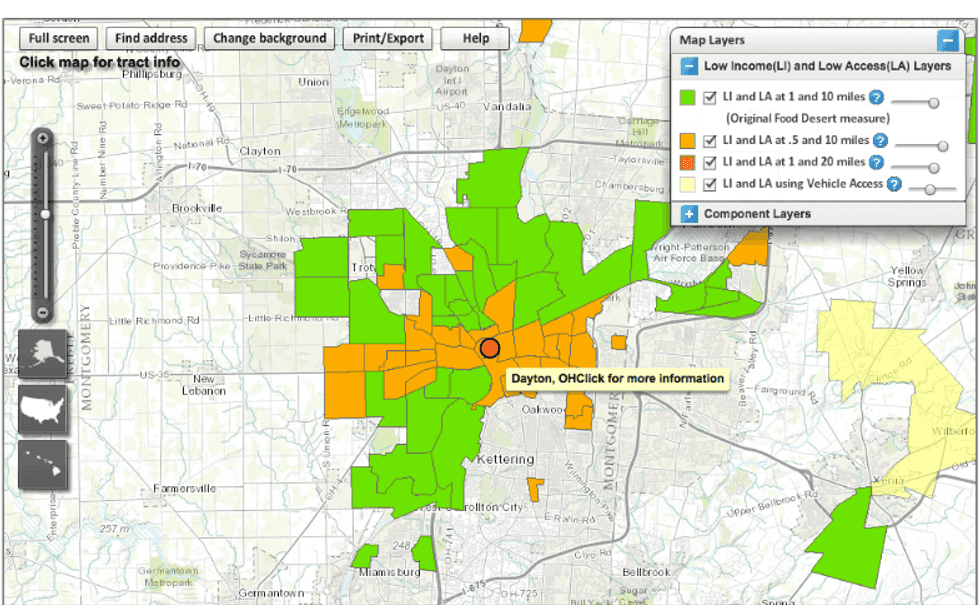
We all know the feeling of hunger: grumbling, empty stomachs that are put at ease during the next meal. According to a recently released study by the Foodbank Inc., 130,200 residents in Montgomery, Greene, and Preble counties report some food insecurity. That’s an increase of 4,500 people from the previous report.
Further, 41,230 of those who experience food insecurity are children, the Foodbank said. According to the USDA, food insecure households were unable at some point during the year to provide adequate food for one or more members due to lack of resources. An article from February 2015 in the Dayton Daily News states that the city of Dayton ranked fourth in the country in 2012 for food hardship, which is an indicator of food insecurity.
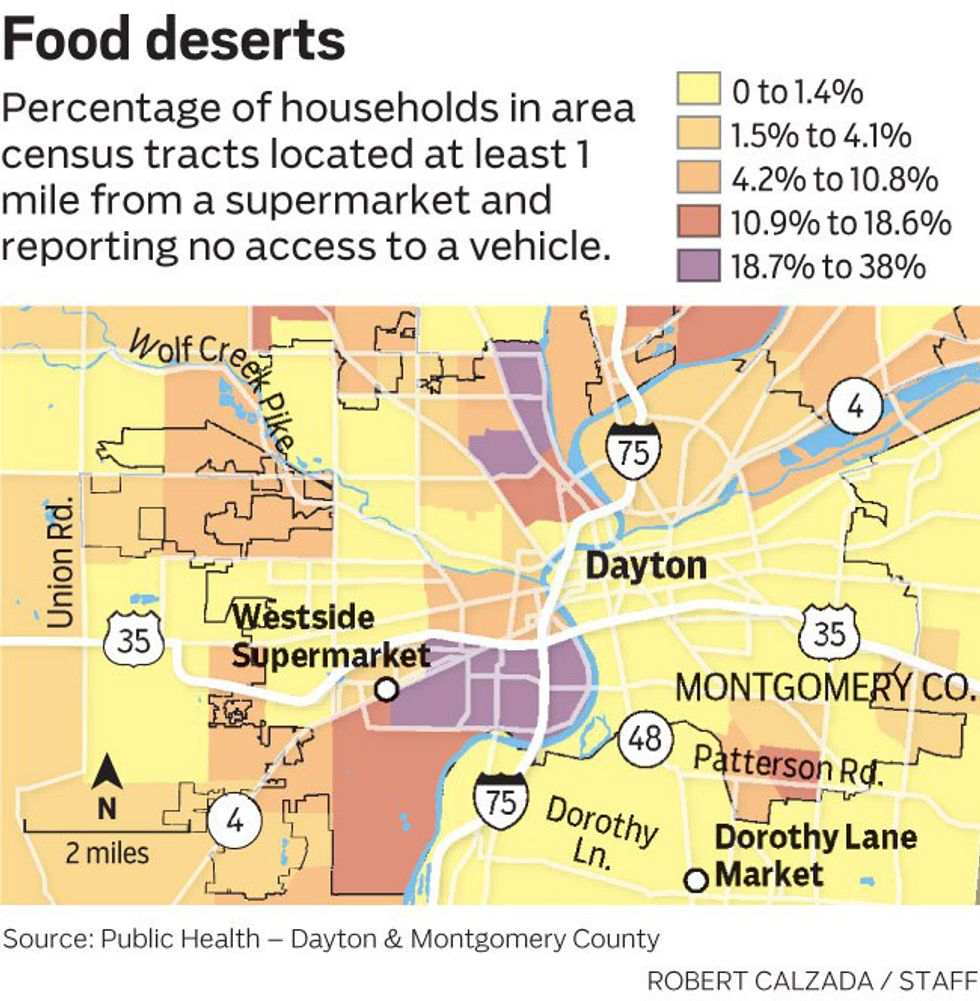
Nick Cardilino from UD’s Campus Ministry and Center for Social Concern, learned first about Dayton’s food desert problem from UD grads. All the inner city grocery stores had moved out, says Cardilino. “There is no farmers markets, only corner markets where all they can buy is junk food, which would be okay if people had reliable transportation.”
But they don’t. Co-presidents of UD Sustainability Club, Meg Maloney and Justin Wamplre, mention that Dayton is one of the poorest cities in America: “That’s something we didn’t realize.” Nineteen percent of households in Dayton don’t have transportation to places with healthy food. Most people rely on public transportation, but Cardilino notes that the Dayton RTA has had problematic ridership and has been forced to cut routes and decrease the number of times that buses runs. This further restricts poverty-stricken areas from gaining access to fresh and healthy food.
Students at the University of Dayton have in the past and again recently gotten involved in various ways to combat this hunger and lack of access. Urban gardens, food recovery, and other awareness events are some of the ways students have reached out to the community to help those who battle hunger and lack of resources each day.
Mission of Mary Farm was a community started by UD grads as a lay Marianist faith community and is now managed by Stephen Mackell. The recent grads wanted to set up a community that was in a low-income neighborhood and then figure out what the needs of the community were. Once they moved to a house on Silver Ln., in the Twin Towers neighborhood, they immediately noticed that there was an abundance of vacant properties that the city wanted to unload and a lack of resources for fresh food. Urban farming converts that unused land into something that is growing healthy food, Cardilino said.
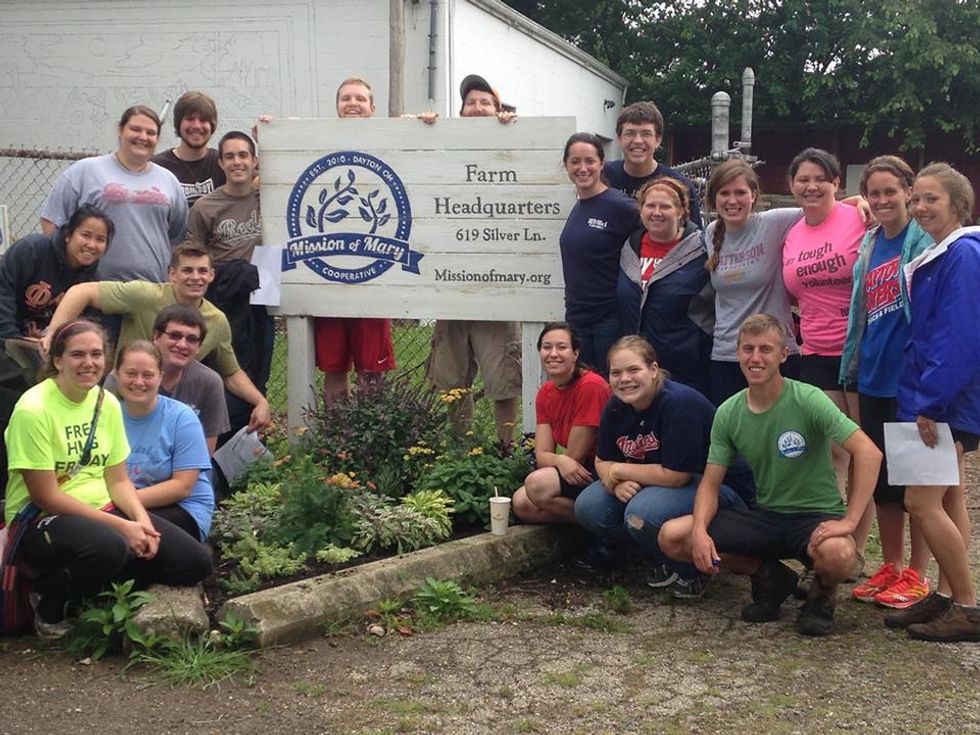
Now Mission of Mary operates three different plots of land in the neighborhood, totaling about 2.5 acres of land. They also try to give back as much of the food as they can with a roadside stand each week during the season, monthly community dinners, and a CSA program. They hold a youth outdoor education camp during the summer to give students the chance to find out where their food comes from and how to cook with fresh food. They often work to get UD students to help with planting, harvesting, and other odd jobs.
UD’s Sustainability Club is an on campus organization, whose motto according to one of the co-presidents sophomore, Meg Maloney, is “food, water, and waste.” Maloney is an environmental biology major and SEE minor and runs the club along with co-president Justin Wamplre, a junior marketing major and SEE minor.

Together they state the club’s main goal is to inform the student body about what they can do to be more sustainable. The group is involved in many activities that reduce waste, such as composting, but also increase the food access in the Dayton area. The group has 30 members that work with the local Food Bank. In addition the group does its best to promote local markets and area farmers. This type of support increases local participation in growing food which gives those in inner cities more options.
The group has plans to build an urban garden near Edwin C. Moses Blvd. as a way to grow local food and give it those who otherwise wouldn’t have access. For the pair, their focus is on trying to educate students about the issues in Dayton and empower them to go out and fix issues. Especially issues that may environmentally help Dayton and the entire earth.
Another on-campus group combatting hunger in Dayton is a recent addition to the UD community. The Food Recovery Network is a national initiative that now has a UD chapter thanks to Danielle DiCristofano, a junior studying health and sports sciences and Michael Keller, a sophomore entrepreneurship major.
Both students had the idea to re-purpose the leftover meals and dining dollars from UD’s dining halls. DiCristofano was inspired by an email newsletter, theSkimm, that mentioned the Food Recovery Network, and Keller researched food deserts in Dayton for a Communications class. Keller found that Dayton is the worst city in Ohio for food insecurity, with the largest number of food deserts in the state. “I had no idea how bad it actually was,” said DiCristofano.
Keller and DiCristofano both believe that everyone has the right to eat, and to eat healthy. Keller originally wanted to donate leftover dining dollars to a charity that fights food insecurity in Dayton and spoke with Brother Brandon Paluch in the Center for Social Concern. Around the same time, DiCristofano had also reached out the Brother Paluch. The Marianist brother put the two in touch, and together they created UD Food Recovery Network.
Currently, members come together every Friday and collect the leftover food from KU Dining Hall, which would have otherwise been thrown away or gone bad over the weekend. There are about seven members on the exec board and volunteers come in as needed. Because they are such a new group, they are still finding ways to organize in a more efficient way, to not waste time or resources, said DiCristofano.
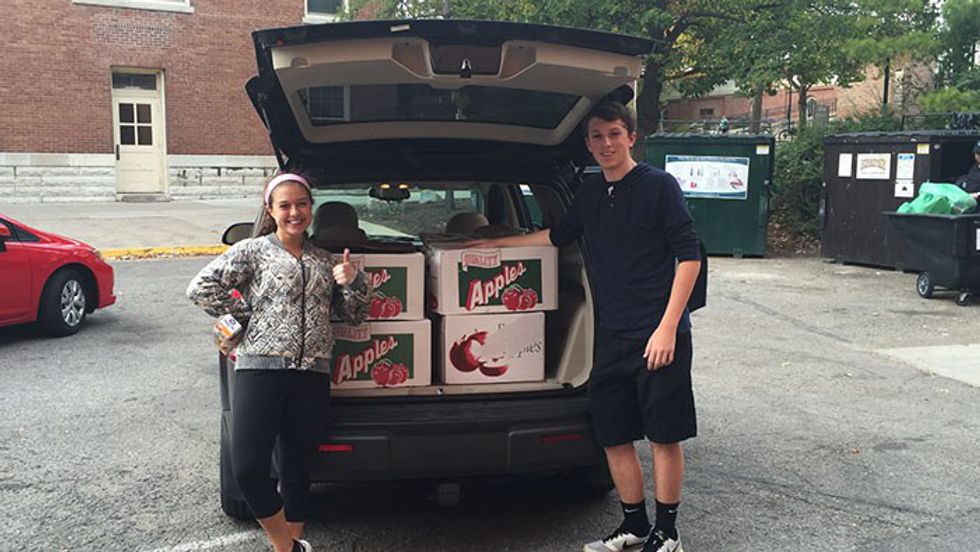
The group only collects food from KU right now, because it is the only dining hall that closes over the weekend and as a result, they have a definite date by which they need food to be used up, while other dining halls will attempt to use up food over the weekend. On average the group recovers about 65 pounds of food per week, although Keller mentions that some weeks are larger than others depending on events going on around campus and specialty meals that are offered at KU.
They are also trying to continue Keller’s original idea of allowing students to donate leftover dining dollars at the end of the semester. If this is approved by dining, they will use that donated money to purchase food to donate, according to Keller. This is still a project in process and if dining services supports it, both Keller and DiCristofano believe that this would be another way that we can combat food insecurity in the Dayton community.
The food collected goes to helping St. Vincent DePaul's clients. Keller remembers part of the speech given by Ellen Gustafson during her time on campus, “She stated an alarming statistic, ’40 percent of all food is wasted.’" Keller and DiCristofano are trying to lower that statistic through UD's Food Recovery Network, and so far, Keller believes it’s working. “We are taking food that would have otherwise been thrown out and donating it to St. Vincent DePaul, which helps them out immensely and allows them to feed more people.”
These groups and the urban farms are helping hunger, and Cardilino commends Mission of Mary Farm on their great job on improving the East End neighborhood, “But that’s one neighborhood.” With the closing of Kroger in West Dayton on Gettysburg Ave. seven years ago, Cardilino notes that he can’t think of any grocery stores in all of West Dayton.
An article on WHIO.com from May 2015 states that the current options for those living in that area include “a discount grocer and a smattering of corner markets.” These corner markets buy cheap from big chains and then upsell to the people in these areas, who have little to no other options.
The need for increased access to healthy and affordable food was made aware to government officials in May 2015 with the introduction of an amendment that appropriated $2 million a Healthy Food Financing Initiative. An article from Finance Fund mentions that in July, Govenor John Kasich approved an operating budget that included this amendment. This increase in focus for creating access to healthy foods will hopefully be a step in the right direction for neighborhoods all across Ohio.