
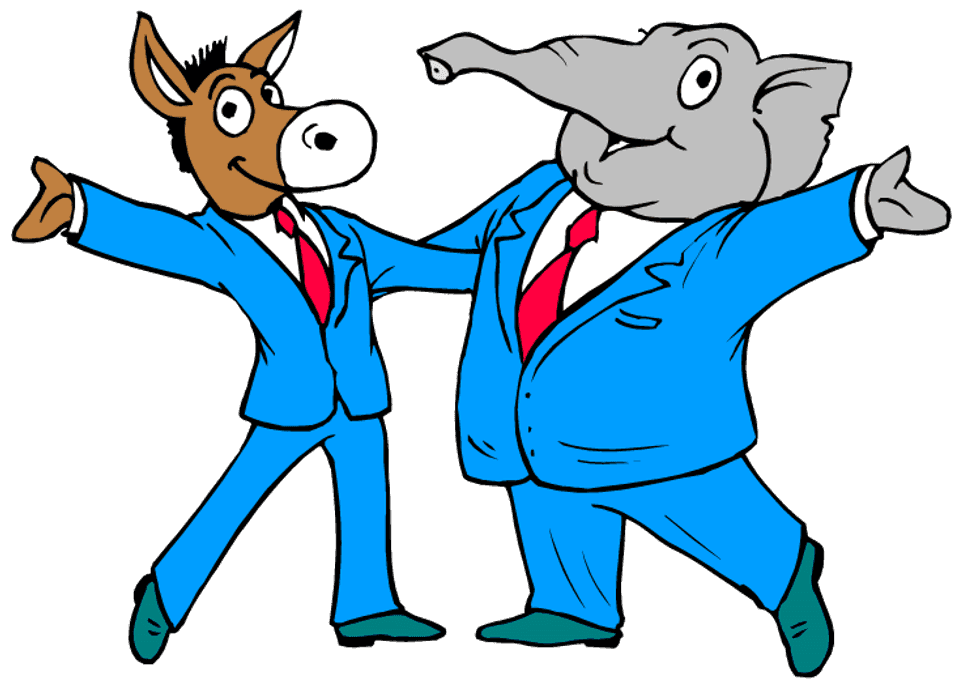
This year's election has been a wild ride that has seen multiple sides fighting for influence in both of the parties. The Democratic side has only featured two real candidates competing for the nomination, while the Republicans began in double digits before narrowing it down to the last three who remained before Indiana. Within the parties, large schisms still exist between those who are on pace to win the nomination and substantial groups within the parties. On the Republican side, the Never-Trump movement can attest to the refusal of Republican Party elites to accept their front-runner. Meanwhile, the recent situation in Nevada between Bernie Sanders supporters and the state Democratic Party shows how unwilling some die-hard Bernie supporters are to accept his loss. Those on the winning sides are complaining about how others in the party are failing to line up behind the winning candidate, the one who won the primary fairly. But the problem does not lie in the primary system (although there certainly are issues with it), but rather with our two party system.
The Democratic and Republican parties have become highly polarized over the past few decades, making it very easy to understand just what the two parties are for and how they would plan on governing should they be given power. This in and of itself is not a problem, and I would argue that it is a good thing to know generally what those you elect plan to do when in office, and that they will be held accountable by the party structure if they stray too far. But the problem with polarization lies within the fact that, in the United States, we only have two poles.
The primaries in both of the parties are showing this; regardless of who wins the primary in each party, there will be a substantial minority of party members who are upset with the outcome. There are real differences between Sanders and Clinton, or Kasich and Trump. But beyond that, there are lots of people who have great differences with the parties. The idea that a nation as large and diverse as the United States, with over 330 million people that will be a majority-minority nation by 2050, can fit everyone within two parties is ludicrous. For instance, it is not hard to someone who supports a robust, Social-Democratic welfare state based off of their religious beliefs, but also believes that abortion is murder and strongly supports traditional marriage. In our two party system, we have no clean place for that person like many other Western Democracies would.
The answer to this problem is to add more parties into our system. These additional parties would allow for more Americans to have their viewpoints properly represented in government. It would also allow for more to get done, as the building of coalitions on certain issues that currently have majority support in the US, but are only popular within one party (like gay marriage, a path to citizenship, and stricter gun control laws).
This election has proven that the two party system is broken, and the best answer moving forward is to add more parties into the mix. Allowing for the people to be better represented through the parties will allow for more efficient leadership and a fairer democracy.