
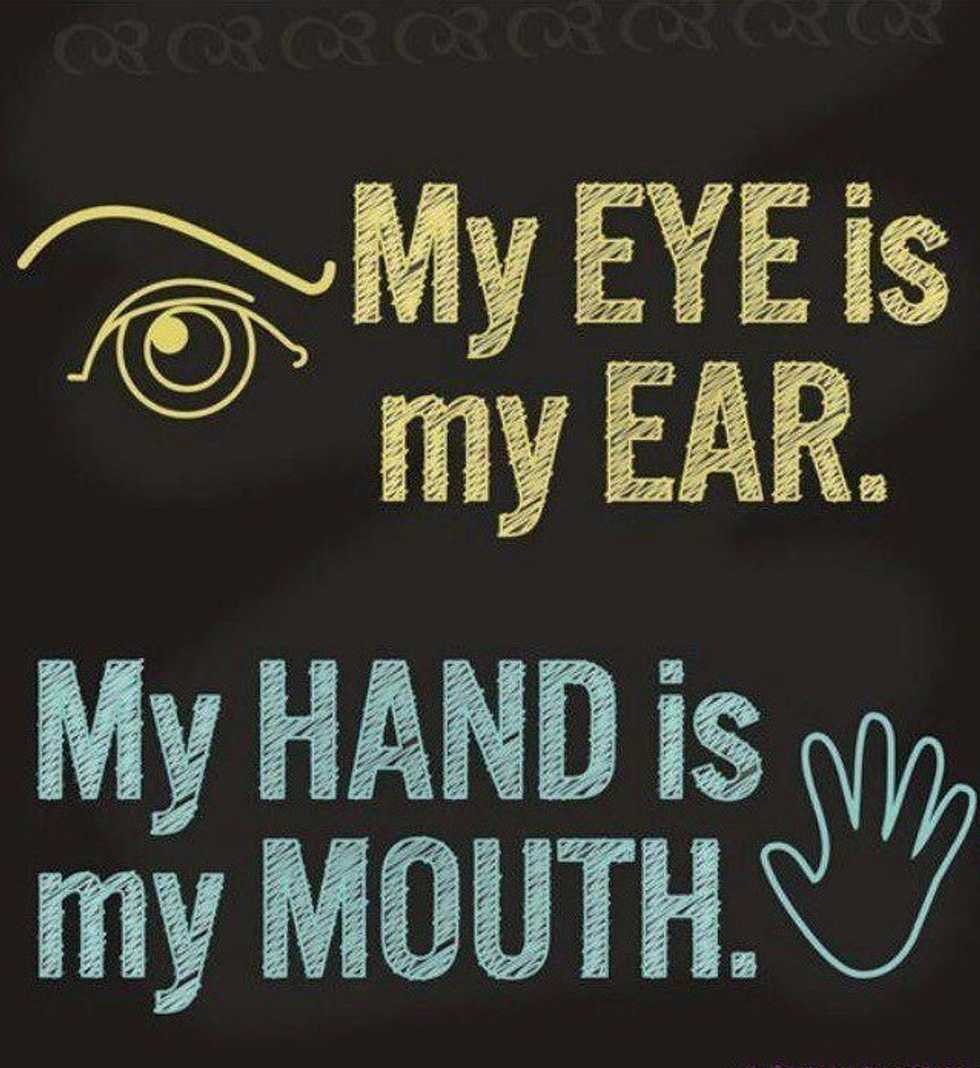
When I accepted the opportunity to tutor a beginner's American Sign Language class, I started an amazing experience. I already loved signing, and being a tutor really solidified and expanded my knowledge. I hope that by talking about my experience, it helps others who might be undecided about tutoring or being a TA.
Before I transferred to Western Washington University for my bachelor’s degree, I was attending Clark Community College in Vancouver, Washington. While at Clark College, I earned the American Sign Language Certificate with my associate’s degree by going through a two-year sequence of ASL language classes and deaf culture classes. By the time I had completed the certificate, I volunteered often within the deaf community and had developed a love for signing. My tutoring experience opened my eyes and really helped me develop my knowledge of my second language.
I was first asked to be a tutor in an ASL 121 summer course for beginners, which I found to be not only fun, but a real improvement to my learning. I was incredibly nervous the first day. What would the students think about me? Would they want to learn from the teacher rather than a TA tell them how something is done? Would there be any advanced students in the class to communicate with? How many would know more than me? I wasn’t really sure of anything until I came to class a few times. For those of you afraid of tutoring or being a TA (or if you're an introvert like myself), don't be. It wasn't nearly as bad as I thought it would be! I felt really comfortable helping the students who wanted to excel and do well in the class -- I even made a few new friends and caught up with some old ones. (One of the many great things about having friends in an ASL class is having great practice buddies.)
But, I came to realize that learning a language is one thing, but teaching and interacting with people is a whole different story. Tutoring for the beginner’s class helped me realize that although the book work and learning in class are important in learning a new language, it is also incredibly important to have real-world experience practicing communication. Even though I didn't learn new signs during my time as a tutor (because the signing in the beginner’s class doesn’t teach complex vocabulary), I had so much practice communicating with the professor, as well as teaching the students their first signs. It was interesting helping them from day one because my professor did not use her voice, and the students did not know how to sign. It was amazing to see their progress, and I even had the opportunity to interpret, which is what I wanted to do when I completed the program at Clark. Teaching was the best way to refresh my memory and become more confident in my skill.
When you're teaching something, you're paying closer attention to your own efforts. I was hyper-focused on not becoming lazy in my signing because these students were asking me for help; learning the wrong way can be very hard to correct later on. Being a tutor in any class is a really important job because you're helping people learn, and learning a new language is not an easy thing to do. It's very rewarding to be a successful tutor, but you have to give it your best effort.
Needless to say, I learned a lot from tutoring, especially since it was for a language class. I would recommend tutoring or being a TA to anyone who practices a foreign language because you can be in the class and practice what you’ve already learned with a professor without actually taking the class again. I had a new level of conversational practice with the professor I tutored for as I learned from her and was able to review with the students. If you really want to go further in your learning and understanding of a language, this is a great way to do it.
Teaching is the ultimate proof of knowledge, and being able to teach a language is an amazing feat. Helping other people learn a language I love so they could be part of a culture I love was truly an unforgettable experience.