


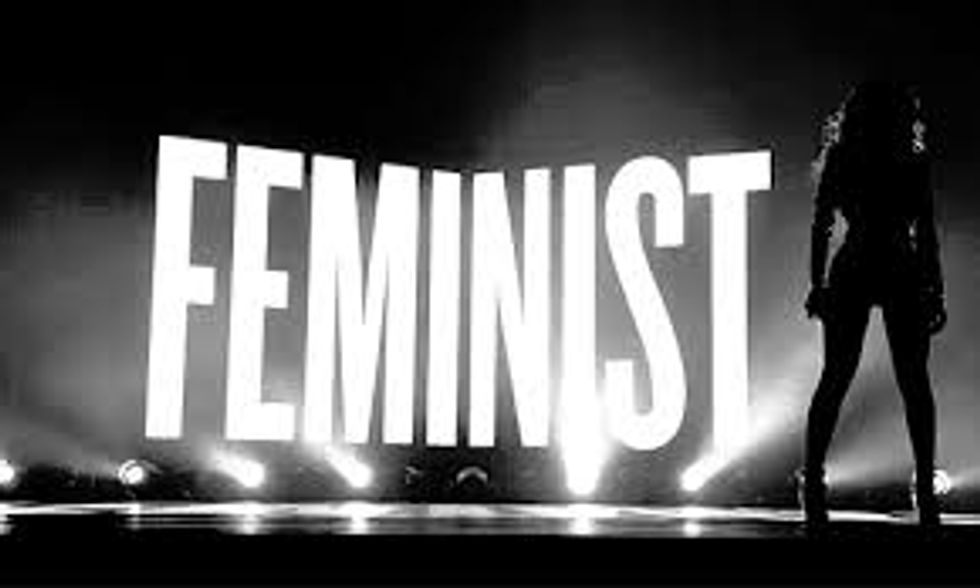
Truth: Many people against feminism do not understand what feminism is.
According to Merriam Webster, feminism is, "The belief that men and women should have equal rights and opportunities." Feminism is not hatred against men. Feminism is not the belief that women are inherently weak. Feminism is not or the idea that all women should grow out their armpit hair and not wear bras. Do you believe that women and men should have equal rights? Congratulations, you are a feminist!
There have been several anti-feminist movements that have come about such as the hashtag #WhyIDon'tNeedFeminism. In this movement, women posted pictures of themselves on the internet, holding signs stating they they do not need feminism. However, if you have seen any of these pictures, it is apparent that many of these women do not know what feminism even is, and base the entire concept of feminism on extremist movements. I guarantee that if you asked any of these women, "But do you believe that women should have equal rights?" they would (whether they admit it or not) realize they are contradicting themselves.
So, before you say you are anti-feminist, ask yourself: do you believe that women and men should have equal rights?
Truth: Many people believe that we do not need feminism because they think that women have equal rights.
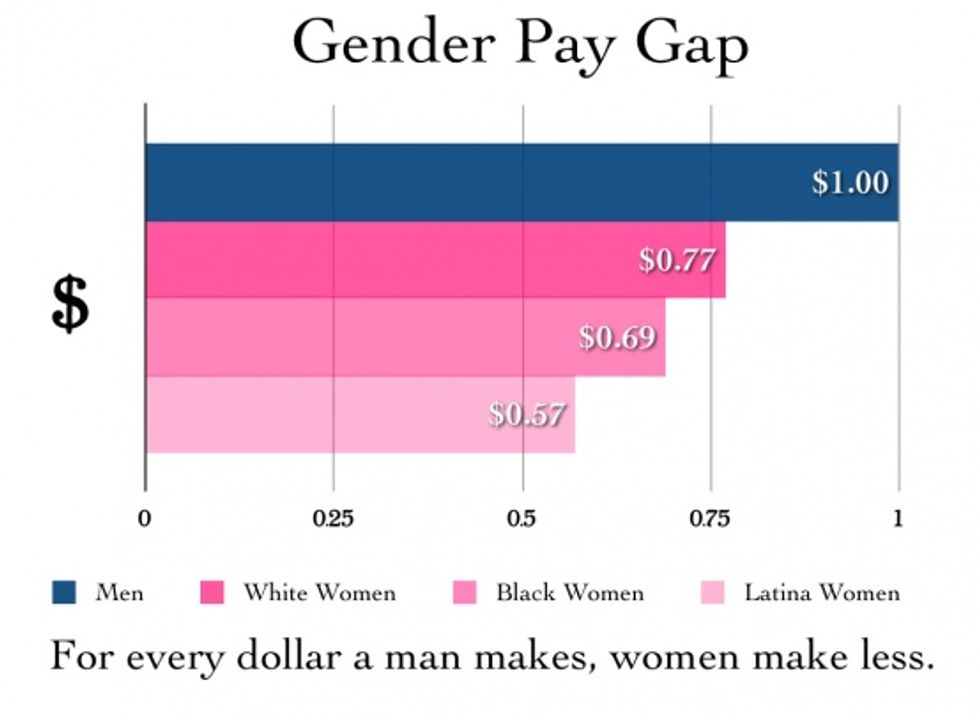
While it is a fairly well known statistic that women make only 77 cents for every dollar a man makes, this graph from the University of Oregon demonstrates the furthering pay gap between white, black and Latina women. There are no federal laws demanding equal pay for all women, therefore demonstrating the inequality for women in the workplace.
Another feminist issue is the idea that women need to modify how they dress because men have some uncontrollable, carnal sexual desire, justified by the common expression that "boys will be boys."
Whenever women are catcalled, sexually harassed, or raped, the first question is always, "What was she wearing?" It doesn't matter what she was wearing. No matter how much of her body she was exposing, it will never justify the need for a man to violate her.
This same idea goes for school dress codes. In high school, we all had the "no spaghetti strap" rule, or the "shorts must extend beyond your fingertips" rule. The middle school in my hometown even banned yoga pants and leggings unless you were wearing a shirt that covered your butt. The reason for the existence of these dress codes is that administrators believe that boys will be too distracted. How about instead of teaching our girls from a young age that they must modify their appearance to avoid the wandering eye of men, we teach our boys to not objectify women.
In a world of true equality of men and women, women will be respected for who they are as a person and not for how they choose to present themselves.
*There are many more sources of gender inequality, and if you are skeptical of the ones I mentioned or are interested in learning more, I encourage you to do further research in order to gain a further knowledge of the need for feminism.*
Truth: Many people are afraid to identify as feminists.
I once took a sociology class, and as a warm-up to our class lecture on feminism, the professor asked, "How many people believe that women should have equal rights?" Every student raised their hand. The professor then asked, "How many people would identify as a feminist?" In response, only a third of the class raised their hand. When the professor asked why nearly two thirds of the class dropped their hands, many students said that they do not want to be associated with an extremist movement.
When the professor asked why nearly two thirds of the class lowered their hands, they responded with the following point:

Myth: All feminists do these things:
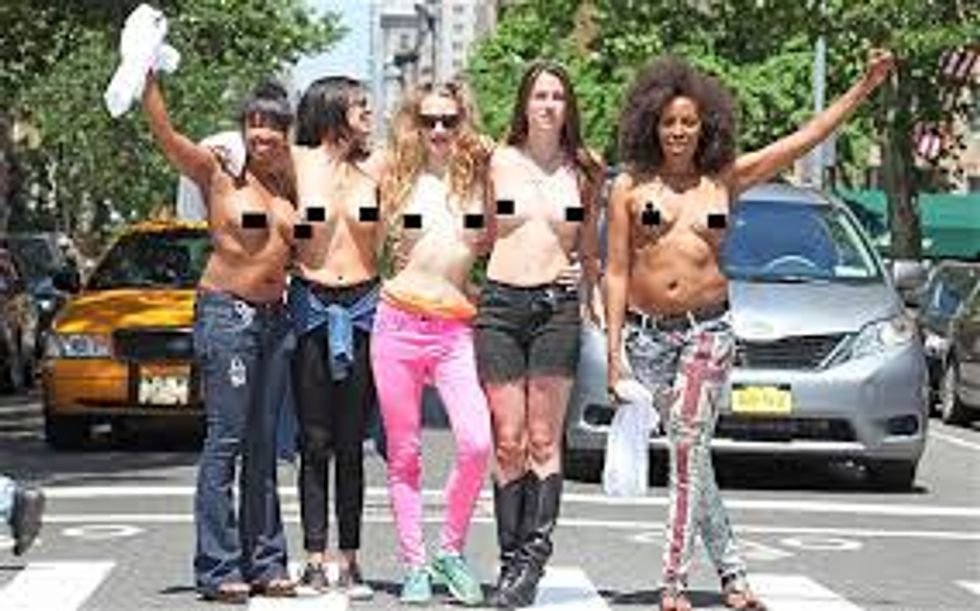
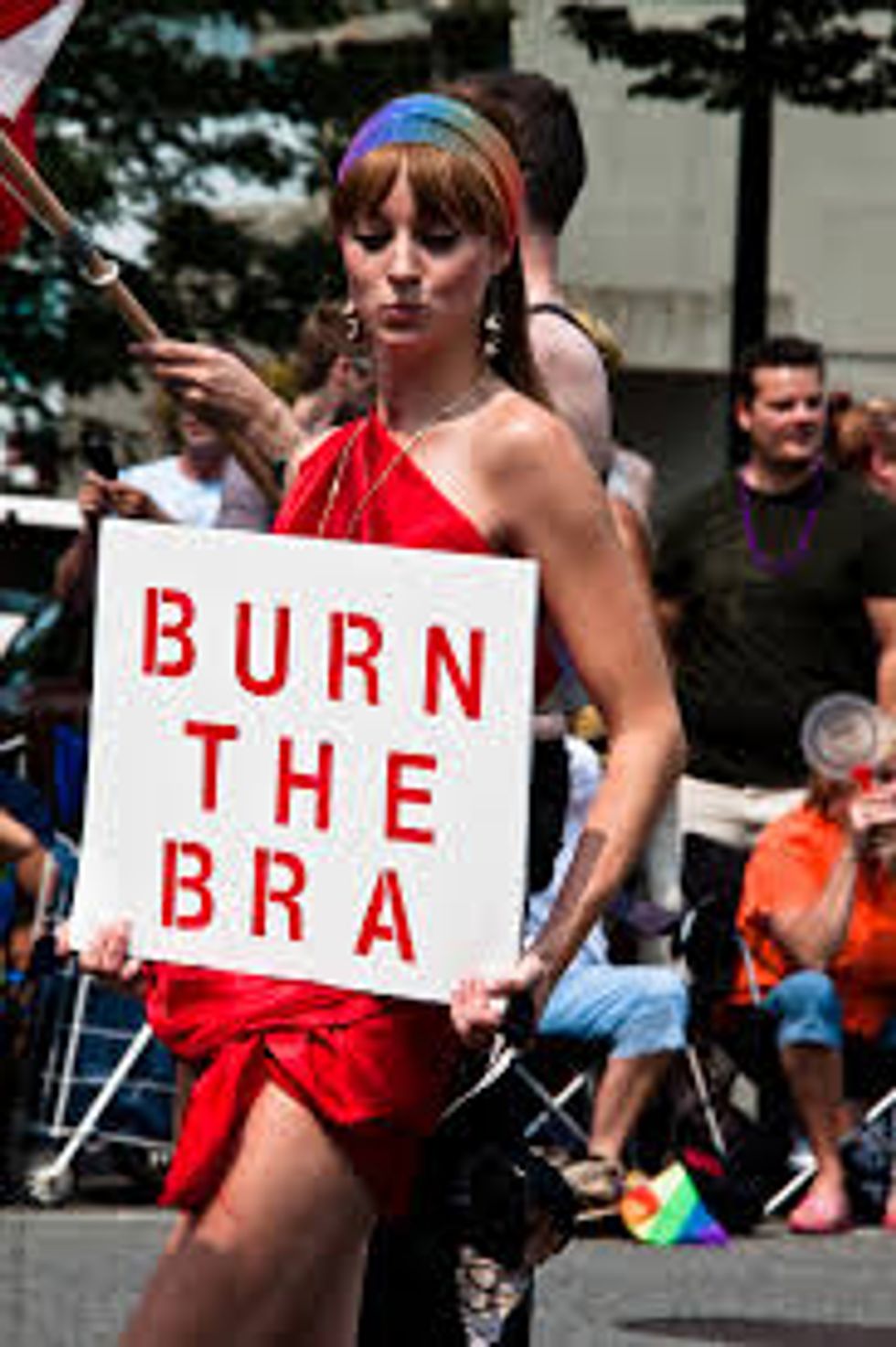

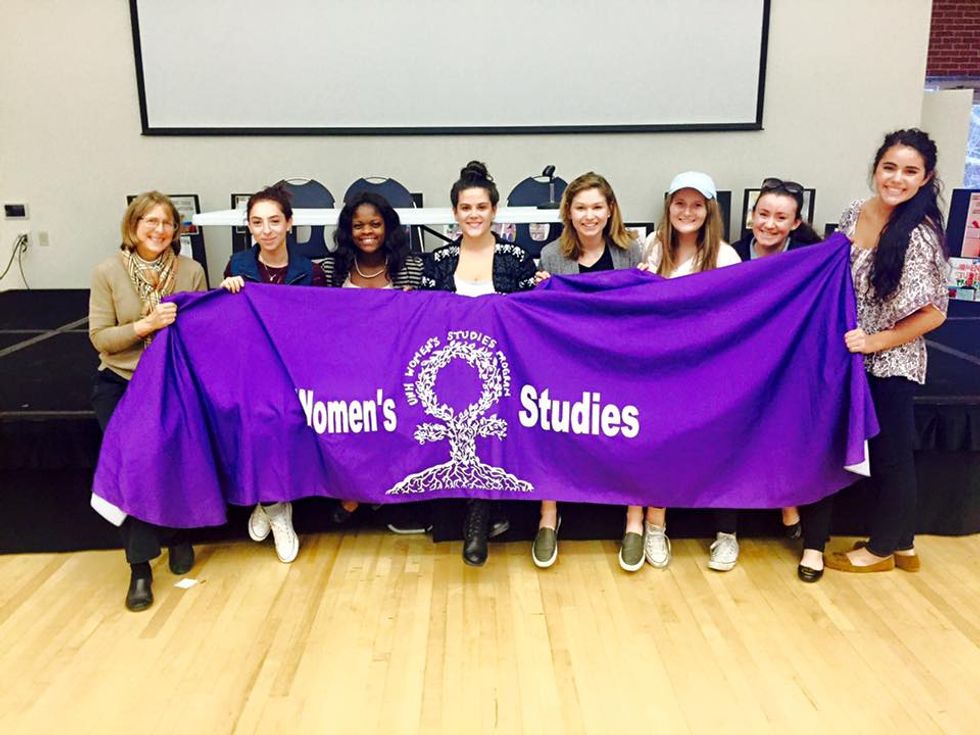
Just like any other movement, religion, or political party, feminism has extremists. Similar to how we wouldn't define all Muslims as terrorists or all Christians as members of the KKK, all feminism cannot be defined by extremist movements. Many people who are opposed to feminism picture the images above when they hear the term, and in turn, view feminism with disgust. In reality, in order to be a feminist, you simply have to believe that men and women should have equal rights. Feminism is not always extremism and many feminists can be anyone from stay at home moms, to celebrities, to college students, to working moms, to CEOs, and many more.

Myth: Men can't be feminists.
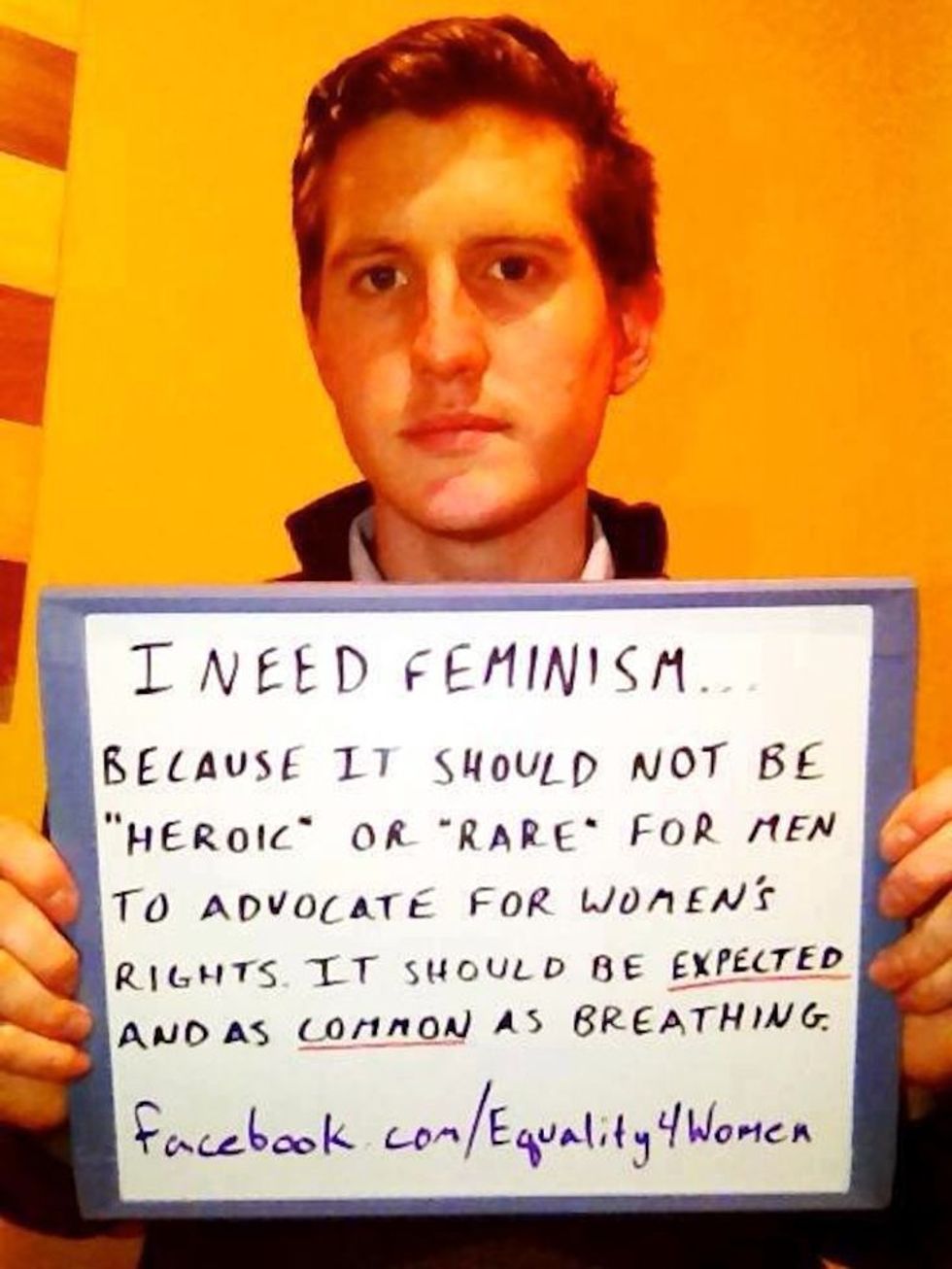
Feminism is for everyone, as it is the belief that men and women should have equal rights. Many men are advocates of equal rights for women. Celebrities such as Ryan Gosling, Joseph Gordon-Levitt, and John Legend have been very vocal about their identification as feminists, and have used their celebrity platform to show men that it is not only okay to be feminists, but is essential for an equal society.
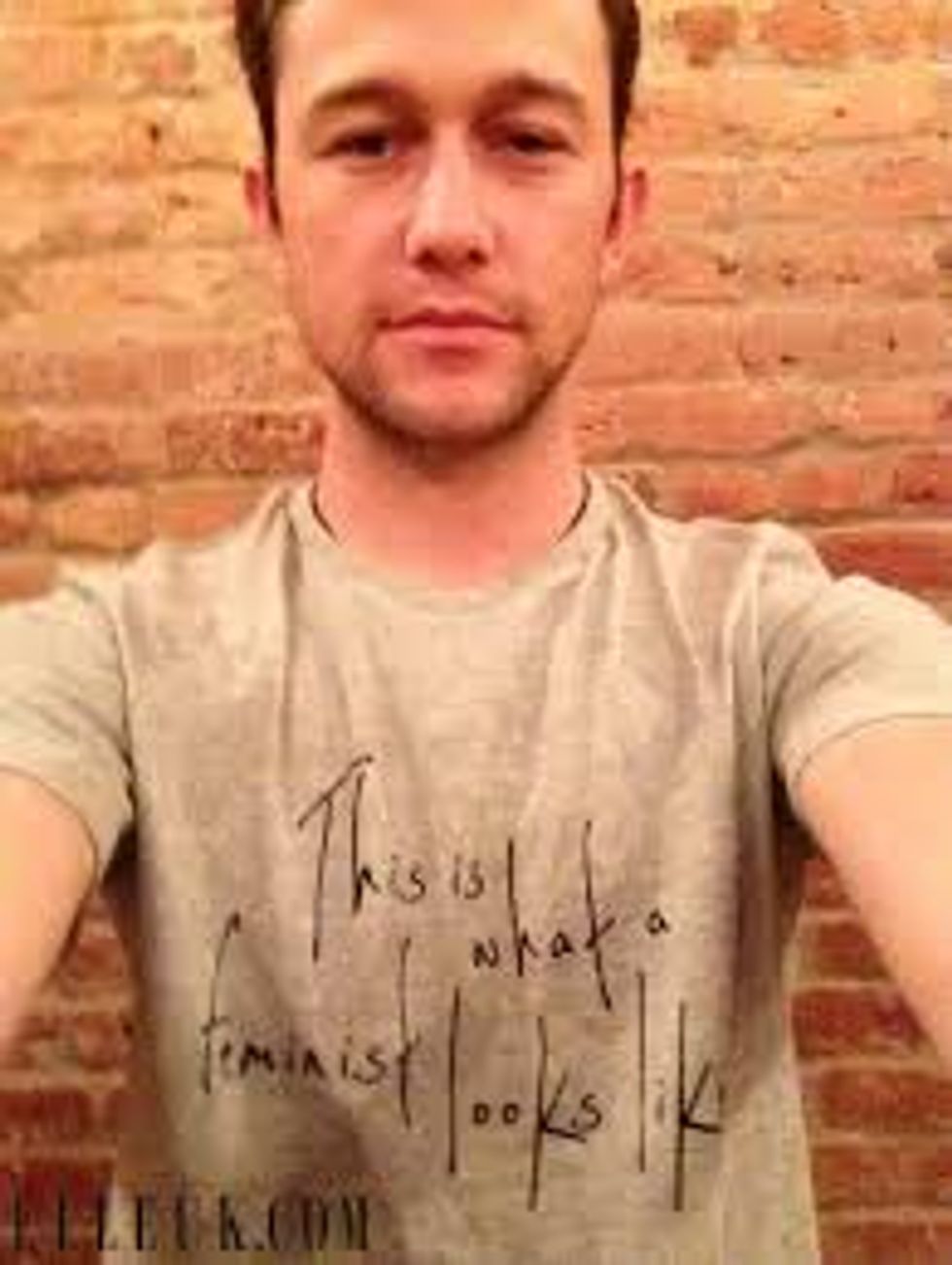
Skeptics of feminism may wonder why men would be feminists. A big reason is that male feminists believe that all people should have equal rights and because women have still not achieved parity in society, support the feminist movement. In addition, to the notion that women and men should be equal, the truth is, feminism addresses issues that affect both men and women.
An example of one of these issues is paid maternity leave. The U.S. is the only industrialized nation in the world to not federally require paid maternity leave.
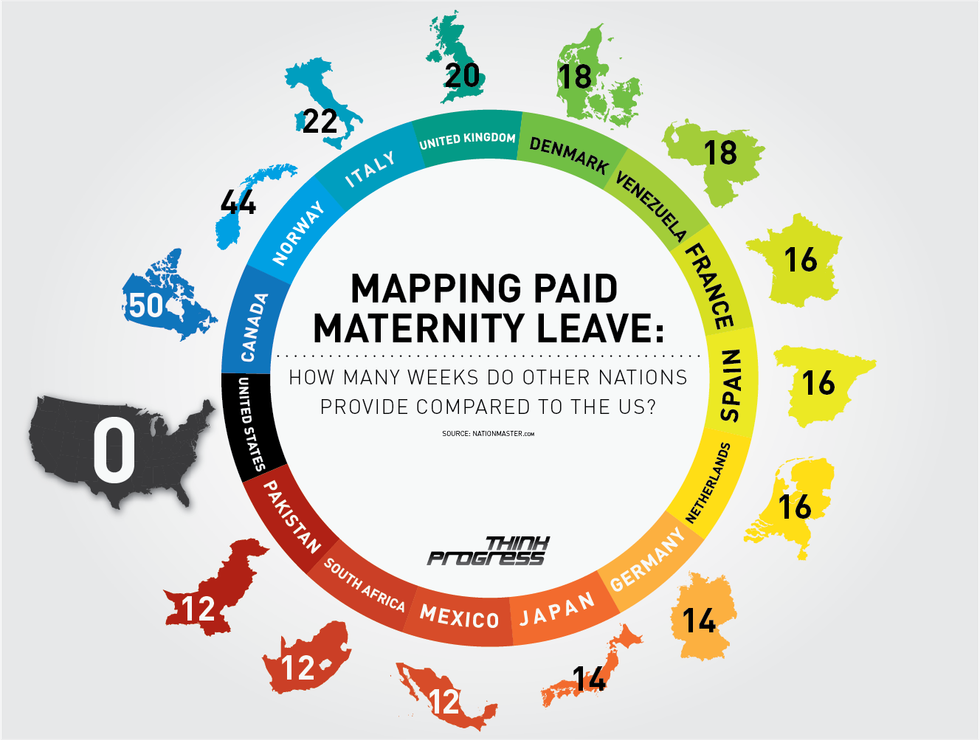
Paid maternity leave is an issue that affects both parents. It allows parents to spend crucial times with their newborns, without having to worry about losing money. In the U.S., many parents with low-paying jobs are forced to continue working right after child birth, missing out on essential bonding time with their babies and forced to hand their children to expensive day care centers to take care of their newborns.
While maternity leave is an issue that affects both males and females, it is often dismissed as just another "angry feminist" fantasy and has been dismissed by U.S. politicians for far too long. This further calls for the need for support for feminism by both men and women.
Myth: Feminists hate men.
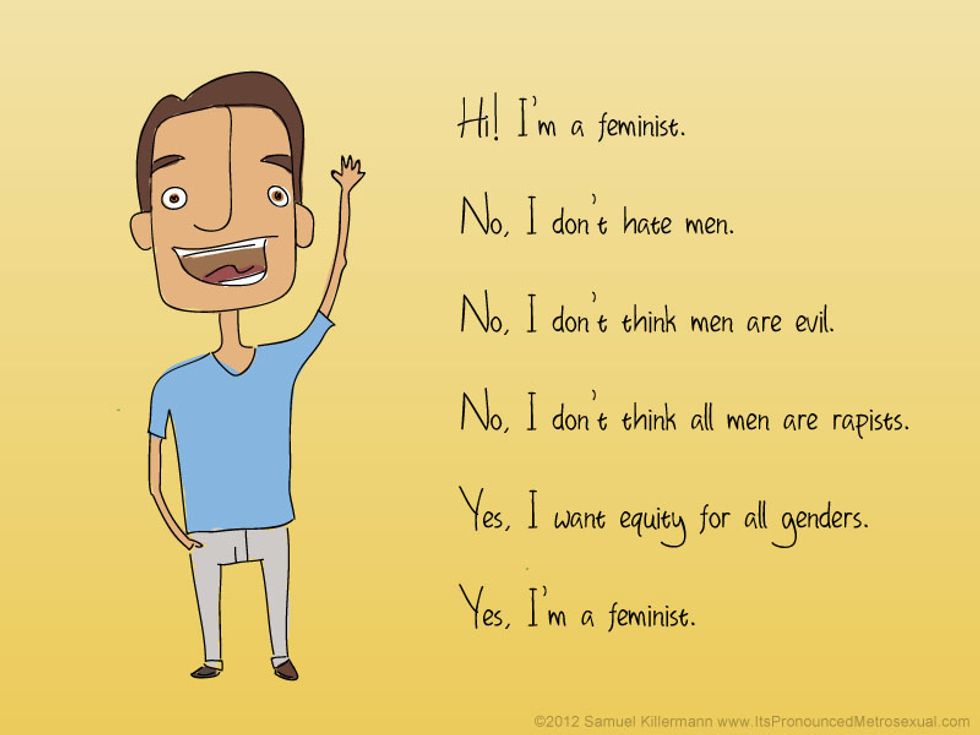
This is a myth manufactured by anti-feminists to suppress the feminist movement. Feminists do not hate men. Just because feminists believe that men and women should have equal rights does not mean that they hate men or even think that men do not have problems of their own. Feminists believe in gender equality. While feminists are against society's expectation that all women have to be lady like and proper, they are also against the expectation that all men have to be tough and emotionless.
In her famous feminist speech to the United Nations, Emma Watson said that, "It is time that we all perceive gender on a spectrum, not as two opposing sets of ideals." There are many issues of gender equality that affect both men and women and, if we all work together, we will strive to reach equality.
Myth: Feminism brings women down.
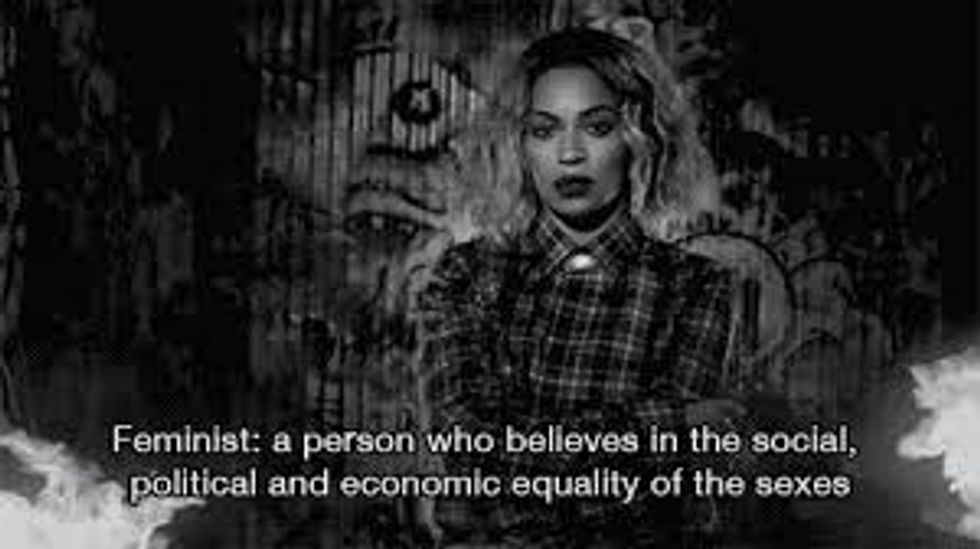
Many anti-feminist bloggers and news pundits share the common belief that advocating for women's rights brings women down. This very belief is a byproduct of conformity to a patriarchal society. It is supporting the idea that as women, we should "know our place" in society, and rather than fighting for our rights, we should remain complacent.
If society remains complacent, women will never achieve parity. Imagine if society had always been afraid to advocate for women's rights. Women would still not have the right to vote, would not have equal working opportunities, would not even be able to play on sports teams, and so much more. Did the feminists who fought for these opportunities "bring women down?" I will let you answer that for yourself.

















