

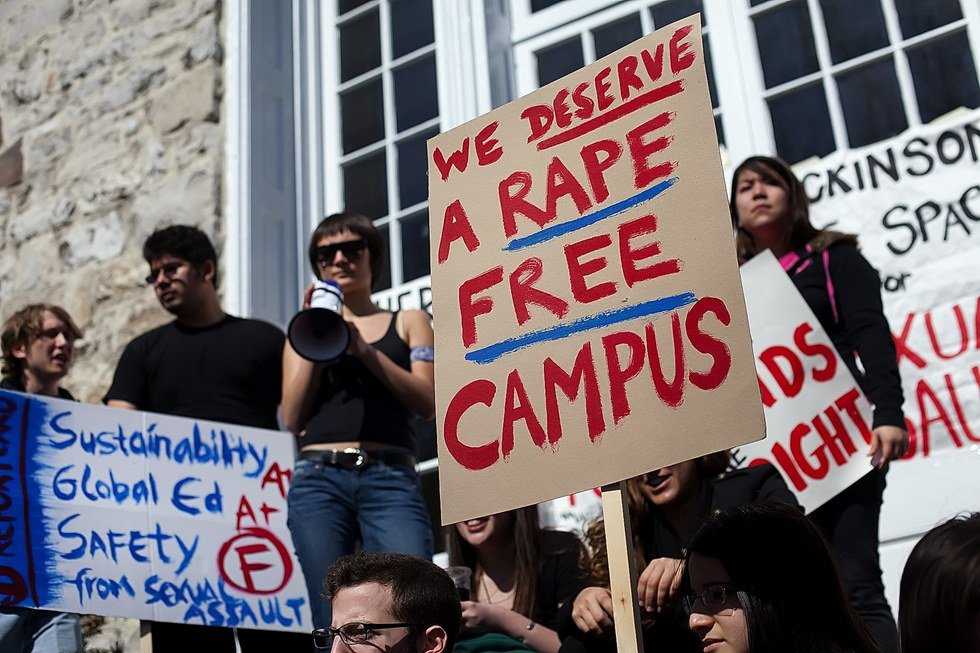
Sexual assault on college campuses around the United States has increased over the past years. According to the Huffington Post, when the U.S. Department of Education’s Office for Civil Rights first revealed the list of schools under investigation on May 1, 2014, it was investigating 55 colleges. By January 2015, it grew to 94. Now they are investigating 106 colleges and universities due to concerns about whether the schools violated Title IX in their handling of sexual violence reports. Among those schools are some big-name universities including, University of Kansas, Columbia University and Arizona State University.
According to the New York Times, one in four women experience sexual assault on campus. People are used to not talking about sexual assault because it was taught that you would have to keep quiet about it or something bad would happen. Today college students are most likely to be open with stories about themselves or friends who have experienced sexual assault.
With the numbers being so high it is in question, why aren’t these boys being punished for their actions? According to the documentary "The Hunting Ground," University of California Berkeley (2008-2013) had 78 sexual assaults reported and three expulsions, University of North Carolina (2001-2013) had 136 sexual assaults reported and zero expulsions and University of Virginia (1998-2013) had 205 sexual assaults reported and zero expulsions; however 183 expulsions for honor board violations. The problem is these universities are trying to build a good imagine for themselves and if they are reported as a school with high sexual assault rates alumni will not donate money and students will not apply there.
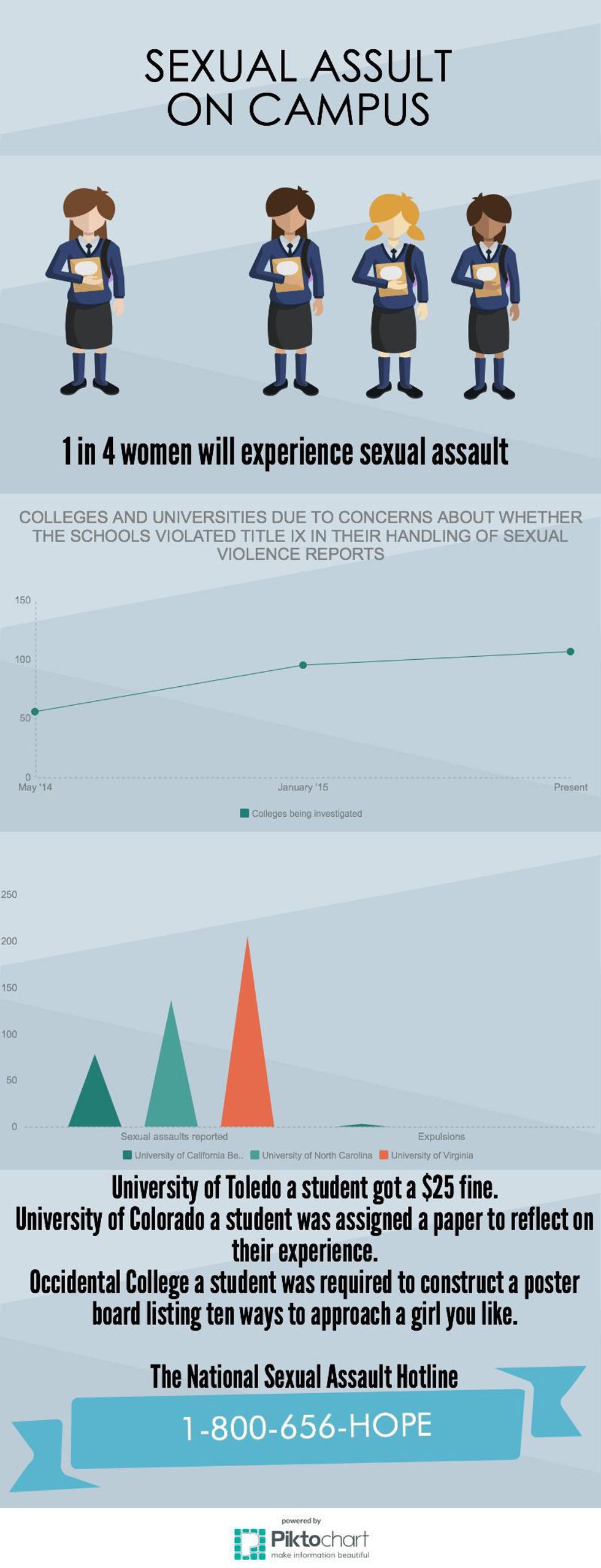
Instead of suspending or expelling a student, colleges would rather give them punishments that will not affect them. For instance, University of Toledo a student got a $25 fine, at the University of Colorado a student was assigned a paper to reflect on their experience and Occidental College a student was required to construct a poster board listing ten ways to approach a girl you like. By not having the predator kicked off campus the girl is left scared to go on campus with the fear of seeing him again. Girls who experience sexual assault can end up suffering from depression, post-traumatic stress disorder, abuse alcohol and drugs and potently consider suicide.
College is something that is expected to be the best four years of someone’s life. But for many girls it has turned into a trauma they are expected to deal with. Sexual assault prevention has been categorized as a forbidden topic to talk about. However it is a topic that colleges need to educate their students on better. This issue should not be ignored and needs to become a wide spread topic.
*If you or anyone you know needs help, The National Sexual Assault Hotline phone number is 1-800-656-HOPE. Be aware, and help spread awareness on your college campus.*