
Studying abroad, or traveling in general, is a goal many college students have. Unfortunately, a lot of students leave this dream behind, primarily because they are unsure of how to go about planning a trip in the first place. Deciding where to go, how to schedule travel around school, paying for a trip, choosing where to stay and so on can all become overwhelming and discouraging. I decided to ask one of my closest friends, Corrine Jarnagin, about her travel experiences as a student at Northern Arizona University in Flagstaff, Arizona.
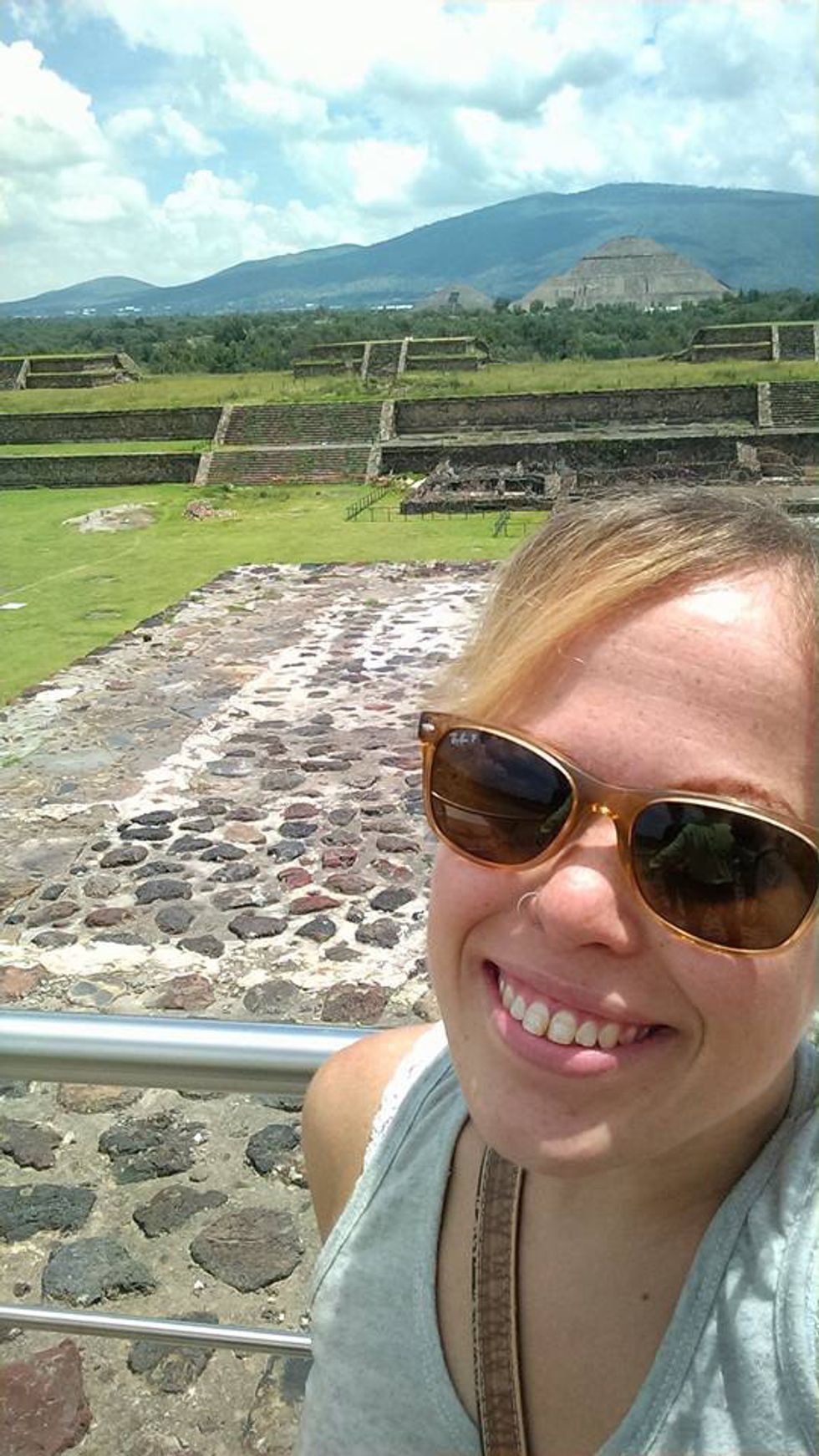
Corinne is a 22-year-old Spanish major who plans on teaching English as a second language for her career. She had visited Ecuador, Argentina, Panama, Costa Rica, Nicaragua, Honduras, El Salvador, Guatemala, and Mexico all during her time in college. When she's not backpacking through South America, she's busy on campus as president of Project GIVE Alternative Breaks, through which she led a trip down to the Arizona-Mexico border to do service work. Corinne also is a member of No More Deaths, a humanitarian group which deals with issues in the latino community such as border injustices and DACA. She also does volunteer work within the Flagstaff community for Childhelp, raising awareness, funds and providing services for victims of child abuse. Knowing how passionate Corrine is about helping others and immersing herself into new experiences, she was undoubtedly the best person I know to ask about traveling as a student.
Reilly: What first prompted you to travel during college?
Corrine: I attended a presentation by a group called ISV (International Student Volunteers). I traveled to Ecuador through that organization and helped build a septic tank and taught English in a small village in the mountains. From that trip on I was hooked on traveling.
R: Can you explain some of the process you went through to organize your travels? How did you get started?
C: It all depends on what kind of traveling you want to do. I have done volunteering abroad and I have backpacked. When you are volunteering abroad, the organization you use will plan almost all aspects of your trip, the only real responsibility you have is fundraising the money for your program and purchasing your plane ticket. When you backpack, you have to budget for each individual aspect of your trip such as food, housing and transportation. Two great websites with resources for traveling on your own are Nomadic Matt and Lonely Planet.
R: What are some good ways for students to begin planning a trip?
C: First decide on where you want to go. I am a Spanish major so I look into traveling to the Latin countries. Lonely Planet books and website give many wonderful ideas of places to go.
R: What is the most memorable thing you've experienced during your travels?
C: The most memorable thing I experienced was when I met a random women in Nicaragua and instead of giving me a ride to a hostel like I asked she took me to her family’s home where they fed and housed me for free for a week. I am still in contact with that family to this day.
R: What have you gained from your experiences?
C: There have been many wonderful things that I have gained from my travel experiences. Independence, self-reliance and cultural knowledge are just a couple of the benefits of traveling. Traveling by myself I have been forced to think on my feet and rely on myself for everything I need when I am abroad. Although traveling makes you independent it also gives you remarkable friends that you will meet along the way. People always asked me how I wasn’t lonely when I travel by myself but I was never alone for long. I was constantly with other travelers, exploring together.
R: Why should other students make this a priority?
C: Everyone should make traveling a priority. Being immersed in another culture is necessary for our understanding of others. We are taught from a young age how to be U.S. citizens rather than global citizens. I feel so blessed to have people around the world who love me and consider me a member of their family. Everyone should have an opportunity to have such beautiful and life changing experiences.
R: Moving forward, how will you use your experiences in your career?
C: Thanks to my traveling experiences I was able to discover what I career I want to pursue. From my summers teaching English in Ecuador and Argentina I learned that I want to be an English teacher.