

In the fall of 2014, University of Virginia was rocked by a horrific story of sexual misconduct that occurred on campus published by Rolling Stone magazine. The initial story alleged that a then college freshman was brutally raped by members of a fraternity while at a party. Upon its release, the story went viral as many were shocked and appalled that such an act had occurred and went unpunished by the university and law enforcement. This prompted an investigation into the policies of UVA and the incident itself. After further investigation, it was revealed that the details of the account provided by the victim were fabricated and untrue, and Rolling Stone issued a statement retracting the article on April 5, 2015. Although the events described in the article were falsified, it is clear that the victim did experience a serious trauma and is not to be blamed for whatever it was that she did experience.

Photo via PBS
While this particular story was retracted because of factual inaccuracies, it launched discussion of sexual misconduct and Title IX policies to the forefront of issues in 2015. Colleges and universities all across the United States have been diligently working to explain Title IX policies to their students. Title IX reads as follows:
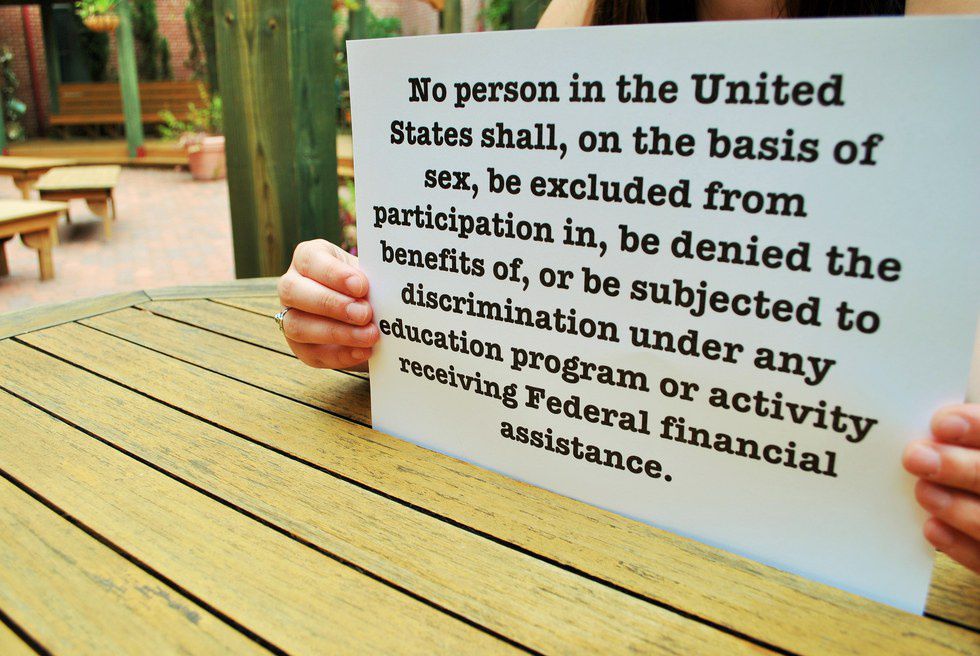
No person in the United States shall, on the basis of sex, be excluded from participation in, be denied the benefits of, or be subjected to discrimination under any education program or activity receiving Federal financial assistance.
Even though Title IX is a short statute, it has an incredibly broad scope that covers sex discrimination in educational institutions, sexual harassment, and sexual violence. Educational institutions receiving federal funding are legally obligated to respond and remedy hostile educational environments under Title IX. To be in compliance with Title IX, schools must do the following: disseminate a notice of nondiscrimination, have a Title IX Coordinator, adopt and publish a grievance procedure for incidents, train all employees, and provide appropriate legal proceedings and recourse for both the accuser and the accused.
In response to the new guidelines set forth by the Office of
Civil Rights, many universities have begun to reevaluate the way in which they
responded to instances of sexual assault on campus. This includes revamping
grievance procedures for those who have experienced sexual harassment as well
as sexual assault. Schools must be prompt when responding to instances of sexual
misconduct, and inform victims of their right to report the incident to the
police or to not report to the police. In order to best implement these
policies, the school is required to provide adequate training to all of its
employees on how to identify and report sexual harassment, violence, and
discrimination. During investigations, schools must also balance the needs of
the victim with the due process rights of the accused. Prior to the new
guidelines set by the Office of Civil Rights in its 2011 “Dear Colleague”
letter, victims’ rights advocates felt that colleges and universities across
the countries failed adequately to address needs of campus sexual assault
victims. However, these new standards raise a different set of concerns
regarding the due process rights of the accused.
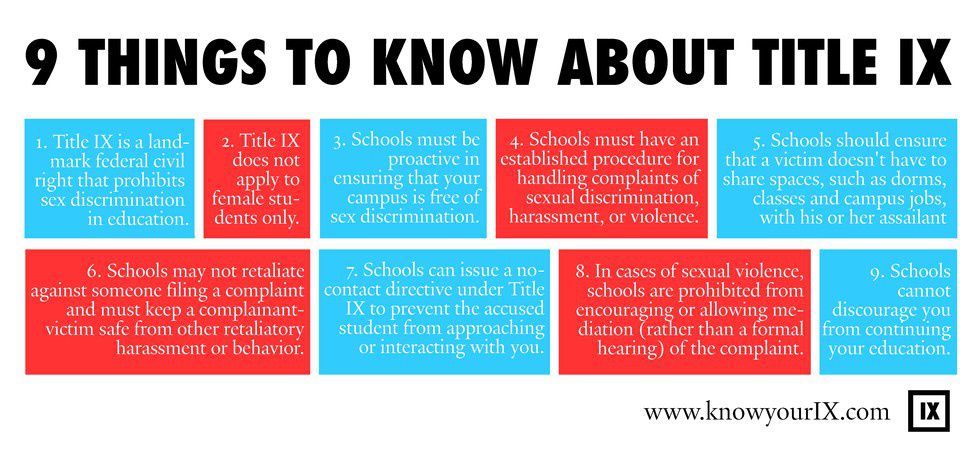
Photo via Know Your IX
While implementing effective Title IX policies is critical to protecting students, so is altering the way in which sexual assault is viewed on college campuses. This change must come from students themselves. Campus officials must work with their students in order to promote a culture of sexual assault awareness and change.
At Christopher Newport University (CNU) in Newport News, Virginia, that is exactly what campus officials and student leaders are doing. By working alongside students to create a culture of change, University officials are empowering students to take a stand against sexual harassment and violence. Millennials are being placed in a powerful position to facilitate a momentous change in campus culture.
At the start of the 2015 fall semester, CNU held mandatory training for all staff including professors and student workers in order to facilitate a better understanding of Title IX policies. Since these policies directly impact students, the Christopher Newport University Student Assembly is hosting several information sessions that address what the new campus policies are, how if affects campus, and what students should be doing as a result of these new policies.
On September 17, CNU’s Center for American Studies (CAS)
hosted a debate between Erin E. Buzuvis and Christina Hoff Sommers about the
constitutionality of Title IX, and the current Title IX controversies on
college campuses. According to Dr. Elizabeth Kaufer Busch, the Co-Director of
the Center for American Studies, “It is crucial to debate public policies like
Title IX in order to dispel misconceptions and educate the public about the
origin and meaning of our laws”. This debate facilitated a healthy discussion
of new Title IX policies and surveys conducted after the debate indicated that
students in attendance left feeling more informed about Title IX and how it
impacts them. Dr. Kaufer Busch further stated that, “the seriousness of sexual
assault necessitates that universities adjudicate cases with the utmost care.
The new concern with these policies is whether or not they adequately balance
the needs of the victim with the due process rights of the accused”.

Photo via The Center for American Studies at CNU
These new policies may seem frustrating to students, but it is important for them to be put in place and understood by the student body, as they are an important resource. A survivor of sexual assault, who wished to remain anonymous, confided, “I wish these had been in place when my assault happened, but because there were no rules about it yet the school wasn't required to notify the students that it had happened. I think the new policy shows students how serious the problem is – every time they get a CNU alert stating an incident has taken place, it's a blatant reminder that sexual assault DOES happen and it can happen to anyone. It doesn't matter if it's men, women, gay, straight, whatever – this is everyone's issue. It's never going to get better until we realize that and start taking responsibility for our actions and our campus. Thankfully, I think these new Title IX policies are a step in the right direction.”
Student leaders are also incredibly important in this process of facilitating awareness and change. When asked to describe how her organization is involved with Title IX practices, Hannah Phelps, Student Executive Director of Peers for Inclusion, Empowerment, and Respect (PIER) stated that, "PIER strives to influence the campus in a way that would allow all individuals to feel included and respected. Through our collaboration with SAVE and diligence to understand Title IX, we can ensure that individuals who are impacted by sexual assault still have a voice and place in the CNU community. This applies to individuals of all walks of life, identities, background, and different personal experiences."
According to Timothy Richard, an active student leader at CNU, “Title IX has definitely impacted my leadership on campus. For one, as an orientation leader, I am now required by law to report anything related to sexual assault to the Title IX campus coordinator. Previously, training emphasized that when someone confides an assault in you, you don't discuss it with anyone else and encourage the victim to trust in you and to report the assault himself or herself. Now, not only would I be able to support and encourage the victim, I would be required to make the report myself.”
Reporting instances of sexual assault can often be stressful and traumatic for survivors. “We provide awareness about Title IX during weekly meetings,” explained Vice President of Marketing for Where Is the Line, McKenna Deal. “We stress that they [members] are there to help survivors go through the process of reporting someone for sexual misconduct.”
As reports of sexual assault on college campuses are becoming more prevalent, Greek life has become inextricably linked with the issue. When asked about this link, Taylor Thomas, brother of Delta Upsilon Fraternity answered, “Being in a fraternity myself, my fellow brethren and I are in the spotlight because of tragic events happening across the country. Anything that happens within the fraternity reflects directly back to my leadership, and it is my responsibility to make sure the fraternity is headed in the right direction. As the president of a fraternity, my job is to not only be a role model of how a fraternity man should act, but to also know their policies and keep the fraternities’ members accountable to them.”
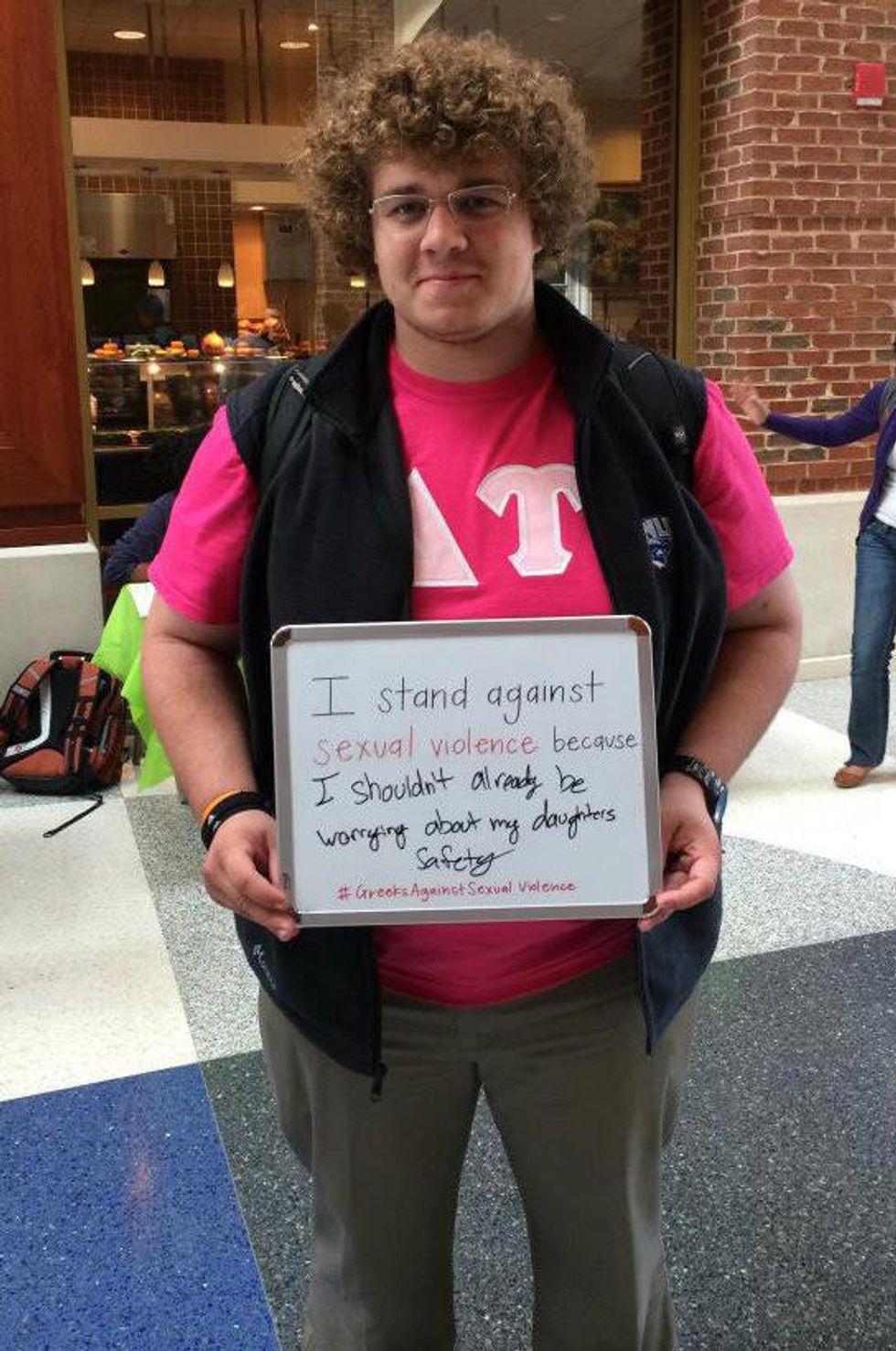
Photo via Facebook
Furthermore, Thomas noted that, “Our fraternity takes Title IX issues very seriously; I know I can count on my members to do the right thing. In fact, in regards to CNU’s Greek Life, I can count on many Greek men and women to take these important issues seriously. While I can’t speak for all fraternity men across the country, this is something I can take pride in – not only being a member of Delta Upsilon, but as a fraternity man and member of the CNU student community that is taking a stance on these matters.”
The implementation of Title IX policies on campus has greatly impacted the way college students interact with each other and campus officials. Colleges and universities such as Christopher Newport University are making important changes in the way college students perceive sexual assault. It is only through an active partnership between students and officials that positive change can be made. Phelps described this relationship best in the following statement, “As a student leader, I am working to be unified with the University on this new policy, ensuring my own education and understanding, so that I can take it back to my organization and campus community.”
It is because of dedicated Millennials like Phelps, Richard, Deal, and Thomas all across the nation that college campuses are able to implement new Title IX policies in such an effective manner. So, never doubt that a small group of dedicated individuals can enact significant social change.