


When I first began my college career, I thought I knew how to take notes and study efficiently. Nope, wrong! Throughout my first semester, I had to come up with a system that worked for me and helped me to become a successful student. In order to save incoming freshmen some time and stress, and to help any other students who may be struggling, I've decided to share my tips and hints with y'all.
1. Do not write down every word that comes out of your professor's mouth.
It is impossible to write down everything your professor says in class. Instead, try to write down key words, vocabulary terms, or something that sounds really important. It is hard to think and process information while your hand is moving a mile a minute, so when you stop writing everything, you have time to process all of the information.

Don't be like Jim Carrey.
2. Buy a voice recorder. Now.
Best investment I have ever made, hands down. This is especially handy if you are like me and learn best from hearing something more than once. Listen to your lecture recording at least twice! I don't recommend using the voice recorder on your phone. This will only give you reason to be on your phone during class, which, yes, is a distraction.

3. Re-write your notes.
Seriously, I'm not kidding, especially if you're following tip number one. You can kill two birds with one stone by rewriting your notes as you listen to the class recording. You can pause the recording to write down as much as you want, and you can fast forward though the parts where the class somehow got off topic. Studies show that the more times you write and hear something, the better you learn it.
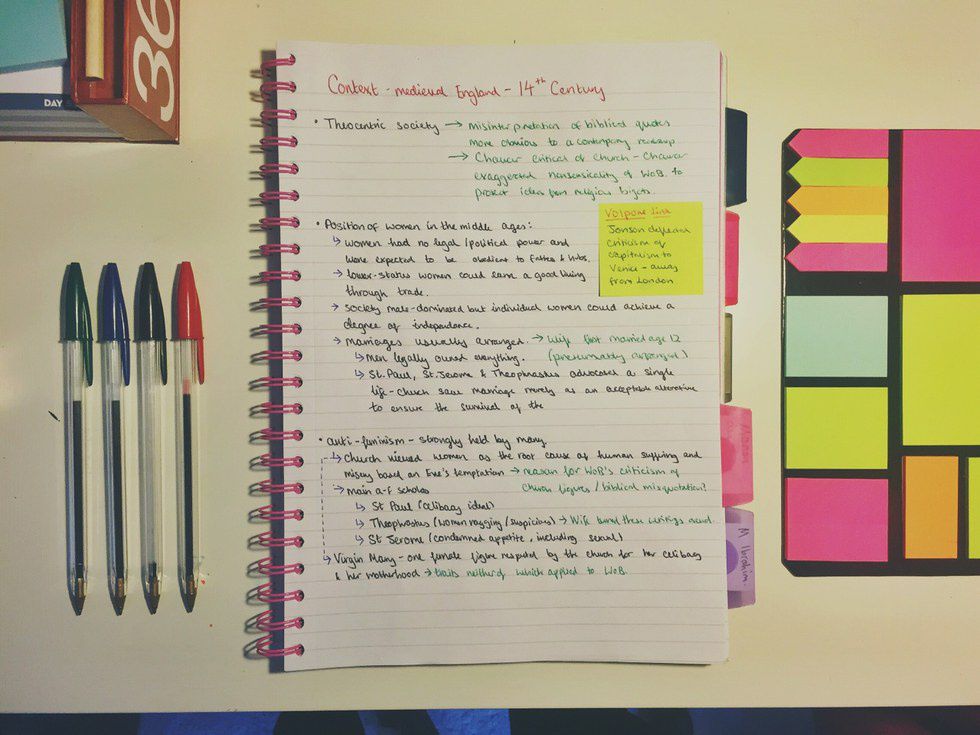
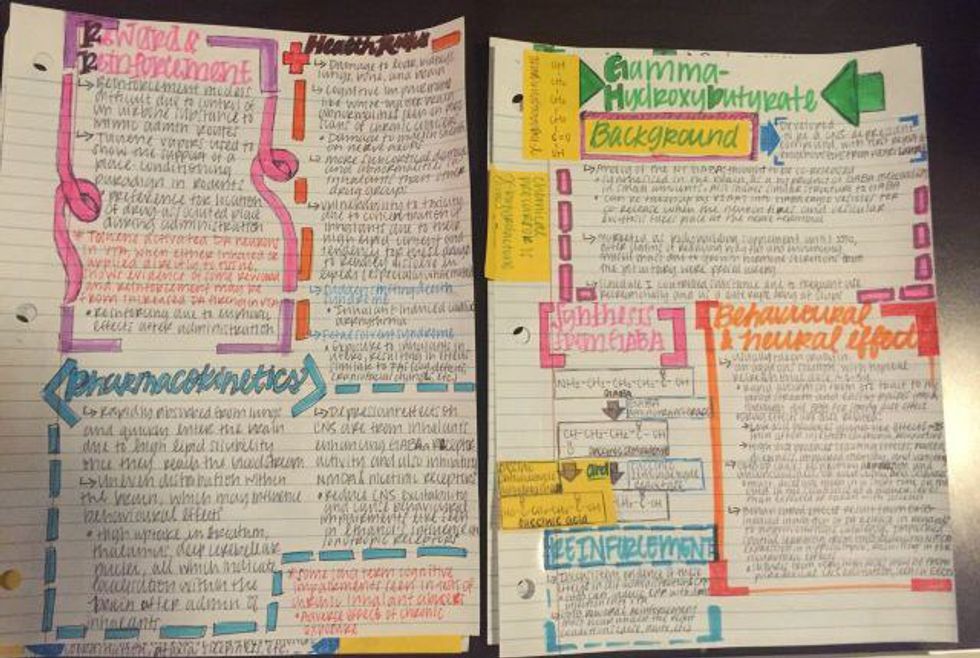
4. Two words: color code.
I'm not good at highlighting because I have a tendency to want to highlight everything, and then it all stands out and the purpose is defeated because it looks like a rainbow threw up on my notes. Instead, I color code with colored pens. I use a green pen for vocabulary terms, red pen for something that sounds crucial, etc. Figure out what works best for you when it comes to color coding. But remember, when highlighting, less is more.
5. Learn what your professor does when he/she says something important.
It didn't take me very long to learn when my professors were explaining something they were going to put on the test. It's all in the body language, facial expressions, and tone. For example, some of the only times one of my freshman professors stood up was when he was going over something he was thinking about testing. He also made an awkward pause after finishing a question that would likely be tested, and his next statement began with a different pitch. Instead of worrying about writing all of that info down in class, glance over at your recorder and jot down the recording time so you know where to find it later when you rewrite your notes.

6. Brainstorm for yourself.
Fight the urge to go straight to your professor or to that smart kid in your class to get a question answered. Brainstorm for yourself first. Use all of the knowledge you have on the question in order to come up with an answer. Professors do not want to give you an answer, but they do want to help you come up with an answer. So, if you get stuck and can't figure it out, then, and only then, should you seek help.

7. If you can't teach it to someone else, you aren't prepared.
No if-and-or-but about it. If you can't teach the material to a classmate, you aren't prepared to succeed on the test. I recommend finding a study group and each "teaching" one topic that will be on the test. Explain it in your own words! Not only will your partners benefit from hearing it another time, you'll benefit because they can chime in and let you know if you left something out or if you got something wrong.