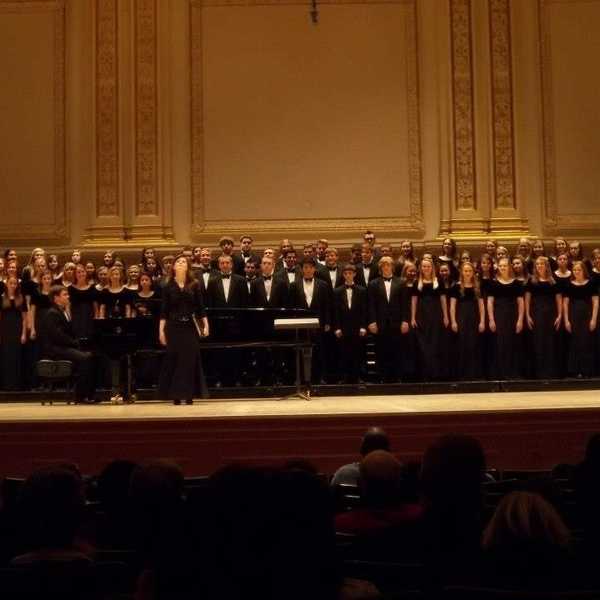
In order to graduate with a music major at Luther College, you must fulfill a recital attendance requirement wherein you go to 12 recitals a semester for six semesters. I'll be the first to admit that I don't really like the fact that I'm required to go to a bunch of recitals. To me, that's kind of like reading books — the fun immediately gets taken away if you're required to do it.
I feel as though I should start challenging myself to keep listening to music so that I can grow my mind and to keep reminding myself why I'm studying what I'm studying. So, when the opportunity arose, I decided to go to an orchestra concert that I was not able to get credit for.
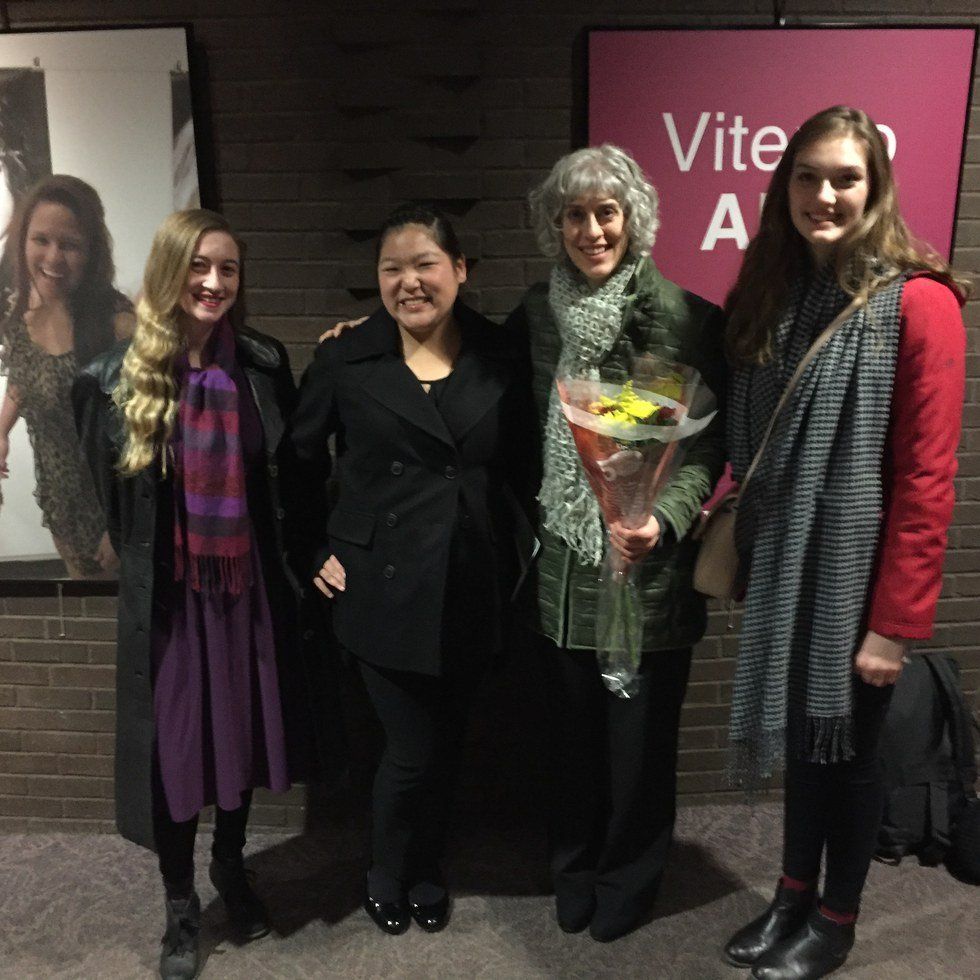
Anyone who knows me knows that I adore my flute professor, so I, the second flute of the Luther College Symphony Orchestra, along with a couple friends in tow (Stevie, a singer, who also happens to be growing a taste for orchestral music, and Rachel, who is the Principal Flutist of the LCSO), set off to the big city to watch Dr. Hester perform as Principal Flutist.
I have actually gone to see Dr. Hester perform before, but this time was different. Now that I am part of an orchestra myself, I have things to learn from watching my teacher perform like this. And the fact that Rachel was with me this time meant that we could both take in this opportunity to learn things together.
This particular concert featured hits made famous by Judy Garland and Liza Minnelli, as well as an arrangement from "Porgy And Bess" by George Gershwin. Stevie really appreciates really deep, powerful voices, so she really enjoyed the music, while Rachel and I were more focused on our flute prof and how she was interacting with the second player. This isn't to say that we didn't enjoy the music, but we were more interested in watching our teacher perform and were watching the performance with a different perspective.
When the concert was done and we were driving home, Rachel, Stevie, and I were talking, and this is what came out from the whole experience:
Music heals the soul.
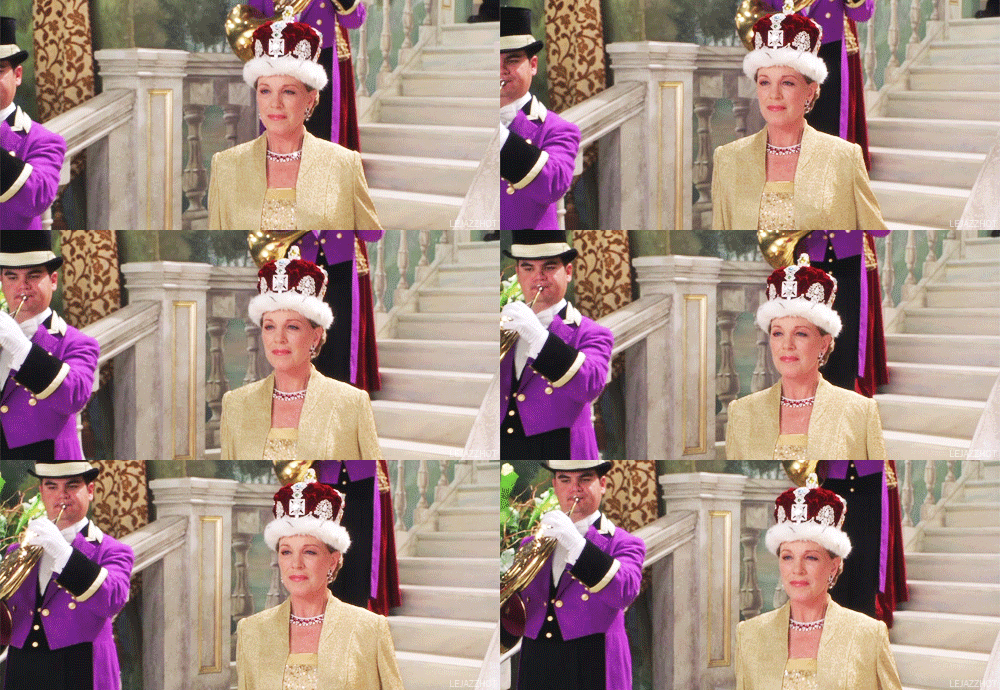
We came to a consensus that we were all pretty worn out. It's nearing the end of the semester, and everyone's passion for what they're studying was starting to diminish. We all love Luther, but getting off campus, even for a few hours, rejuvenated our drives to finish out the semester strong. It was nice to take time to throw our cares away (to feel the full effects of how I felt, observe the GIF below and watch this video of Judy Garland singing a song from the musical "In the Good Old Summertime") and do something we all enjoy.

Despite not being able to talk on stage while you're performing, you can communicate with the musicians around you.
This has to be one of the biggest lessons I personally could use in my own practice with the LCSO and in sectionals. Rachel and I spent a good chunk of the car ride talking about what we observed from watching our teacher interact with the second flutist. Obviously how she interacted with her was of importance to us, since we are principal and second flutists ourselves. We paid attention to the smaller details, like watching Dr. Hester count out measures on her fingers and the second flutist making small acknowledgements with her hands, letting her know that she was watching and that they were on the same page. During intermission and before and after the performance, it was nice to see that the orchestra members were making conversation and were seeming to enjoy making music with each other.
Hearing your teacher's thoughts on their performance gives you a new perspective.
It turned out that Dr. Hester wasn't the biggest fan of the repertoire, especially the Gershwin. But she executed her performance with the most grace I've seen a person muster. When I talked to her backstage after the performance, she wasn't talking (too much) smack about the repertoire, but more so on how loud it was, and that she was going to need to take some time the following day to try to get the ringing out of her ears. She did seem to at least be amused that there were instruments at that performance that are not traditionally found in the orchestra (AKA: Saxophones and Banjos), and that orchestral repertoire could stand to have more banjo in it.
It's important to watch your teacher perform so that you can see what drives them.
Tracy Wiggins, a music professor at the University of North Alabama, wrote this post on Facebook that resonated with me, especially after this performance. The best way to become a better musician is to listen to music played by people you admire. I barely ever hear Dr. Hester play because most of the time I'm with her, I'm in my lesson. Obviously she has no time to be playing the flute in front of me because she's too busy dealing with me, fussing over how I use my tongue, "bugging" me (the term she uses for fixing the way my hands are positioned in relation to the flute. Her words, not mine.), and being subjected to sour notes and subpar performances of the same piece over and over and OVER again.
The poor woman is guaranteed to be subjected to my abysmal, ungodly noises at LEAST once a week (thankfully, I've noticed that the time and practice I put in are slowly but surely bearing the fruits of my labor and improving how I play to become a bit less offensive to the ears); it's only fair that I'd go and listen to her for once. I get to learn a little more about her each time I go to the Symphony through how she decides to interpret the music and how she works with the other musicians around her. Being constantly reminded that formal music training can be a bit grueling can really wear a person down, so I have so much respect to see someone make music and be happy doing so as their livelihood.
It's fun to watch your teacher perform outside of where you normally see them.
Like I said, I barely hear Dr. Hester play a note in my lessons, and if I didn't have a habit of going to the symphony, I'd only be able to hear her once a year, if that. It is nice to have the roles reversed and I get to hear her perform instead of her getting to hear me perform all the time. Every time I watch her onstage, I am not only affirmed of my choice to go to Luther to study with her, but I also get what I think is a "proud parent moment": I get the warm fuzzies as I watch my teacher, Dr. Hester, do what she does. I know Rachel was feeling this same pride as we kept poking at each other during the performance and borderline fangirling over how well Dr. Hester was doing with her solos and how poised she was sitting in her chair. Even Stevie was proud of Dr. Hester to a degree: On the car ride back home, she said that she was even becoming a fan of Dr. Hester, and she doesn't even play flute.
Overall, going to the symphony was an experience that I won't soon forget. The music was pretty good, and Rachel, Stevie, and I grew closer as friends from the whole experience. But the biggest realization that came out of the whole experience was this: through her grace, poise, and disposition, Dr. Hester truly reigns as queen of the woodwind section.