
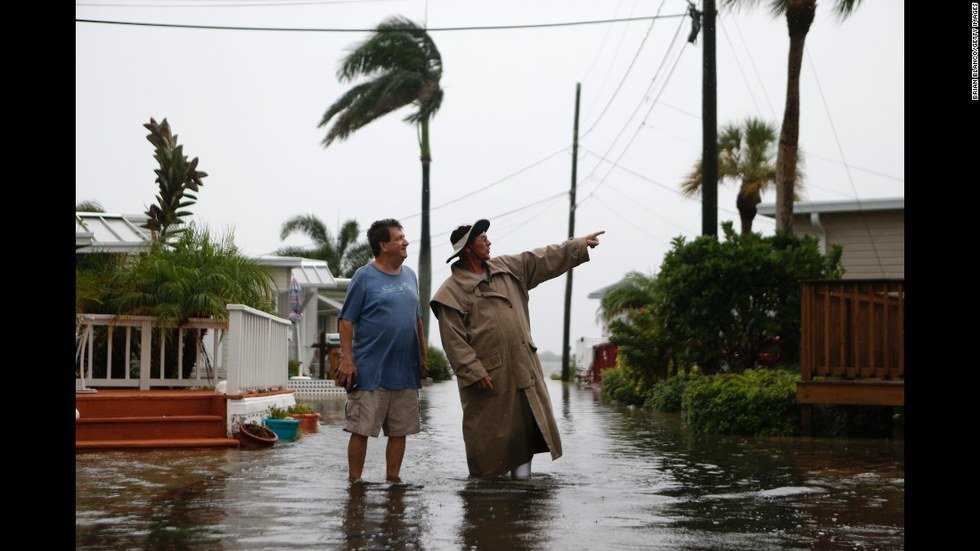
"Classes cancelled due to hurricane," was the message students waited all afternoon to see. The alert to students went out about 3:30 p.m. Our academic calendar provides days to make up for “storm days” if needed. The peak of hurricane season occurs in late August through early September, which coincides nicely with the beginning of classes in the fall semester. While a day off is always appreciated, a hurricane does cause some inconvenience. Streets in Charleston flood during a normal rain event, so a hurricane brings more water-logged streets and the probability of losing power is high -- it's the perfect opportunity for a pajama day.
However, something interesting happens to people in the South as a storm approaches. Those folks, who normally stand in line at the store waiting impatiently to check out, begin to talk with each other. They begin conversations as though they were at a family reunion. It goes something like this:
“I hope we don’t lose power for too long this time. Hermine dumped some rain on Florida, didn’t it?”
“Were you here for Hurricane Charley?”
“I was here for Hugo...how about you?”
“The last one was a real pain… It took out two trees in my yard.”
“So where will you go if we get a big one?”
“Want me to help you load that water and bread in your car?”
“Where did you find the batteries?”
People share stories about which direction they will go and what they plan to pack if they have to leave.They discuss whether they should leave the boats at the dock or take them into the inter-coastal waterway and hope for the best.They discuss prices of gas, plywood, and generators. Volunteer organizations and faith-based groups work together with local/national government agencies to prepare as well as assist during and after the hurricane.
In spite of the risk of hurricanes, residents and visitors love Charleston. Charleston receives numerous awards each year; recently, Charleston was named the Number one City in the U.S. by Condé Nast Traveler 2015 Readers’ Choice Awards. Other awards include most romantic, friendliest, best town for foodies and one of the best places to retire.
What isn’t celebrated are the other awards we receive in South Carolina.South Carolina was ranked 43rd among the 50 states in education (Quality Counts 2015). This is actually an improvement after being tied at the bottom of the list with Mississippi for a number of years. South Carolina ranked number one in women killed by men (Violence Policy Center). According to Feeding America, 16.4% of South Carolina residents experience food insecurity, which is defined as not having access to adequate food, however over 30% of our residents are rated as obese by the CDC. The risk of being diagnosed with HIV in South Carolina in among the highest in US (CDC). These are only a few of the issues facing our state.
Please, don’t misunderstand me. In spite of these statistics, I do love Charleston and South Carolina. Charleston is one of the most enlightened areas in our state. I have to defend it; after all, I am a Southerner and a Charlestonian. Yes, I am one of those rare native Charlestonians -- my high school Alma Mater song began with "Here in Old Historic Charleston; City by the Sea." My high school was in an old historic house in downtown Charleston. A quick afternoon walk would find students strolling along the Battery talking, sneaking a cigarette or planning to return later that evening to watch the "submarine races." The truth is, there were never any submarine races in the Charleston Harbor. It was the term used to describe parking along the Battery and "making out."
Over the years, we have retained some of our valuable old Southern ways. We usually know at least a few of our neighbors. Strangers in the store are polite, smile and say hello. However, those same sweet people will attempt to cut you off, run you off the road or pass you at the speed of light on the highway. We do live in NASCAR country and many people think they should practice just in case they ever get the chance to drive on the track.
As I sit listening to the rain and wind blow outside, I wonder what might happen if we all put as much effort into talking, planning and working together during the rest of the year. Perhaps, we could find solutions to some of the issues faced by Charleston and our state. When the wind is howling and floods are threatening our roadways, it is easier to see the imminent need. It is more difficult to confront the issues of hunger, obesity, domestic abuse, violence, racial tensions or poor education when we don’t always see the impact. The impact is there, nonetheless; perhaps, we simply choose not to see.