
My great-great grandmother Lazara used to organize raids on government food trucks so that she could feed her family. In order to not get trouble with any of the local government tattletales, she'd bribe them with whatever they wanted; a watch, some shoes, maybe an extra shirt. She'd tell my aunt that, when they went to this house, they'd have to pretend like the shoes there were top-notch, or else the boss would feel insulted and not provide any other services to her.
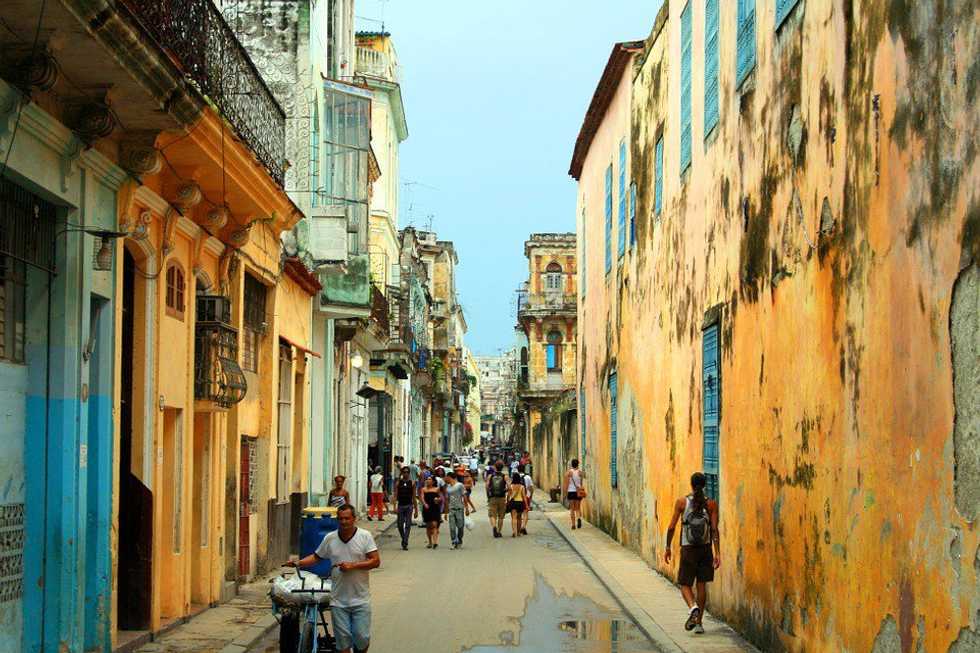
This was life in Cuba.
Now, Lazara--or Lazarita, as we call her--is 104 years old. She's still alive, and she is taken care of by my grandmother. She sits on her recliner, no longer able to use her legs, and rambles on. Sometimes, she tells us that she sees a man dressed in white, playing the guitar while trying to get her to love him. Other times, she'll complain that the really nice woman who takes care of her is no longer there, and that a mean woman has replaced her. I've heard more dirty words out of her mouth then from any other person I've met.
It's strange to think that this was the woman who served the role of matriarch to my family. I've always known her as the grandmother who sits at the recliner in her room and asks me if I have kids yet while watching Spanish novellas from the fifties (incidentally, I don't). It's hard for me to really believe these stories. I know they're true, but do I understand their reality? What their truths imply?
I tell other people these stories of Cuba whenever they ask me about the relations between Cuban and the United States in the past year. It's interesting to see the looks on their faces. Some seem completely taken by it. Others are sort of disinterested, but they listen just because I am telling the story. A few seem to view it like an episode of a soap opera: they're desiring the emotional roller coaster ride for the sake of that ride, though I wish they'd take it more to heart. But if I have a hard time internalizing it, why should those who are strangers to my family be expected to do the same?
I don't know what the changing relations between Cuba and the United States mean for the Cuban people. My parents tell me that any lifting of the embargo will pump life into a dying regime--a bad move, since it is its impending death that could mark change. Will any money from raising an embargo go to the people, or merely to the government? Will the government continue its practice of handing out private licenses to the Cuban people, so that workers can make $60 a day as a taxi driver in the private sector instead of $40 a month as a doctor in the public sector?
Obama's visit has been particularly upsetting to my family due to the chumminess he showed to Raul Castro. The problem wasn't that a President visited and was friendly to the leaders of a Communist dictatorship (that has happened before), but that there has been no acknowledgment of the oppression of the Cuban people. Maybe it is true that exposure to capitalism is the best way to free the Cuban people. But shouldn't we condemn people like Castro, who murdered many people to get to where he is today? Shouldn't we recognize the evils of communism, especially in how it forces women in their 70's to risk their lives in organizing raids on food trucks?
Or do we know these things, but not understand their significance?