


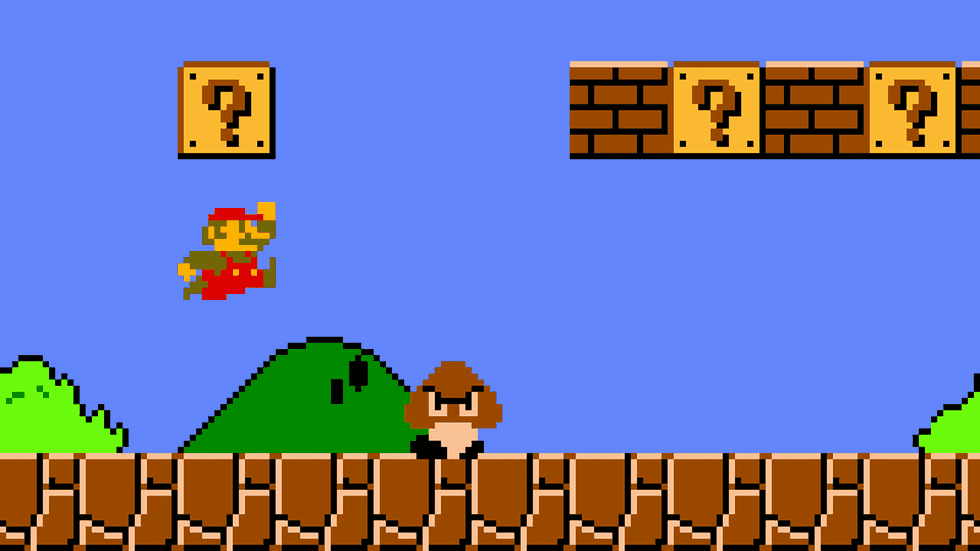
As an avid gamer, I feel it necessary to talk about the role of video games in regards to entertainment and what it has to offer that things like film or television or music can’t. I would say that playing video games is my primary hobby, and like any hobby, it builds character (for better or for worse, but that’s beside the point). In today’s society, how does gaming translate into the real world? What does this activity provide that others don’t? Gaming is often looked upon as a slacker’s endeavor, or something that falls outside of society’s expectations for how you should spend your time. But there is more to gaming than what they might think.
The obvious and most fundamental point is the interactivity of the audience. Players take an active role in the story and gameplay, guided by the creator’s intention to, in the simplest sense, get to the finish line. It is entirely up to the player to get there though, and even sometimes how they get there, placing more emphasis on the audience than a film would.
These are the underlying functions of video games: challenge and achievement. The entertainment of the game (any sort of plot aside) comes from the ability to complete levels or defeat bosses or rescue the princess, and you feel good about doing it. The player is expected to employ levels of dexterity, hand-eye coordination, and quick mental reflexes in order to advance. Good gameplay also teaches you how to play the game through actually playing the game (not any of this boring tutorial stuff), and learning to pick up on those patterns and hints can translate quite valuably in real-life interaction. It can teach you how to learn skills easier and beyond that, how to do a better job.
In the popular YouTube series “Sequelitis” animator and video game enthusiast Arin “Egoraptor” Hanson discusses this idea of the game teaching the player how to play the game with the example of Mega Man X’s first stage (Video contains some rather crass language). This is essentially the gaming version of “show don’t tell,” a sentiment employed by any good entertainment medium.
As gaming has evolved, it has consequentially grown more complex, incorporating more story elements to create an emotional investment rather than just one of challenge and gratification. An example of this is the advent of choice-based games such as The Walking Dead and The Wolf Among Us, which allows players to choose the actions of protagonists, leading to branching storylines based on the decisions taken. This sort of gameplay accentuates decision-making and consequences, and is good practice in the ability of foresight and thinking ahead (which choice is better in the long run, has the best outcome, etc.).
Gaming can also provide an outlet for strategy and analysis, with many games using an almost chess-like approach to complicated turn-based battles. Planning ahead is crucial, and recognizing strategy and using a close analytical eye can be useful in real-life decisions, perhaps big decisions such as choosing a job or finding a place to live.
There is an infinitely expanding variety of games that exist, and they will continue to grow and challenge players to push themselves to their limits in order to achieve success. All while being dang good fun in the process.














