


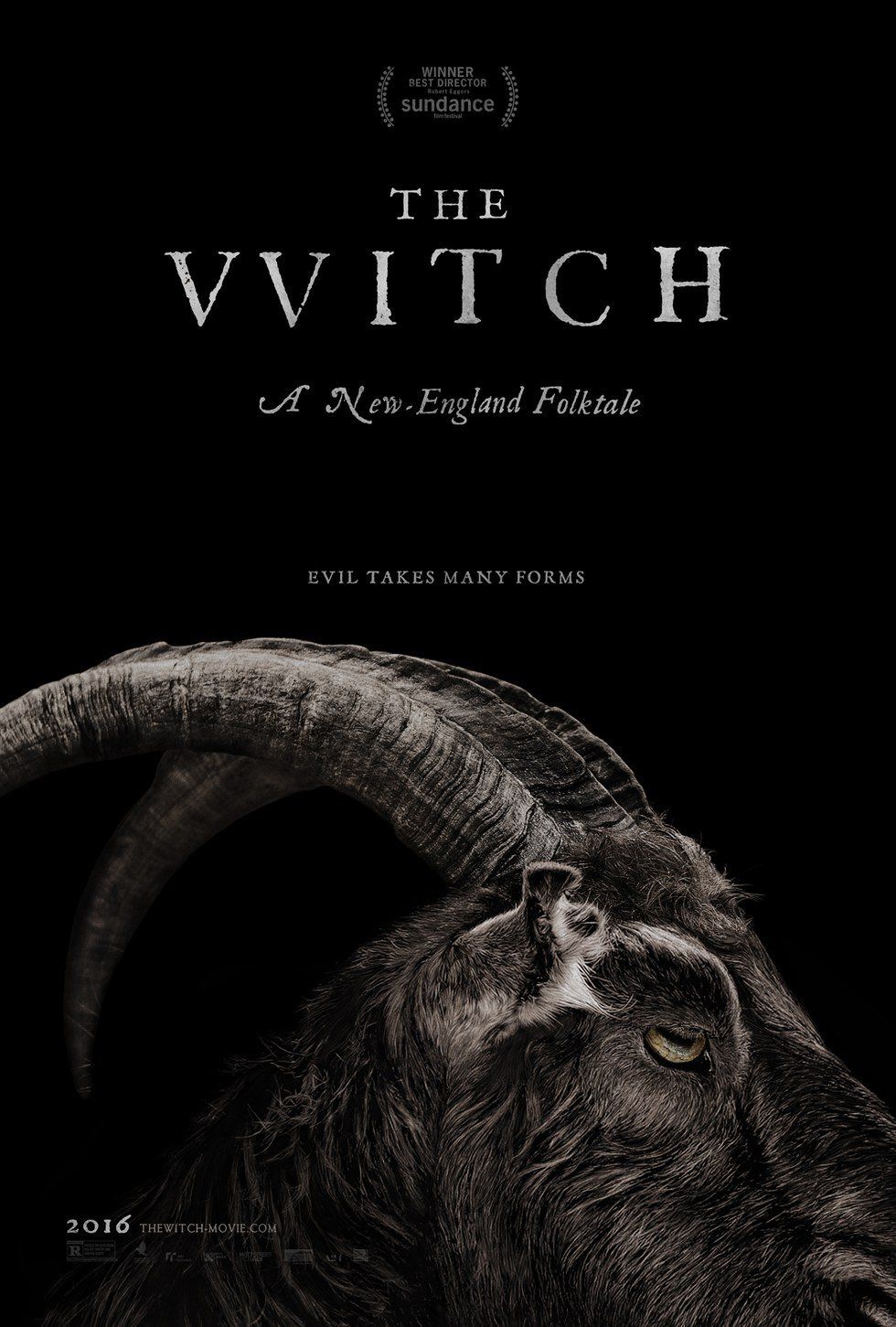
A time of relocation in a foreign land inhabited by heathens in need of divine providence, the seclusion of a god-fearing family to a barren spit of land in the woods, and the presence of a baby snatching witch make for a juicy premise. Writer-director Robert Eggers taps into that premise with varying degrees of success in “The Witch,” a film that delivers a masterfully measured slow burn horror story, in spite of a number of glaring inconsistencies.
The film opens on the face of Thomasin (Anya Taylor-Joy), an adolescent girl watching her father (Ralph Ineson) face a Puritan tribunal while his family and the whole of the settlement stand by. While his crime is not fully revealed, it has to do with spreading the Gospel, and it is implied he did so in the vain of the Old Testament rather than the New. The scene cuts between close ups, avoiding any sort of comforting wide or even medium establishing shot; Eggers utilizes this technique throughout the film, regularly saving a wide shot for the end of a scene, when he is ready to reveal the horrific image he has been teasing. The opening scene is the macro version of this technique, in that it establishes the tone of the film, tightens the vice grip that doesn’t let up until the haunting final shot of the film.
Once the family is banished and has resettled on their farm in the woods, Eggers wastes no time in showing the viewer what the threat is to the family: a witch who steals the infant of the brood and bathes in its blood. This early taste is key, as the gore is then toned down and the pacing creeps along. Without an indication of what was to come, the slow burn approach would lose much of its anticipatory impact. That’s as far into the plot as I will go, as there are a number of excellent scenes and images that need to be appreciated on their own.
The biggest strength of “The Witch” is the cinematography--in particular the use of light and shadow as framing devices and the patience with which the camera holds on a single image, very often a face reacting to something that Eggers will keep excruciatingly concealed until the camera moseys around to reveal it. He borrows the latter technique from "The Shining," and there is one scene in particular that uses it to great affect. The period setting allows for much of the frame to be regularly bathed in shadow, with only structural things like the roof of a building or the curve of a face lit by candle light. There is an impressive confidence with which many of the shots are lit, a confidence that comes from building expectations for the viewer, knowing that they have seen enough of an actor or location to identify it with very little to go on. The story really is built on these visual cues. With the viewer primed by the initial glimpse of the witch, the constant dark spots in the frame allow the imagination to run wild. Shadows are also used to tease out an image, especially when the viewer is waiting for something from a previous scene to reappear and be confirmed as actually having taken place.
Where the film falls short, though, is in its inconsistent use of period dialect. Whole scenes are spoken with “thou arts” and “thees,” while others will use the modern “you ares” and “he/she” and so on and so forth. Why not stick to one or the other? The film ends with a message explaining that much of the film was informed by historical accounts of witchcraft in colonial New England, and that many of the exchanges in the film were taken verbatim from those accounts. So why not try to seamlessly blend the lifted dialogue with the original? The discrepancy only serves to distract the viewer, and is baffling even a day after watching the film. It by no means ruins the film, but seems odd in an otherwise great piece of horror.
Language discrepancies aside, “The Witch” is well worth your time. The cast is excellent, from the grief stricken mother (Kate Dickie) to the accusatory twins (Ellie Granger and Harvey Scrimshaw) and an oddly comedic black goat. The score is shrill and loud and relentless, even though it is sparsely implemented. Physical horror in the tradition of "The Exorcist" is spot on, with children's bodies contorting shockingly believably. And the cinematography is where the true storytelling takes place, as with any good horror film.
















