
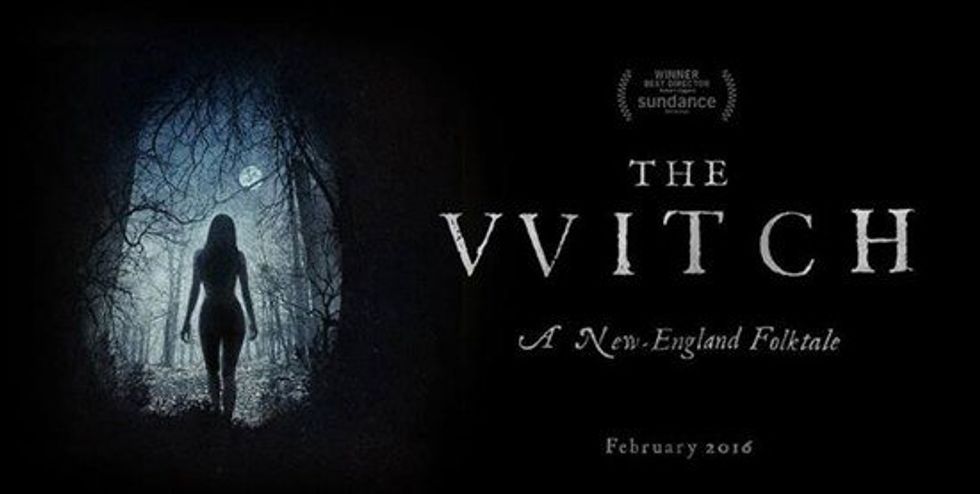
Robert Eggers directorial debut, the chilling, deeply unsettling film, "The Witch," is the kind of horror movie I have always longed to see. It is a tale set during the period of Puritan Massachusetts, a setting that is ripe with varied superstitions about the devil and sin. On the surface, the structure of the film seems quite simple, the tale focuses on a Puritan family that is banished from their secure settlement to resettle on the edge of a tangled and foreboding wilderness. What ensues is a religious fundamentalist nightmare brought to life: the family’s newborn, Samuel, is kidnapped by a red-clad witch residing in the nearby woods. I will not go on to spoil the movie for those that haven’t seen it but, needless to say, a litany of grisly events ensues. And, the oldest daughter of the family, Thomasin, is quickly blamed for the dark occurrences that seemingly begin to torment this family.
What is so fascinating about "The Witch" is the multitude of ways in which this film can be read. The striking aesthetic and many of the more violent scenes in the film were drawn directly from Puritan folklore regarding witches and the devil. By the end of the film, it remains unclear if the family is tormented by an actual witch or, instead, that their unflinching, unwavering religious fundamentalism had begun to drive them insane. This is the beauty of a film like "The Witch." It provides the audience with no easy answers and leaves the meaning of the film up to the viewers. In an age where horror movies are replete with hollow jump scares and simplistic plot lines fit for middle school children, it is quite refreshing to see a horror film that, astoundingly, assumes that its viewers are intelligent and can glean meaning from a film that does not hold itself to one specific interpretation.
However, to me, the most fascinating interpretation of this film concerns itself primarily with feminist thought. The concept of a witch during this time period centered around the idea of a rebellious female outsider. Some signs that one could be suspected of witchcraft in the seventeenth century include: being a woman, being financially independent, you’re a woman married with too many children, and you’ve had sex out of wedlock. Given these aforementioned signs of witchcraft, what becomes evident is the deep-seated terror the Puritan community had regarding female independence and autonomy. Cast in this light, it becomes of little surprise that Thomasin is blamed for the misfortunes at her family’s home. She is, after all, blossoming into a young woman, which deeply concerns her parents at several points within the film. If you were to maintain a feminist critique of this film, the figure of the witch, and even that of Satan, can be viewed in an entirely different manner.
If anything, the figure of the witch is the embodiment of feminine assertiveness and autonomy: the ultimate outsider. Furthermore, the figure of Lucifer in this film can be seen as tool to uncover or express notions of feminine empowerment. Towards the end of the film, a sinister figure asks Thomasin if she would “like to live deliciously.” Who wouldn’t want that? Who wouldn’t want to be gloriously, spectacularly free in an era where any expression of individuality was thought of as demonic? Yes, "The Witch" is a truly effective horror film, but it also concerns itself with many of the same issues that young woman face in our society today.
Maybe being a witch isn’t such a negative thing after all?

















