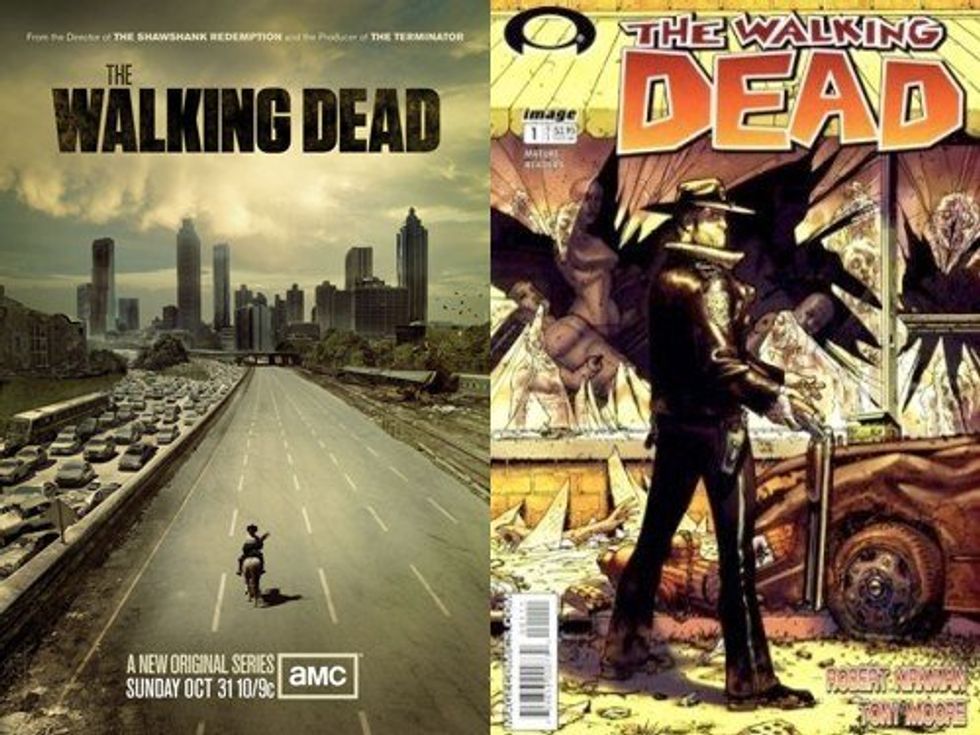
There are many differences in "The Walking Dead" series on AMC and the graphic novel by Robert Kirkman and Tony Moore, even though they consist of the same basic plot and characters. Sometimes, this happens because of television network requirements, and other times, it happens because the director has a different creative vision for the series than the illustrator did for the novel. There are also instances where these differences happen in order to better develop the story within a serial format for television.
The AMC series opens with Sherriff Rick Grimes encountering a little girl who turns out to be a zombie, while the graphic novel opens with a Rick and his partner Shane engaging in a shootout with a run-away prisoner. After the title sequence of the series, the series shows a scene between Rick and Shane in which they discuss their failing relationships, followed by a police chase that ends with a dramatic shootout in which Rick is injured, as in the beginning of the graphic novel. We see Shane talking to Rick in his hospital room and leaving him flowers, then we see Rick responding, expect the flowers are dead. He gets himself out of his bed, still noticeably in pain, and wanders around the hospital and town, looking for any other signs of life. He also does this in the graphic novel, though the extent of death and destruction is less depicted in the book than it is in the series. These changes could be necessary television techniques used to draw the story out or grab the attention of a larger audience, but with as minimal as they are, there is not that much more of an impact created. The conversation between Rick and Shane sets up a storyline to display that Rick and Lori may not have the best relationship, and gives an audience more insight into the concept of their relationship having fallen apart before the zombie apocalypse occurs. This conversation also gives the television audience a tendency to be more sympathetic towards Lori when they find out that she left with Shane, whereas the graphic novel leaves you in more of a state of shock about this. The graphic novel makes her jump to giving up on Rick appear to be a reflection of the lapse of societal structure within the apocalypse, but the AMC show provides background as to why their relationship developed. So while it is still shocking that Shane and Lori are together, we were given the telltale signs that Lori and Rick were not in a great place when he was shot and hospitalized.
The way the series starts, Rick seems to be better adjusted and composed than the Rick from in the graphic novel. He is taken aback by the zombie child, but he doesn’t let it stop him from shooting and killing her. The Rick from the graphic novel has very clear emotional reactions to his environment, but essentially gets himself together and rolls with the zombie apocalypse world he is thrust into. The Rick of the series appears to also be composed and rolling with the changes he is facing before the title credits, but then when he wakes up in the hospital, he appears more emotional than the Rick in the comics. He wanders around the hospital and the city in his hospital gown in the series, whereas he gets dressed in the graphic novel. He also has an elongated breakdown inside of his house in the series, while the graphic novel does not contain a scene like that. This, again, could be to gain more sympathy for the situation that the character is in, and to create a more realistic reaction than the one portrayed in the graphic novels.
These differences are just some of the many ways the graphic novel and television series differ, but they tend to heighten and explain more than the graphic novel did, so they do not take away from the original point of the narrative. In many instances, they make the story seem more realistic and likely to happen.